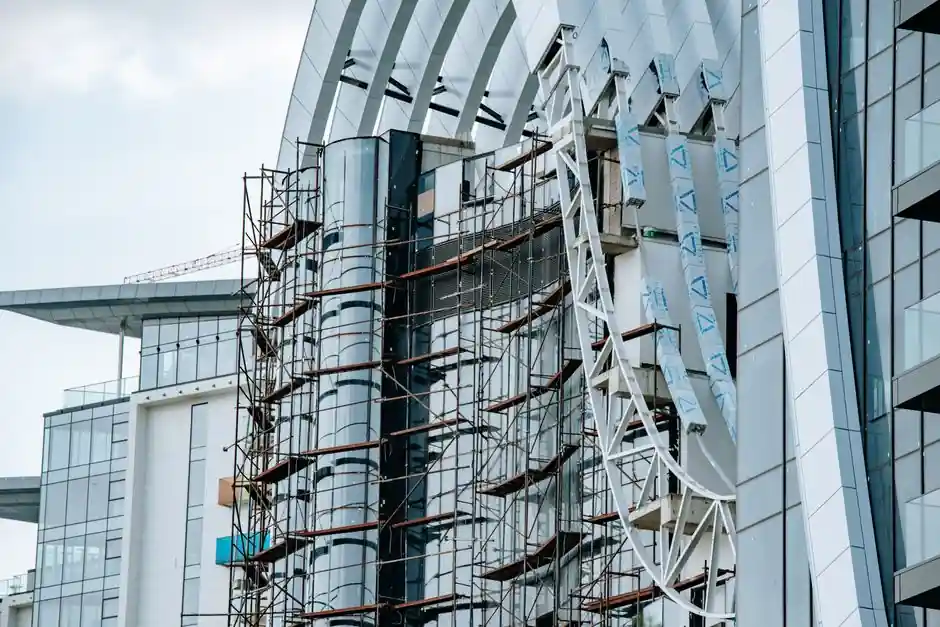
Frame scaffolding can be stacked into access towers in minutes, whereas Cuplock is more productive for repetitive, rectangular, straight-run structures that require heavier-duty support [S9][S1].
The practical answer depends on geometry, height, load, transport volume, and crew productivity, not on a universal erection-speed claim: lightweight frame scaffolding suits short, mobile work platforms, while Cuplock suits multi-level industrial and construction structures [S3][S7].
Speed by Project Geometry and Workload
Frame scaffolding is normally the faster option for a short, repeatable access tower because prefabricated welded frames need only cross-braces, ledgers, and locking pins to become a complete unit [S5][S9]. A frame can therefore create a usable platform before a comparable Cuplock structure has been assembled member by member, and published guidance describes frame towers as stackable within minutes [S9].
Cuplock overtakes frame scaffolding when the work becomes a large, repeated installation rather than a single tower. Its standards carry fixed bottom cups [S1][S2]. The same standard lengths, bay lengths, and connection sequence can therefore repeat across a rectangular elevation with fewer component types than a brace-and-frame arrangement [S1].
Frame scaffolding wins on one small tower, short-duration facade access, painting, or cleaning because it has fewer assembly operations and lighter pieces [S3][S5]. Cuplock wins on a straight, multi-level facade, bridge, flyover, slab-shoring, or repeated-bay installation because its modular node arrangement supports faster repetition and higher-duty use [S2][S3].
Component and Connection Differences
Cuplock uses vertical standards, horizontal ledgers, cups, and optional separate transoms; the ledger blade enters a fixed bottom cup and a sliding upper cup is lowered to secure it [S1][S3].
Frame scaffolding uses prefabricated welded tubular or aluminum frames connected with cross-braces, ledgers, clamps, or integrated locking devices [S5]. Those welded frame units reduce the number of separate joints for a tower, while Cuplock requires standards, ledgers, braces, and node locks to be coordinated in sequence [S3][S5].
Cuplock has fewer distinct components than traditional tube-and-coupler scaffolding, but that does not make it faster than a small welded-frame tower in every case [S1][S3]. The meaningful comparison is total labor operations: a frame tower may save enough handling time to dominate a small job, while repeated Cuplock bays amortize crew familiarization and node placement across a larger footprint [S3][S7].
Load Capacity, Stability, and Operating Limits

Cuplock is the stronger choice for tall or heavy-duty work, including formwork support, slab and beam shoring, bridges, flyovers, and industrial structures [S2][S3]. Its fixed cup and blade arrangement provides strong vertical-load performance, but the connection is primarily constrained to 90° ledgers and therefore remains less adaptable to irregular geometry than a multi-direction rosette system [S2].
Frame scaffolding is intended mainly for low- to mid-height applications where heavy load capacity is unnecessary [S5]. Typical roles include residential and small commercial work, painting, cleaning, maintenance, and temporary low-level access [S3][S5]. Standardized frame sizes simplify planning and inventory, but a straight frame arrangement adapts poorly to curves or complex shapes [S5].
Neither system should be selected from a generic trade article alone. Cuplock does not have one universal permissible load across every component length, steel grade, span, and brace arrangement; the same limitation applies to aluminum and steel frames. Approved design tables, manufacturer instructions, and the site-specific loading plan must govern working loads, wind exposure, foundation support, and erection sequence.
Transport, Handling, and Crew Effort
Frame components are often lighter, smaller, easier to transport, and quicker to reposition, which reduces cycle time for short jobs and frequently moved work platforms [S3][S5]. This advantage matters when the scaffold is transported between locations or erected in a confined area where larger components are difficult to rotate.
Cuplock occupies more transport and stacking volume than frame scaffolding, and its pieces require assembly rather than simple frame stacking [S3]. The payoff is a uniform scaffold built around 500 mm node spacing and standardized bay dimensions, with the connection suited to straight, repetitive construction rather than isolated mobile-access towers [S1][S2].
Crew effort therefore shifts with scale. Frame assembly is straightforward to erect and dismantle [S5]. Cuplock uses a more sophisticated locking process, but fewer component types and repeatable connections support efficiency on large straight structures [S3][S5]. For access platforms, compare the systems with aluminum ladder only where the task is access rather than a working platform; a ladder does not provide the deck, guardrail, or shoring capacity of either scaffold system.
Decision Matrix for Speed and Lifecycle
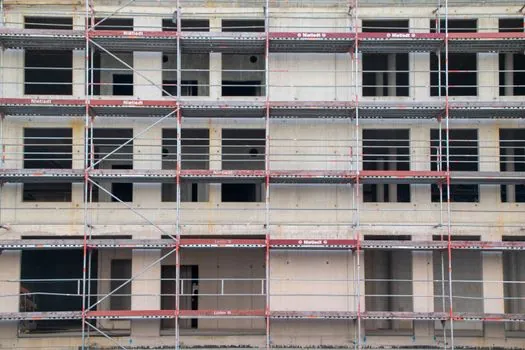
Speed winner: frame for one small or medium access tower, especially where a crew can carry and stack complete frames; Cuplock for repeated rectangular bays across a large straight elevation [S1][S9]. Capacity winner: Cuplock for multi-level, heavy-duty shoring or construction where the frame system would require substantial adaptation [S2][S3].
Flexibility winner: frame for simple, identical elevations and easily moved work platforms, but not for curves or highly irregular forms; Cuplock handles varied heights and forms better than frame while remaining more constrained for complex geometry than Ringlock [S2][S3][S5]. Transport winner: frame because its components are generally lighter, smaller, and easier to transport [S3].
Lifecycle winner depends on utilization. Frame offers lower logistics and handling burden for short-duration, low-level work. Cuplock can justify its larger material volume and longer duration where repeated assembly, higher load demand, or multi-level use makes component productivity more important [S3][S7]. Neither research material establishes a universal percentage speed advantage, so a claim that Cuplock is always faster than frame is not supportable.
Suitable Use Cases and Selection Rules
Specify frame scaffolding for low-rise buildings, painting, cleaning, maintenance, temporary construction, and quickly relocated access platforms where the working platform is modest and the geometry is repetitive [S3][S5]. It is also sensible where transport volume, handling effort, and short deployment time dominate the erection calculation [S3][S9].
Specify Cuplock for high-rise construction, bridges, flyovers, heavy-load areas, slab and beam formwork support, and tall industrial structures [S2][S3]. The system is particularly credible for straight elevations, facades, and shoring arrangements using regular bay lengths and 500 mm node spacing [S1][S2].
Do not choose frame for a heavy shoring duty simply because it erects quickly, and do not choose Cuplock for a single small tower solely because it is the more sophisticated system. The decision test is straightforward: if the structure repeats many identical bays or carries substantial vertical load, Cuplock normally gains assembly productivity; if it consists of a few movable frame units, frame normally wins [S1][S3][S9].
Procurement and Verification Controls
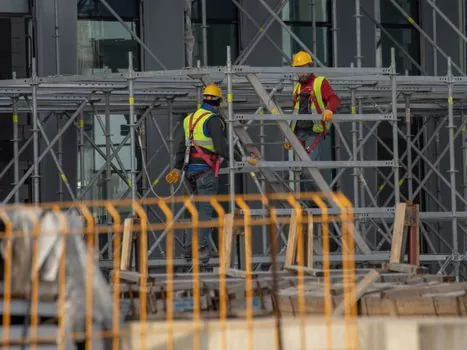
Measure erection productivity using the same work package, crew, access, and material layout. Record the number of standards, ledgers, transoms, braces, frames, base assemblies, and locking operations; then divide installed metres or platform area by crew-hours. Track repeated cycles separately, because a 500 mm-node Cuplock layout and a welded-frame tower have different production rates [S1][S5][S9].
Record component mass, packed volume, and the number of loads delivered to site. These variables explain why frame can remain faster in transport and setup despite Cuplock having fewer member types for repetitive construction [S1][S3]. Include erection, bracing, decking, guardrails, inspection, dismantling, and transport in the comparison rather than timing only the first frame.
Require the supplier to identify the exact system configuration, component dimensions, material, approved loads, bracing assumptions, and installation instructions. Cuplock component families use defined standards and ledger lengths, including 0.9 m, 1.2 m, 1.5 m, 1.8 m, 2.0 m, 2.5 m, and 3.0 m options in cited examples, while the governing arrangement determines usable load capacity [S1]. Do not extrapolate a manufacturer’s application example into a project-specific safe working load.
A controlled trial should compare one representative frame tower with one representative Cuplock bay group, using the same crew size, base condition, deck area, guardrail arrangement, and bracing plan; track crew-hours, completed lifts per shift, installed mass, and packed transport volume [S3][S5][S9].