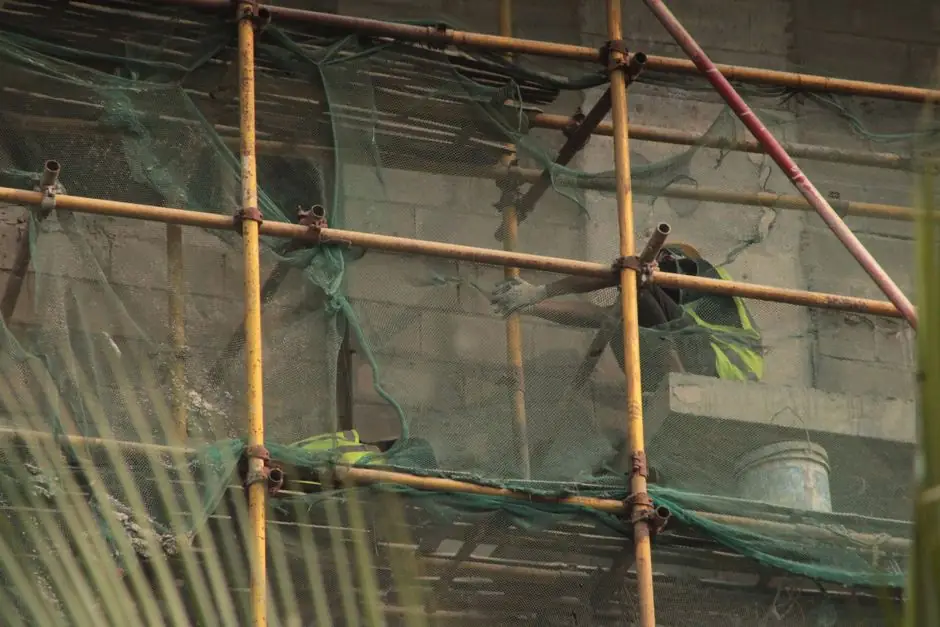
Cuplock locks up to four members at right angles through a cup-and-blade joint, while Ringlock locks eight members at 45°, 90° and 135° through a rosette-and-wedge joint [S4].
Both systems commonly use Ø48.3 mm galvanized steel tube, but their connection nodes determine erection effort, bracing flexibility, storage volume, and suitability for complex structures [S3][S4].
Connection mechanism at the standard
Cuplock places a fixed bottom cup and a movable top cup at each node on the vertical standard; the forged blade at the end of a ledger or transom drops into the bottom cup, and the top cup slides down and rotates to clamp the blades together [S2][S4].
Ringlock replaces the two-cup arrangement with one welded circular rosette that has four narrow slots for horizontal members and four wider slots for diagonal braces; wedge-headed ledgers and braces enter these slots, and a captive wedge is hammered home to secure the connection [S3][S4].
Ringlock therefore uses one discrete wedge head at each member end, whereas Cuplock uses forged blade ends plus a top cup that must travel down the standard. On repetitive rectangular layouts, the sequence remains straightforward: insert the blades, lower and rotate the cup, then release the top cup for the next lift. On Ringlock, the corresponding sequence is align, insert and hammer the wedge [S1][S4].
Node geometry and connection capacity
A Cuplock node accepts as many as four members, normally at 90° intervals. That capacity fits straight façade bays, square towers, rectangular access structures and standard deck grids without requiring a separate node geometry [S2][S5].
A Ringlock rosette accepts eight members, with horizontal and diagonal connection positions distributed at 45°, 90° and 135° [S4]. This permits braces to connect directly to the rosette rather than relying on separate couplers and supplementary tube, a practical advantage for circular tanks, curved façades, ramps, bridge soffits and irregular industrial structures [S3][S4].
The comparison should be made by member count and permitted direction, not by the number of loose fasteners alone. Cuplock provides four right-angle positions at each node, while Ringlock provides eight positions at 45°, 90°, and 135° [S3][S4]. Both systems then rely on standards, ledgers, transoms, braces, base jacks and deck support to complete a stable structure.
Erection effort and geometric flexibility

Both systems erect faster than traditional tube-and-coupler scaffolding because their joints are predefined, but Ringlock generally requires less manual effort. The wedge locks directly into the rosette, while Cuplock requires the installer to position multiple blades, slide the top cup and rotate it into the locked position [S1][S3].
Cuplock remains efficient for repetitive layouts where every bay is rectangular and the available member directions are sufficient. It is commonly selected for building façades, shoring, formwork support, residential work and smaller commercial structures [S3]. Its limited angular geometry becomes a disadvantage when the design requires splayed standards, intermediate diagonal angles or a nonrectangular elevation [S2].
Ringlock is the stronger choice for complex geometry because diagonal braces terminate directly at the rosette. Typical applications include high-rise buildings, bridges, tunnels, stadiums, large industrial plants, factories and curved façades [S3][S4]. The system also has a practical training advantage for mixed-shape work, because crews are not restricted to the right-angle node layout.
Load behavior, bracing and component wear
Ringlock’s eight-direction rosette distributes member forces over more available connection positions, which supports complex layouts and higher assembly flexibility. Cuplock’s four-way connection remains structurally effective for conventional rectangular structures, but changing direction outside the node requires additional components or adapted bracing [S3][S4].
The connection wear point differs directly. Repeated Cuplock assembly cycles act on the cup faces and the blade-to-cup interface, so loose or worn cups require inspection before the joint can be assumed effective. Ringlock concentrates repeated loading at the wedge and rosette slot, where the captive wedge physically fills the opening and resists loosening [S4].
Diagonal bracing is a decisive comparison point. Ringlock braces lock directly into the rosette, while Cuplock often requires separate couplers and tube for diagonal restraint [S4]. Neither node description substitutes for the manufacturer’s load tables, erection drawings or project-specific stability design. Selection of scaffold boards, access platforms and component ratings must follow the approved system instructions and applicable local scaffold regulations.
Cost, inventory and operational fit
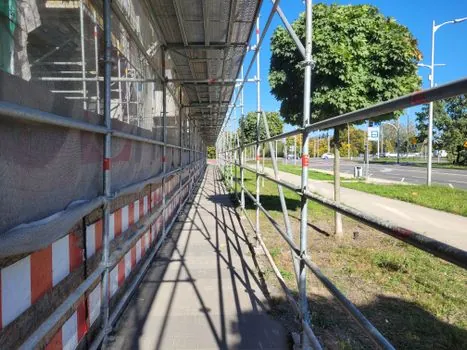
Cuplock generally carries the lower initial investment for a standard rectangular configuration, while Ringlock commonly carries a higher purchase price because of the rosette and wedge-head architecture [S3][S4]. The total cost should include erection labor, brace modifications, transport volume, inspection time and inventory discipline, not only the invoice value of standards and ledgers.
Storage differs because each Cuplock node uses both a fixed cup and a sliding top cup, making standards bulkier to stack. Ringlock carries a rosette at each node and is therefore more compact in storage and transport [S4]. Ringlock also simplifies fleet standardization when the same project team moves between industrial, bridge, façade or access scaffolds, because the same node accepts horizontal and diagonal members.
Cuplock is not the inferior system. It is a sensible choice for repetitive 90° structures, lower-complexity formwork support and installations where crew familiarity and standard rectangular bay dimensions dominate. Ringlock is preferable where angular bracing, variable geometry, direct diagonal connections or reduced assembly effort justify the additional procurement cost [S1][S3][S4].
Decision criteria for procurement and erection
Specify Cuplock when the scaffold is predominantly rectangular, uses four-way 90° members, requires a conventional formwork or façade configuration, and the supplier confirms compatible 500 mm node spacing and component capacity. Ringlock when the design includes diagonals at varied angles, circular or curved structures, repeated multidirectional bracing, or a requirement to reduce connection operations per node [S2][S4].
Compare both systems on eight measurable items: members per node, permitted directions, node spacing, number of actions to lock one member, direct diagonal-brace support, worn-component inspection points, storage volume per standard and total installed labor. A practical scoring rule is to use Cuplock for projects scoring high on repetitive 90° geometry and Ringlock for projects scoring high on angular flexibility and direct rosette-braced connections [S3][S4].
For mixed temporary-works portfolios, Ringlock is usually the easier system to standardize because the rosette accepts eight members and braces connect without supplementary couplers. Cuplock can remain preferable where the scaffold is a simple, controlled rectangular structure and its lower purchase cost offsets the additional cup-handling effort. This makes system fit, not the joint name, the defensible procurement basis [S1][S3][S4].
Before ordering, request the supplier’s current drawings and technical data for tube diameter, node spacing, member lengths, brace geometry and permitted loads. Confirm that jacks, spigots, ledgers, transoms, braces, wedges, cups and platform supports form one compatible system rather than combining components from unrelated manufacturers [S1][S7].
Track two site signals after the first 50 connections: rejected or reopened joints and man-hours per installed bay. A rising number of loose wedges or seized cups identifies whether training, wear control or system geometry is driving the erection cost [S1][S4].