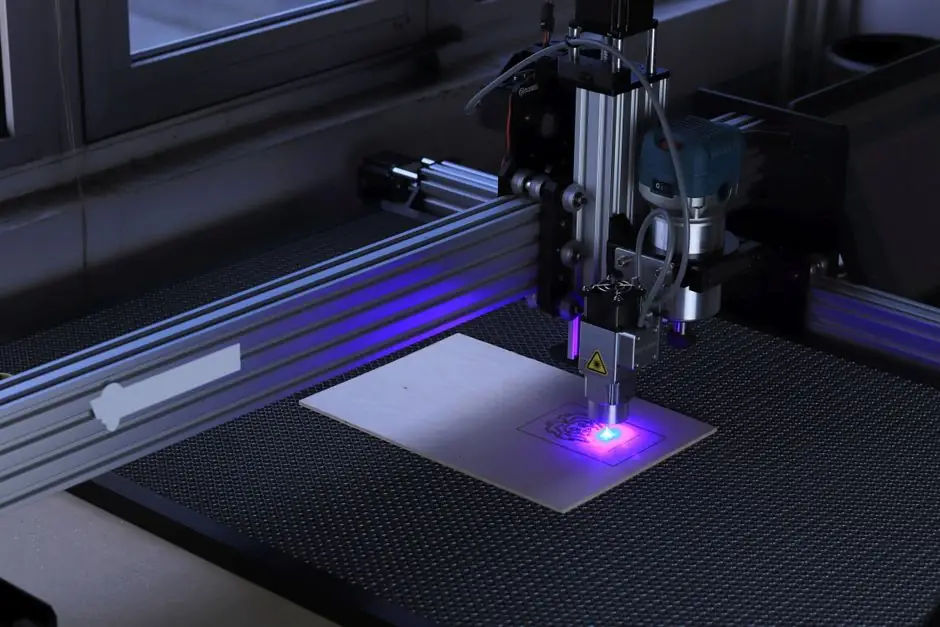
Choose a CNC plasma cutter when repeatability, nesting, automated height control and production throughput outweigh the lower flexibility of a handheld unit.
Choose handheld plasma for field repairs, one-off work and access to large or irregular sheets; typical handheld systems address material around 25 mm thick, while a cited 63 A CNC configuration cuts 0.5–30 mm plate and reaches 40 mm on selected edges [S3][S4].
Core Decision: Automation Against Portability
CNC plasma is the better choice for batch cutting, repeated profiles, nested parts and work requiring repeatable torch geometry. Mechanised systems provide precise motion control, automatic height adjustment and compatibility with nesting software, which are the decisive advantages over manual guidance [S4].
Handheld plasma is the better choice for site repair, short runs and irregular access. These compact systems are intended for light fabrication and maintenance, with material around 25 mm representing the typical upper application range cited for handheld equipment [S4].
The decision can be reduced to four criteria:
For volume, CNC wins because the part path comes from the control system rather than an operator's hand. For portability, handheld wins because the machine and torch can be carried to the work. For complex geometry, CNC wins because programmed paths can reproduce curves, notches and multiple parts without redrawing every cut. For one-off field work, handheld wins because moving and setting up a larger machine is unnecessary.
This also separates the two plasma cutter formats from CNC vs Manual Milling: Positioning Accuracy Decision Guide, although plasma cutting addresses sheet profiles rather than milling three-dimensional features.
Thickness and Material Limits
Plasma cutting is most suitable for electrically conductive metals, including mild steel, carbon steel, stainless steel, aluminium, copper, titanium, nickel, iron and galvanized sheet [S1][S2][S3]. The process uses a concentrated arc to melt the workpiece and remove the molten material, so it does not share the laser process's broader ability to cut wood, plastic or glass [S2].
Handheld systems are commonly used around 25 mm thickness [S4]. These figures are not interchangeable performance guarantees: machine output, torch design, gas, material, speed and consumable condition determine the actual cut envelope.
Accuracy, Geometry and Edge Quality
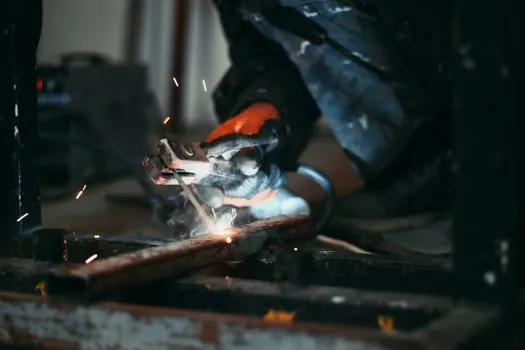
CNC plasma controls the torch path and can maintain a fixed torch-to-plate distance through automatic arc-voltage height control. These functions directly address hole geometry, dimensional repeatability and cut quality in multi-part production.
Handheld plasma offers less geometric control because the operator determines the path, torch height and travel speed. It remains practical for straight lines, openings and repair cuts where no drawing-driven repeatability is required. A CNC plasma table also accepts CAD geometry through USB transfer and supports direct programming and operation on the machine [S3].
The practical comparison is therefore:
CNC plasma offers stronger repeatability, faster setup for identical parts, automated height control and nesting integration, but it requires a table, utilities, a larger working footprint and planned maintenance. Handheld plasma offers lower equipment bulk, flexible access and straightforward field deployment, but it relies on operator skill and is slower for repeated production geometry [S1][S3][S4].
Where CNC Plasma Fits
CNC plasma fits fabrication shops producing brackets, gussets, discs, flanged sections and nested plate parts from carbon steel, stainless steel, aluminium or galvanized sheet [S2][S3]. The control system can repeat the same profile across a batch while maintaining torch height, which supports more consistent holes and cutouts than manual operation [S3][S4].
Portable CNC plasma is useful where a fixed production table is impractical but programmed geometry is still required. A cited portable configuration combines guide rails, beams, control panels and a CNC host [S3]. Its listed attributes include a small footprint, manual handling capability and operation on carbon steel, aluminium, copper, galvanized sheet, titanium and other conductive metals [S3].
For high-volume structural work, CNC supports automated nesting and minimizes repeated manual positioning. The cited 63 A configuration includes arc-voltage adjustment, kerf compensation and anti-collision controls, and is rated by its manufacturer for continuous 24-hour operation [S3]. Verify that rating against the installed power supply, cooling arrangement, duty profile and local electrical supply before treating it as a production guarantee.
Where Handheld Plasma Fits
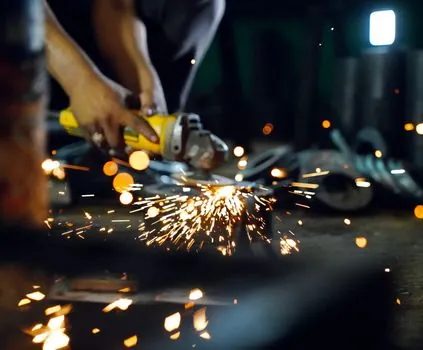
Handheld plasma fits maintenance, installation work, trailer and agricultural-equipment repair, and short-run fabrication where the plate cannot be moved to a table. Its compact format avoids transporting a table, rails and CNC enclosure, while the operator can approach the cut from the available working side [S4].
It is also the practical choice for straight cuts, openings and local geometry not derived from a CAD file. Straight-line work may favor a saw when kerf, edge finish and material support are controlling factors, while plasma becomes more useful when curved profiles are required [S5]. The cited forum material is contextual rather than a specification source, so this comparison should be confirmed with production trials.
Handheld plasma is less suitable for high-mix, high-volume orders, nested batches, frequent hole-shape inspection or work where dimensional evidence must show every part matches the same nominal profile. It is also unsuitable for nonconductive materials [S2].
Cost, Throughput and Operating Requirements
The CNC option has higher equipment and installation burden because it needs a controlled machine axis, a cutting table, source, torch, gas supply and automation. The portable example lists guide rails, beams, control panels and a CNC host as principal components, while its USB workflow allows CAD geometry to be transferred to the control [S3].
The handheld option reduces hardware and setup requirements but moves labor cost into manual positioning, torch control and rework. Handheld plasma can use compressed air as the working and shielding gas, making it the simpler, lower-maintenance choice for general fabrication or a smaller operation [S4].
Compare total cost per accepted part rather than purchase price alone. For CNC, include table space, nesting efficiency, consumables, gas, preventive service and material handling. For handheld, include operator time, setup, travel, offcut handling and the cost of correcting geometry. A CNC machine is usually justified when the same geometry recurs; a handheld cutter is usually justified when mobility and access dominate.
Equipment selection should record power-source output, stated material range, torch consumable availability, control version, gas requirements, footprint, cooling arrangement, duty cycle and service support. These fields distinguish two machines that both carry the plasma label but deliver different production capability.
Procurement and Trial Procedure
Specify CNC plasma by the parts to be produced, not by cutting capacity alone. Record material grades, minimum and maximum thickness, hole diameters, tolerances, edge requirements, annual volume, nesting software, file-transfer method and required table size. The cited portable configuration supports CAD transfer by USB, automatic plate-height tracking and a 63 A power source rated for 0.5–30 mm cutting, with up to 40 mm edge cutting [S3].
Specify handheld plasma by field conditions and operator environment: plate thickness, travel access, power supply, gas availability, duty pattern and expected rework. A typical handheld application range of about 25 mm is documented, while mechanised systems remain the appropriate category when repeatability and productivity are mandatory [S4].
Run representative coupons before purchase. Test the thinnest production sheet, the thickest specified plate, smallest critical hole, typical contour and the actual consumable and gas set. Record cut time, ignition behavior, hole shape, kerf, dross, edge position and rework. For CNC, repeat identical parts to verify path repeatability and height control; for handheld, use the same geometry to quantify the operator-to-operator spread.
The next trackable decision point is the production mix: a repeating profile in one material usually favors CNC, while isolated cuts or inaccessible installation work usually favors handheld.