
Chemical anchor epoxy typically requires 24–48 hours to cure, while vinyl ester reaches its working state sooner and is better suited to time-constrained installations.
What Determines Chemical Anchor Cure Time?
Chemical-anchor formulations commonly use epoxy, vinyl ester, polyester, or hybrid bases, and their molecular structures affect short-term properties such as cure time, installation temperature, and dispensability.
Full cure is not the same as gel time or installation time. The resin formulation, installation temperature, hole condition, hole diameter, and embedment depth all affect when the anchor reaches full strength [S3][S4].
The setting time of a bonded anchor depends on its resin formulation and installation conditions, including temperature and hole condition. That 12-minute result belongs to a rapid-curing anchor system, not to all chemical anchors.
Epoxy and Vinyl Ester Compared Against Installation Deadlines
This comparison applies to cure class, not product substitution. A named anchor cartridge may have its own gel, load, and cure times, so the product technical data sheet and installation instructions control the job.
Where Epoxy Is the Better Choice
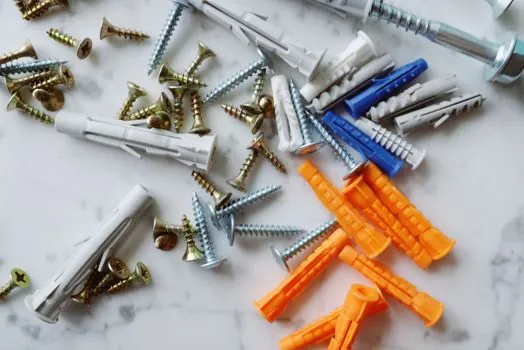
Epoxy chemical anchors require the cure time specified for the particular product and installation conditions before loading.
Epoxy is also less susceptible to rain or spray during small marine repairs than polyester or vinyl ester, a practical advantage where the bond cannot be protected from moisture [S5]. Epoxy is better suited to underwater work because it does not absorb moisture.
Do not select epoxy solely for cure speed. The resin formulation also governs load capacity, chemical resistance, corrosion resistance, service temperature, fire resistance, installation temperature, and sensitivity to hole geometry [S3]. For a chemical anchor, these long-term properties can outweigh a shorter changeover schedule.
Where Vinyl Ester Is the Better Choice
Vinyl ester resin requires a catalyst, MEKP, to initiate curing, so the resin and catalyst must be mixed correctly before dispensing [S8]. Vinyl ester resin requires the MEKP catalyst to be mixed in to initiate curing.
One repair discussion notes that vinyl ester has a much faster kick time for outdoor use in spring.
Environmental and Installation Constraints
Damp or high-humidity conditions can significantly delay curing, increasing the period before the anchor reaches full strength [S7]. Damp or high-humidity conditions can significantly delay curing and may prevent an anchor from reaching full strength on the expected schedule.
Hole preparation is part of the cure process. Depending on the applicable technical approval, hole cleaning may require compressed air, a hand pump, and a brush [S4].
Do not load an anchor because a surface or cartridge feels set. The stated cure period must be completed under the expected substrate temperature and environmental exposure. For resin selection within expansion anchors, chemical bonding performance must be evaluated separately from mechanical expansion behavior.
Choosing a Safe Cure-Time Plan
For chemical anchor selection in warehouse pallet racking, resin type, substrate, and applied load should be evaluated as one system rather than selecting only by cure speed. The warehouse pallet-racking anchor guide covers that broader selection framework.
Before installation, record the product name, resin family, substrate, hole diameter and depth, ambient and substrate temperature, and required loading time. Then confirm the manufacturer’s gel time, full-cure time, installation range, and maximum load in the product technical data sheet.
The controllable signals are cure completion, substrate moisture, and elapsed installation time.