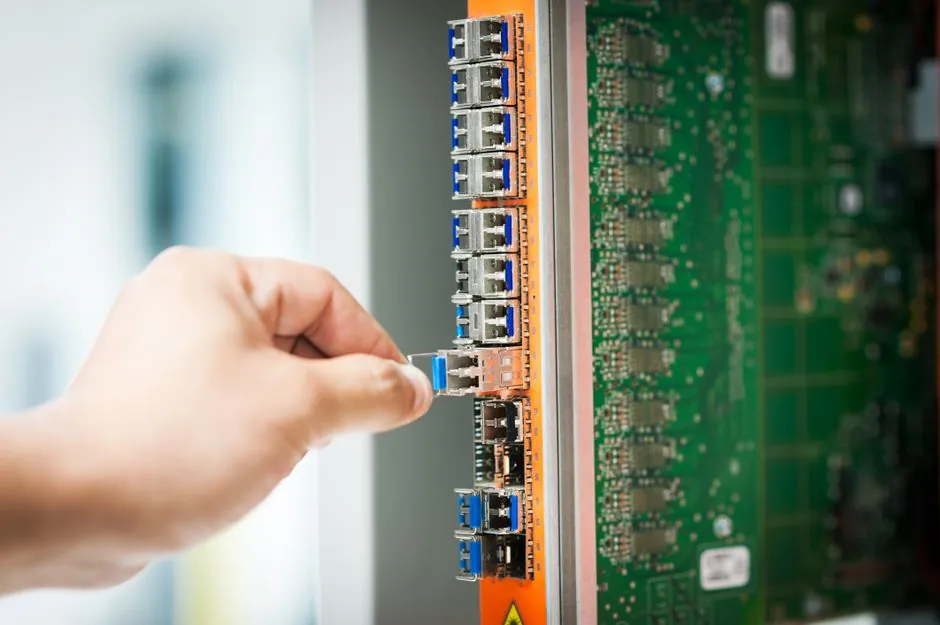
A single CXP-12 link carries 12.5 Gbps, and a four-link CXP-12 camera reaches 50 Gbps of aggregate interface bandwidth, which is roughly five times the 9.6 Gbps usable throughput of a 10GigE Vision link [S4][S5]. That gap is the single largest engineering variable when sizing a high-resolution or high-frame-rate vision system in 2026.
CoaXPress 2.0 is managed by the Japan Industrial Imaging Association (JIIA) CoaXPress Working Group, while 10GigE Vision is anchored on IEEE 802.3 Ethernet physical layers; both sit alongside newer variants such as 2.5GigE, 5GigE, and 25GigE for mid-range bandwidths [S4][S5]. Engineers are not choosing a winner; they are choosing which trade-off fits the line.
Raw Bandwidth: CXP-12 vs 10GigE on the Numbers
One CXP-12 channel at 12.5 Gbps is already 25 percent faster than 10GigE's nominal 10 Gbps line rate, and one CXP-12 link equals two CXP-6 links in a single coaxial cable, reducing cable count and repeater hardware [S1][S5]. A four-link CXP-12 configuration delivers 50 Gbps, a figure that 10GigE simply cannot match in a single host channel without link aggregation overhead [S4].
The effective throughput gap is wider in practice. CXP-12 reaches about 4850 MByte/s effective, which is more than four times 10GigE's real-world rate, and that headroom translates directly into higher line-scan line rates or larger area-scan frames at full resolution [S8]. Frame grabbers are not optional on the CXP side: a dedicated CXP frame grabber with DMA offload is what keeps CPU load low and the data path deterministic [S3][S5].
Determinism, Latency, and Synchronization
CoaXPress over a point-to-point coaxial link gives deterministic, near-zero-latency frame delivery, with multi-camera synchronization handled by the frame grabber and not by an extra trigger cable [S1][S4]. The same article notes that 10GigE's latency window of 5 to 50 microseconds depends on the slowest component in the network, and that switched Ethernet can reorder or drop frames when CPU buffers saturate [S1][S3].
The 10GigE Vision spec does define a packet retransmit option, but the turnaround time is longer than the line can sustain at full rate, so retransmits demand large on-camera buffers, which then add jitter and hurt real-time behavior [S3]. For synchronized multi-camera rigs, flat-panel inspection, or high-speed line-scan sorting, that jitter envelope is the deciding factor, not the headline gigabit number.
Cabling, Distance, and Power Delivery
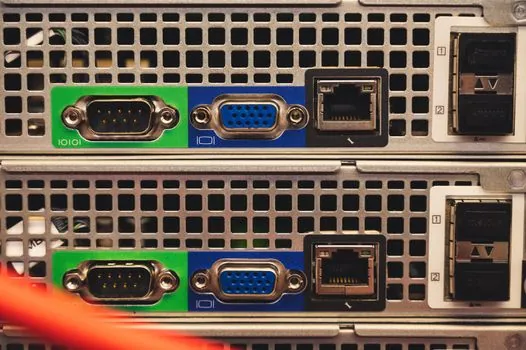
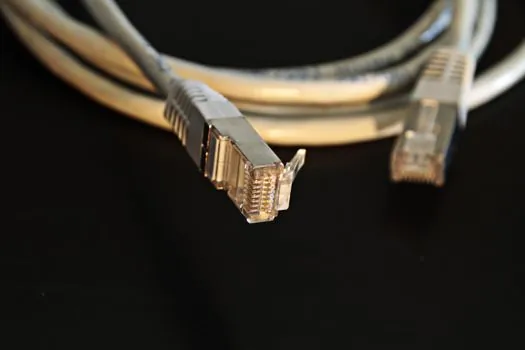
CoaXPress uses standardized 75-ohm coaxial cable and carries video, camera control, triggering, and Power over CoaXPress (PoCXP) on a single conductor, with practical runs of 40 m or more per link [S4][S5]. 10GigE Vision runs on Cat6 up to 55 m or Cat7 up to 100 m, and can be extended further over fibre, which is the cable-length advantage most engineers cite when they pick Ethernet [S1][S3].
There is a thermal and power cost: 10GigE over RJ45 is notably power-hungry, and 10GigE cameras run hot enough to need thermal budgeting, while CXP cameras offload the heavy data path into the frame grabber [S3][S5]. For sites with existing structured Ethernet, a 10GigE deployment reuses switches, cabling trays, and PoE infrastructure; for greenfield lines, CXP-12 keeps the cable plant compact.
Comparison: CXP-12, 10GigE, and the Mid-Band Ethernet Variants
The table below lines up the realistic options a controls engineer will see on a 2026 vendor shortlist, drawn from the reference sources [S5][S4][S1].
Bandwidth: 10GigE is 9.6 Gbps usable, 2.5GigE and 5GigE sit between standard GigE and 10GigE, while CXP-12 spans 12.5 Gbps per link to 50 Gbps over four links. Cable reach: 10GigE reaches 100 m on Cat7 or further on fibre, USB3 caps at 3 to 5 m, and CXP-12 runs 40 m or more per coaxial link with extenders available. Frame grabber: CXP-12 requires a dedicated CXP frame grabber for DMA offload, while 10GigE Vision can ride on a smart NIC but loses its CPU-light advantage without one. Power and multi-camera: 10GigE uses PoE/PoE+ with excellent multi-camera support on switches; CXP-12 uses PoCXP with multi-port frame grabbers giving per-camera dedicated bandwidth; both are stronger than USB3 hub sharing [S3][S5].
For a 4K60 area-scan or an 8K/16K line-scan running flat out, the math almost always points to CXP-12 x1 or x4. For distributed cells with the PC in a control room, 2.5GigE or 5GigE is the pragmatic mid-band answer, and 10GigE fills the gap where 5GigE runs out of headroom but CXP cabling is overkill.
When CXP-12 Is the Right Pick, and When 10GigE Wins
CXP-12 is the correct call for semiconductor and electronics inspection, high-speed line-scan sorting, synchronized multi-camera rigs, and any system that needs a 10-bit 12 MP area-scan sensor above 300 fps or an 8-bit 16k line-scan above 300,000 lines per second [S1][S4]. The 50 Gbps ceiling on a four-link CXP-12 frame grabber also leaves headroom for future deep-learning pre-processing stages that will keep pushing data rates upward [S1][S4].
10GigE Vision is the right call when the site already has structured Ethernet, when the PC must live in a control room more than 40 m from the cameras, when multicasting across a switch fabric is part of the architecture, and when adding a frame grabber is politically or financially difficult [S1][S3][S5]. For 2K to 4K area-scan at modest frame rates, mid-band 2.5GigE and 5GigE variants frequently cover the requirement without the CXP cabling overhead [S5].
Selection Checklist for High-Resolution Camera Systems
Engineers should size the interface against five concrete criteria: peak data rate in MByte/s, required cable distance, synchronization accuracy, multi-camera count, and the host's tolerance for a dedicated frame grabber versus a smart NIC [S3][S4][S5]. If peak data rate exceeds about 1000 MByte/s or if any camera demands sub-100 microsecond synchronization jitter, CXP-12 belongs in the BOM; if cable reach above 40 m or reuse of existing switches is a hard constraint, 10GigE Vision is the safer specification [S1][S3][S8].
Two more signals to track through the rest of 2026: 25GigE Vision is rolling out as a higher-bandwidth Ethernet option, and JIIA continues to extend CoaXPress for higher link counts and 100 Gbps-class aggregate bandwidth [S1][S5]. For related guidance on instrumentation choices across an automation line, see the selection walkthrough on repair vs replace decisions for aging PLCs and the clamp meter vs multimeter selection criteria for the electrical side of the same system.
For component-level specifications, see high voltage tester, hmi panel, and measurement test 2.