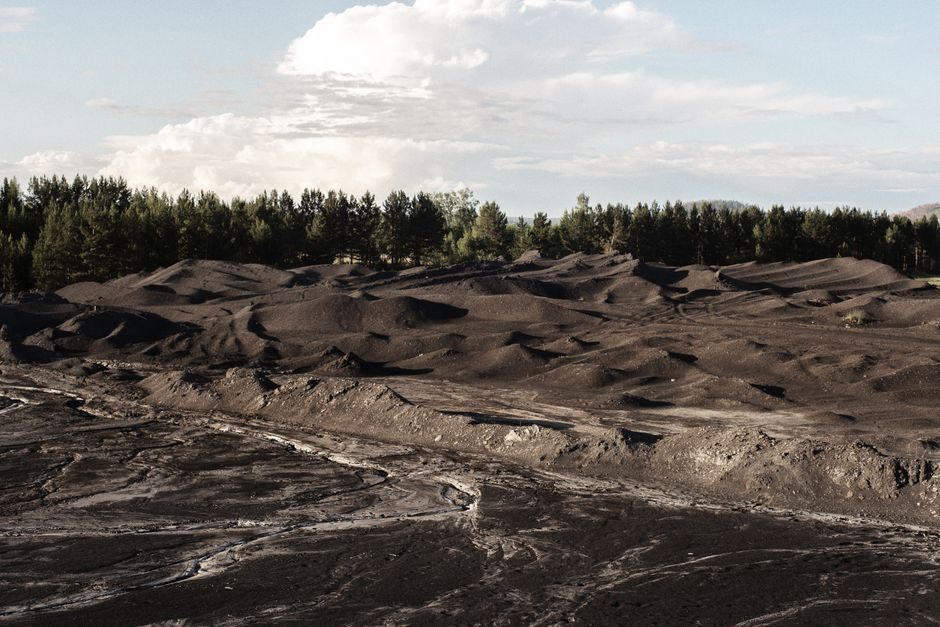
The cobalt market is structurally tight at the upstream end: a handful of vertically-integrated producers control the majority of mine output, while mid-stream refining capacity is increasingly concentrated in Chinese-owned hydrometallurgical plants processing both Democratic Republic of Congo (DRC) concentrates and Indonesian nickel-cobalt by-product [S3][S4].
SNS Insider pegs the global cobalt market at USD 16.99 billion in 2025, expanding to USD 35.44 billion by 2035 at a 7.63% CAGR (2026-2035), with the product mix split between cobalt sulphate, cobalt oxide and cobalt metal, and the type mix dominated by battery-grade material [S5]. Cognitive Market Research frames the structure as "competitive with the presence of a few major players" engaged in capacity expansions, R&D and merger activity, while downstream value pools shift toward battery chemicals [S3].
Upstream concentration: DRC share, ASM share, and the Indonesian counter-weight
Mine supply remains concentrated in the DRC, where the bulk of primary cobalt output originates and where a meaningful share is delivered as artisanal and small-scale mining (ASM) material that flows into formal supply chains through offtake agreements and processing hubs [S3][S4]. Fortune Business Insights' "Cobalt Mining Market" coverage tracks the full value chain — extraction, processing, downstream chemicals — and flags that competitive landscape assessment in the segment "identifies leading players and market share" by region, a data point that aligns with the widely-reported DRC-dominant upstream structure [S4].
The Indonesian nickel-cobalt laterite complex is the main counter-weight: high-pressure acid leaching (HPAL) projects tie cobalt output to the Class-1 nickel supply chain, with Chinese-backed joint ventures holding most equity and offtake rights [S3]. The result is a bifurcated upstream — DRC sulphide/oxide mines plus ASM versus Indonesian laterite HPAL — with the competitive advantage swinging between operators that control feed, those that control refining, and those that control precursor/cathode offtake.
Product mix: sulphate leads the value pool, metal and oxide hold industrial niches
SNS Insider's segmentation breaks the product axis into cobalt sulphate, cobalt oxide and cobalt metal, with battery-grade cobalt dominating the type axis versus industrial-grade material [S5]. Sulphate heptahydrate (CoSO4·7H2O) is the preferred intermediate for NCM/NCA precursor pCAM, and that downstream pull is the structural reason battery-grade demand grows faster than the headline market CAGR.
Process engineers selecting feed should match the form to the cathode, kiln, or alloy spec — not the headline LME price alone.
Selection criteria for buyers: form, grade, provenance and audit chain
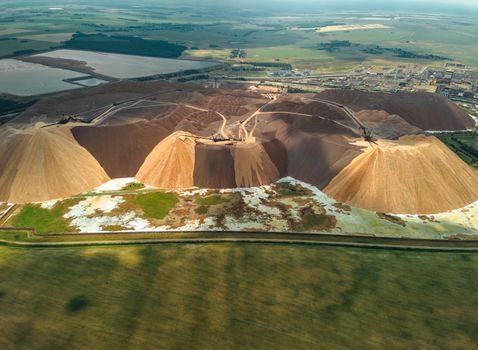
A practical comparison against these criteria, drawn from the publicly-cited market structure: DRC mine-co (vertically integrated, highest tonnage, highest ESG/ASM scrutiny, LME-linked pricing) scores well on volume and traceability programmes but carries reputation risk; Indonesian HPAL (Chinese JV-controlled, by-product economics tied to Ni MHP pricing) scores well on cost and scale but is exposed to nickel-price volatility; independent mid-stream refiners in China and Finland score well on flexibility and tolling terms but have less upstream control. Specifiers buying into battery-grade pCAM should weigh offtake security highest; specifiers buying superalloy feed should weigh grade consistency and ISO/AS9100 audit status highest.
Who this market is FOR — and who it is NOT for
The cobalt supply chain suits large, offtake-locked cathode makers and alloy producers that can absorb multi-year pricing exposure and run supplier-audit programmes, and it suits trading houses that can warehouse and hedge LME-registered metal [S3][S4]. Smaller battery-startup buyers without a multi-year offtake routinely get pushed to spot and pay premium during deficit windows.
The market is NOT a good fit for buyers needing small lots of high-purity metal with short lead times, for projects that cannot accept DRC-provenance material on ESG grounds without a documented OECD-aligned chain, or for any application where substitution (LFP cathodes, manganese-rich chemistries, iron-based pigments, Ni-free hardfacing) can meet the spec. For those buyers, alternative chemistries and alternative forms will almost always be lower total-cost than chasing premium spot cobalt.
Risks, constraints and failure modes in the 2026 cycle
The 2026 risk stack is layered: (a) DRC export and ASM-policy volatility, including permit suspensions and royalty changes; (b) Indonesian HPAL ramp-up execution risk, with multiple projects historically running below nameplate in their first 24 months; (c) cobalt price decoupling from nickel when nickel-Co ratio widens, which can strand HPAL economics; (d) cathode-chemistry substitution, especially LFP and sodium-ion displacing NCM in mass-market EV packs; and (e) ESG-driven procurement rules tightening, including EU Battery Regulation due-diligence requirements and customer-level cobalt-trace mandates [S3][S4][S5].
Process-engineering failure modes that buyers should price in: sulphate batches failing Cu/Ni/Fe ceilings (a single ppm exceedance can scrap a pCAM lot), moisture content excursions in sea-freighted heptahydrate (CoSO4·7H2O dehydration losses), and mismatched grade certificates between supplier CoA and customer ICP-MS results. The fix is duplicate assay at receipt, retained samples for 90 days, and a contractual remedy ladder tied to ICP-MS results at a named independent lab.
Sourcing, standards and where the data trail lives
Public market data converges on three trackers: SNS Insider (USD 16.99B 2025 → USD 35.44B 2035 at 7.63% CAGR, 2026-2035) [S5], Fortune Business Insights' "Cobalt Mining Market" coverage (full value-chain segmentation, regional performance) [S4], and Cognitive Market Research's "Cobalt Market" 2026 update (few-major-player structure, capacity-expansion and M&A activity) [S3].
Standards and audit frameworks that any cobalt shortlist should run against: ISO 9001 for quality management, ISO 14001 for environmental management, OECD Due Diligence Guidance for Responsible Supply Chains of Minerals from Conflict-Affected and High-Risk Areas for ASM traceability, the EU Battery Regulation's due-diligence clauses, and customer-specific cathode-maker CoA protocols. Pricing references are typically LME cobalt cash/3M plus a sulphate premium, with Indonesian HPAL material increasingly priced as a by-product of MHP rather than as a stand-alone cobalt quotation.
For readers sizing the broader battery-materials and energy-storage build-out, two adjacent pieces are worth reading: the Lithium battery manufacturer share 2026 landscape for the OEM side of the value chain, and the Solar panel demand 2026-2030 capacity math for the storage-and-renewables demand pull on critical minerals. Cobalt demand is set by cathode mix, and cathode mix is set by what cell makers ship — the upstream competitive map only makes sense once you read it against downstream cell-OEM concentration.
For component-level specifications, see pressure transmitter, flow meter, and industrial valve.