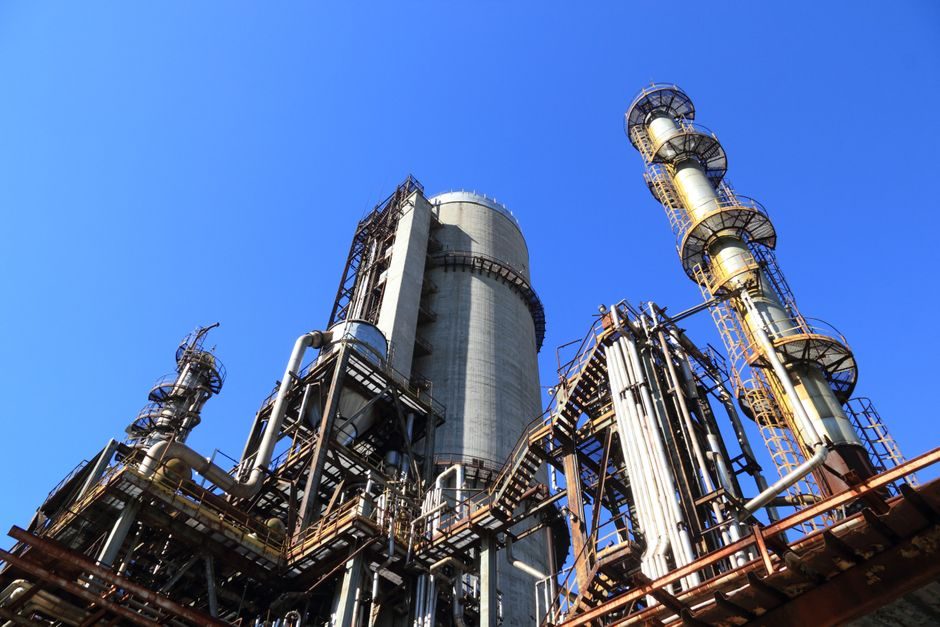
The dominant industrial route to cobalt sulfate heptahydrate is the acid digestion of cobalt(II) oxide (CoO) with dilute sulfuric acid, yielding a CoSO4 solution that is filtered, impurity-stripped, evaporated and cooling-crystallized [S3]. The monohydrate (CoSO4·H2O) and anhydrous (CoSO4) forms are obtained by controlled drying of the heptahydrate, and the chemistry is the same in every variant: CoO + H2SO4 → CoSO4 + H2O [S3].
Feedstock flexibility is the defining feature of a modern cobalt sulfate plant. Producers pull cobalt in as metal cuttings, black mass, hydroxide, oxide or MHP, which is the mixed Ni/Co hydroxide precipitate that Indonesian high-pressure acid leaching (HPAL) operations are now flushing into the market. CAS 10026-24-1 identifies the heptahydrate in commerce, with a molecular mass of 281.10 g/mol and the standard pink-to-red crystal habit used downstream in electroplating, ceramics, pigments, animal feed, and — most critically — the lithium-ion battery precursor chain [S4].
Raw Material Inputs and Why the Oxide Route Still Wins
Cobalt(II) oxide and dilute sulfuric acid are the named starting materials in the standard Cobalt Sulfate production cost model, on a CoO-to-CoSO4 stoichiometry that consumes roughly 0.61 t of CoO per tonne of anhydrous CoSO4 (154.996 g/mol formula mass) [S3]. Procurement is dominated by Co availability and Co pricing rather than acid cost, which is why most Chinese merchant plants sit on cobalt feedstock tolling arrangements with metal refineries and HPAL off-takers [S3].
MHP, by contrast, comes pre-dissolved from HPAL, so the front end is a neutralization/iron-and-aluminum removal train rather than a leach, but the back end (impurity polishing, evaporation, crystallization) is functionally identical.
Core Unit Operations: Leach, Purify, Evaporate, Crystallize
The first unit operation is a stirred, heated acid digestion at 60-90 °C in glass-lined or rubber-lined SS316 reactors, designed to keep residual free H2SO4 in the 5-15 g/L window to maximize Co dissolution while suppressing silica and iron(III) co-precipitation [S3]. A polish step with hydrogen peroxide or sodium hypochlorite oxidizes residual Fe2+ to Fe3+, after which the pH is raised with lime or NaOH to drop Fe, Al, Cu, Zn and Mn as a hydroxide cake that is filtered off [S3].
Purification is the spec-defining step. Battery-grade CoSO4·7H2O is sold against impurity ceilings typically in the low single-digit ppm for Ni, Cu, Fe, Zn, Mn and Ca, and sub-ppm for Na and Mg, with the final polish run through a chelating-ion-exchange resin or a solvent-extraction cascade using D2EHPA or Cyanex 272 [S5][S6]. The EP 4 296 236 A1 patent documents the canonical two-stage filter-and-purge sequence: a first crystallization produces a mother-liquor purge that drags residual Ca and Mg out of the system, and a second cooling-crystallization stage yields the final salt [S6].
Evaporation and cooling crystallization are sized for the heptahydrate target. The clarified CoSO4 liquor is concentrated in a multi-effect evaporator to roughly 350-400 g/L Co, then transferred to a cooling crystallizer that ramps from about 60 °C down to 15-25 °C, seeding CoSO4·7H2O nuclei and producing the characteristic red monoclinic crystals [S5]. A centrifuge isolates the wet cake, which is then dried in a vacuum dryer or fluid bed to surface moisture below 0.5% while preserving the seven waters of hydration [S5].
Process Flow: From MHP/CoO Feed to CoSO4·7H2O Crystal
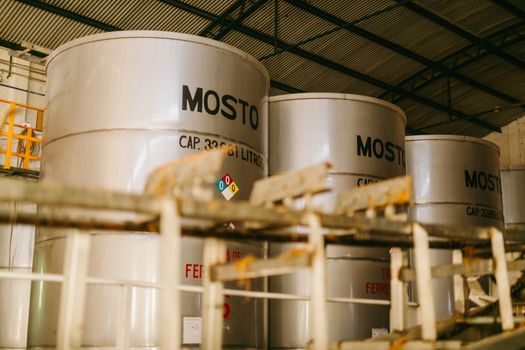
A representative battery-grade flow sheet runs: feedstock receipt → acid leach or HPAL neutralization → oxidative Fe2+ to Fe3+ conversion → primary impurity precipitation → plate-and-frame or candle filtration → ion-exchange / SX polish → multi-effect evaporation → cooling crystallization → centrifuge → wash → vacuum drying → screening → packaging in 25 kg PE-lined bags or 1 t big-bags [S3][S5][S6].
The CN115092971B high-purity cobalt sulfate crystal process adds a controlled anti-solvent crystallization and a re-dissolve/recrystallize loop specifically to drive Na and Ca below 5 ppm in the final crystal, with the redissolution step running at 80-90 °C and the recrystallization step at 20-30 °C [S5]. The EP 4 296 236 A1 method further specifies a first purge between crystallizations to bleed the residual Ca/Mg that would otherwise build up in the mother liquor and contaminate the second-crystal product [S6].
Specification Map: Battery-Grade vs Technical-Grade vs Feed-Grade
Battery-grade CoSO4·7H2O is the tightest spec, with Co content ≥ 20.0% (as Co), Ni ≤ 10-50 ppm, Cu ≤ 5 ppm, Fe ≤ 5 ppm, Zn ≤ 5 ppm, Mn ≤ 5 ppm, Ca ≤ 10 ppm, Mg ≤ 10 ppm, Na ≤ 10 ppm, and moisture ≤ 1.0%; technical/electroplating grade relaxes Ni to ≤ 200 ppm and Fe to ≤ 20 ppm; feed-grade is the loosest band, with Co ≥ 19.5% and a wider color-and-bulk-density tolerance [S3][S4].
The standard identity card for the heptahydrate in commerce lists CAS 10026-24-1, formula CoSO4·7H2O, molecular weight 281.10 g/mol, and a clear pink crystal habit; SDS sheets flag it as toxic if swallowed, a respiratory sensitizer, and a suspected carcinogen under NTP review, with storage batteries, ceramics, pigments, glazes, plating baths and soil/feed additives as the named end uses [S4]. That regulatory envelope is why most merchant plants are now segregated: battery-grade lines in cleanrooms, technical-grade in conventional reactors, and feed-grade on dedicated drying only.
Comparison of Main Production Routes
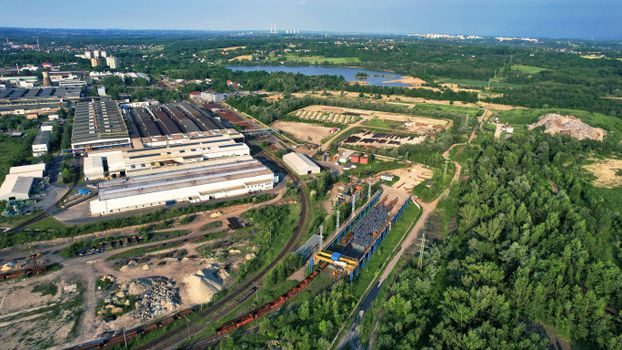
Four feedstock routes are in commercial use today, and the choice sets the back-end capital intensity. Cobalt(II) oxide + H2SO4 is the cleanest, with the smallest impurity load and the lowest evaporator duty [S3]. Cobalt metal + H2SO4 is the most flexible on grade but adds an exotherm-controlled leach tank and a Co sponge dissolution step. Cobalt hydroxide feed is the dominant Chinese merchant route and runs a two-stage neutralization-cum-purification train at moderate acid strength. MHP from HPAL is the lowest-grade feed, so the front-end neutralization is heavier and the ion-exchange polish is mandatory to hit battery spec.
On the four criteria that matter to a process engineer — feedstock CapEx, acid consumption, impurity load, and battery-grade yield — the ranking is: oxide route lowest on acid and impurity load, hydroxide route highest on feedstock CapEx but lowest on acid, metal route most flexible on grade, and MHP route lowest on feedstock cost but highest on purification CapEx [S3]. The pressure transmitter and flow meter count on a typical 10,000 t/yr CoSO4 line sits in the 200-300 instrument range, and the industrial valve count is dominated by PTFE-lined acid-service and stainless crystallization-loop duty.
Limitations, Failure Modes and What the Process Engineer Has to Watch
The single biggest process risk is iron and copper carryover. Fe3+ will co-crystallize with CoSO4·7H2O if the polish filtration is rushed, and Cu2+ in the final crystal is a hard reject for cathode-active-material (CAM) precursor buyers — typically a hard cap at 5 ppm Cu [S3][S6]. The mitigation is a strict oxidation/pH window in the primary precipitation (pH 3.5-4.2 for Fe, pH 5.0-5.5 for Cu) and a redundant 0.5 µm polishing filter before the ion-exchange columns [S5][S6].
Evaporator scaling is the second chronic failure mode. Calcium sulfate fouling on the heat-exchanger surfaces cuts evaporation rate and forces a weekly CIP cycle, so most Chinese merchant plants now run a nanofiltration or weak-acid cation pre-softening step on the clarified liquor before the multi-effect [S5]. Drying is the third: overheating above ~80 °C drives off the waters of hydration and converts the product to the monohydrate, which is a different CAS (13455-34-0) and a different commercial spec — a routine cause of customer rejections in summer when fluid-bed inlet temperatures drift.
Market Context and 2026 Supply Signal
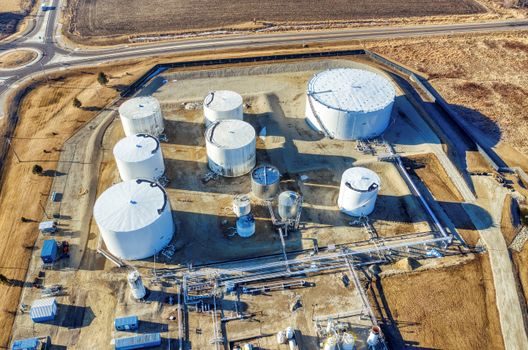
Cobalt sulfate is the closest cobalt product to the EV battery industry, and Fastmarkets' short-term forecast launched ahead of LME week is now the reference indicator for Chinese supply-demand sentiment, with HPAL-derived MHP from Indonesia as the swing feedstock. For comparison, parallel coverage on lithium hydroxide process routes and plant scale and the cathode material market chemistry mix tracks the same CAM-precursor chain one step downstream. [S1]
The next node to watch is whether HPAL MHP tonnage out of Indonesia expands enough to loosen the CoSO4·7H2O spot price into Q4 2026, and whether battery-grade impurity specs tighten further as high-nickel NCM and NCA cathodes push Ni ceilings below 20 ppm in the precursor sulfate — both are trackable signals in the Fastmarkets cobalt sulfate index and in the Chinese merchant-plant capacity disclosures. A useful adjacent read is the nickel sulfate crystallizer automation case, since the unit operations on a NiSO4·6H2O line are the closest direct analogue to a CoSO4·7H2O line.