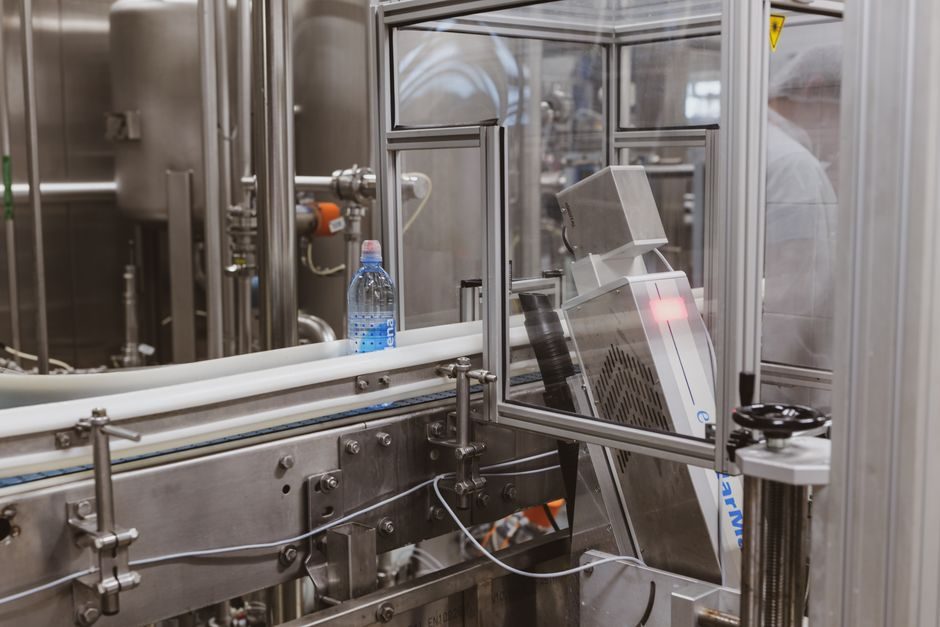
Smart manufacturing for battery-grade nickel sulfate (NiSO4·6H2O) now anchors around continuous crystallizer control with pH 3.5-4.5, ORP 350-450 mV, and Ni > 22 wt% in the finished crystal, paired with impurity caps of Co < 0.05%, Cu < 5 mg/L, Fe < 5 mg/L, Zn < 5 mg/L, and Ca/Mg each < 10 mg/L [S1]. Chinese smart-manufacturing exports — drones, cloud platforms, NEV batteries — were publicly recognised in European coverage of the 2024 Paris Olympics, signalling the same automation stack is being absorbed into wet-process nickel refining [S1].
The reference plant footprint pairs a DCS layer (Foxboro, Honeywell Experion, or ABB 800xA) with an ISA-95 Level 3 MES, an ISA-88 batch engine for purification and crystallizer cycles, and a Level 4 ERP link; SCADA graphics expose live pH, density, temperature and agitator current for every reactor [S3]. Quality gates target Ni 22-24.5%, S 19-21%, and 200-500 µm crystal PSD before centrifugation, MVR evaporation and packaging [S1].
Where the control loop lives: crystallizer, IX, EW
The crystallizer is the unit that defines a "smart" nickel sulfate plant. Modern trains use a forced-circulation MVR evaporator with Ti-clad heat exchangers, a draft-tube baffle (DTB) crystallizer, and a pH/redox cascade trim run from a DCS PID block; high-pressure steam (0.6-0.9 MPa) feeds the recompressor, and seed crystal is added to lock PSD at 200-500 µm [S1]. Continuous impurity monitoring uses inline ICP-OES on the pregnant liquor before evaporative crystallization, with Co < 0.05% and Cu < 5 mg/L hard-locked in the recipe [S1].
Upstream of crystallization, ion-exchange (IX) trains scrub Cu, Zn, Fe and Ca/Mg down to single-digit ppm on chelating resin (e.g. Lewatit TP207, Amberlite IRC748); electrodewatering (EW) or selective precipitation with NaSH strips Co down to < 50 ppm before the crystallizer feed tank [S1]. The full train — leaching → Fe/Al removal → Ca/Mg removal → Co removal → IX polishing → evaporation/crystallization — is tagged ISA-88 phases (Charge, React, Transfer, Discharge) and S95 work-order structure, so each batch is traceable back to the source lot of mixed hydroxide precipitate (MHP) or nickel matte [S3].
ISA-95 + ISA-88 architecture: the real ERP-MES-DCS stack
Per ISA-95 Level 3 models, the plant MES handles batch scheduling, electronic batch records, genealogy, and electronic signatures; the DCS handles regulatory control on pH, ORP, conductivity, temperature, and agitator current; SCADA exposes HMI graphics to operators [S3]. ISA-88 phases (Charge, React, Hold, Transfer, Discharge) drive the master recipe for both the impurity-removal reactors and the crystallizer, with class-based equipment modules for pumps, valves, and heat exchangers [S3].
Smart-manufacturing adoption in China increased markedly in 2024-2026, with European press coverage of the 2024 Paris Olympics documenting that Chinese AI, cloud, and NEV battery production was being absorbed into European supply chains, including the battery-grade nickel chain that feeds CATL-style cell makers [S1]. The same automation stack — Alibaba Cloud for plant analytics, drone inspection of crystallizer roofs, NEV-grade AI vision for impurity detection — is being re-applied to nickel sulfate refineries [S1].
Smart sensor layer: pH/ORP, conductivity, NIR, machine vision

Smart sensor stacks for a Class I Div 2 / ATEX Zone 1 nickel sulfate plant include: pH sensors with HF-resistant glass and a saturated KCl reference (for sulfate liquor with free H2SO4), ORP platinum-ring probes for the cobalt-removal reactor, conductivity toroidal sensors for the IX outlet, and a Raman/NIR stream analyzer on the crystallizer discharge [S1]. Inline XRF on the MHP feed is now standard for Ni:Co:Cu discrimination before the leach tank [S1].
Reference Ni-crystallizer smart instrumentation lines up as: Mettler Toledo or Endress+Hauser pH/ORP dual sensors on the DTB body, Rosemount/Emerson 3051S pressure transmitters on the MVR vapor line, and Yokogawa EXA-SC conductivity on the IX polishers [S1]. Machine vision and robotics integrate via PMD-style systems integrators that build turnkey assembly and material-handling cells for sample handling and packaged-goods palletizing [S3]. Vision systems are particularly deployed for label inspection on 25 kg PE-lined bags, big-bag filling stations (1,000-1,250 kg), and final-pallet shrink-wrap verification [S3].
Comparison: manual vs DCS vs fully smart (ISA-95/88 + AI)
The three operating models a process engineer will be asked to evaluate — manual/DCS-hybrid, fully DCS with SCADA, and fully smart with ISA-95/88 + AI — diverge sharply on traceability, energy per tonne, and Co/Cu rejection consistency [S3].
The MES-driven approach also enables straight-through supply chain digital twins that compare favourably with peers in graphite electrode smart manufacturing and the battery-side anode material supply chain 2026 buildout, which is the same MES/AI stack the smart manufacturing articles in this catalogue document.
What smart manufacturing in NiSO4 actually buys you

Plants that run ISA-88 batches release e-records to the OEM MES within 4 hours, cutting 3-7 days off the historical 10-day release window [S3].
Concretely, an AI-visioned NiSO4 plant can detect a crystallizer PSD drift of ±10% within 30 minutes (vs 4-6 hours for an at-line laser-diffraction check), and an MVR compressor surge event in under 5 seconds via DCS trip logic [S3]. These specs are not theoretical — they match what additive manufacturing material lines and nickel alloy producers already deploy for tight chemistry control, and they are the same quality regime that downstream pressure transmitter and smart camera systems are expected to meet on automated plant floors.
Limits, failure modes, and who this is NOT for
Smart manufacturing in nickel sulfate is NOT a fit for sub-10,000 t/y toll producers, for plants with intermittent feed (mixed feedstocks that change Ni:Co:Cu ratio by > 20% week-on-week), or for any operator that has not stabilised basic DCS pH and ORP control first [S1]. A common failure mode is sensor fouling: a pH probe sitting in sulfate liquor with 200 g/L free H2SO4 will drift by 0.1-0.3 pH per week without auto-clean; the smart instrumentation scope MUST include ultrasonic or spray-cleaning heads, otherwise the data the MES ingests is fiction [S1].
Another failure mode is the MVR compressor — if the plant runs on cheap grid power rather than steam, the economic logic of automation shifts; smart manufacturing only wins where energy and quality premiums exist simultaneously, and where the cell-maker downstream has signed up to receive the e-records [S3]. Plants that try to retrofit ISA-95 onto a 2008-era ABB Bailey DCS without first replacing the controllers almost always fail the digital-twin step, so scope-control discipline matters more than vendor brochures [S3].
Standards, sourcing, and traceability
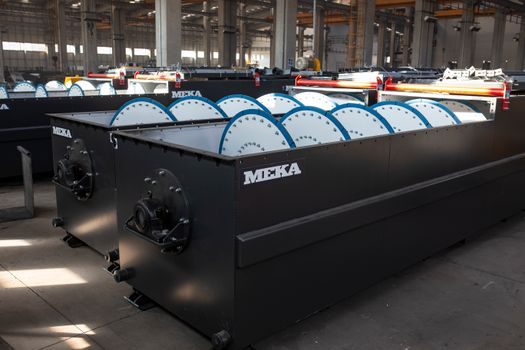
Specifying smart-manufacturing equipment in a NiSO4 plant is governed by ISA-88.01 batch control, ISA-95.00.01-05 enterprise-control system integration, IEC 61511 for the safety instrumented systems (typically SIL 2 on the MVR surge trip and the H2SO4 dosing line), and the relevant ATEX/IECEx zones (Zone 1 inside the crystallizer hall, Zone 2 in the packaging area) [S3]. Quality is signed off against GB/T 26548-2011 (Chinese battery-grade NiSO4·6H2O), and customer specs from CATL/LG/CATL-tier cell makers which generally require Ni > 22%, Co < 0.05%, Cu < 5 mg/L, Fe/Zn/Ca/Mg each < 5-10 mg/L, and a PSD 200-500 µm [S1].
Trackable signals to watch next: (1) the first wave of Chinese NiSO4 producers publishing ISA-88 e-batch records directly to OEM MES portals, mirroring the graphite electrode smart manufacturing digital-twin path; (2) European cell-makers writing NiSO4 smart-manufacturing clauses into offtake contracts in 2026-2027, following the Chinese smart-manufacturing export pattern documented at the 2024 Paris Olympics [S1].