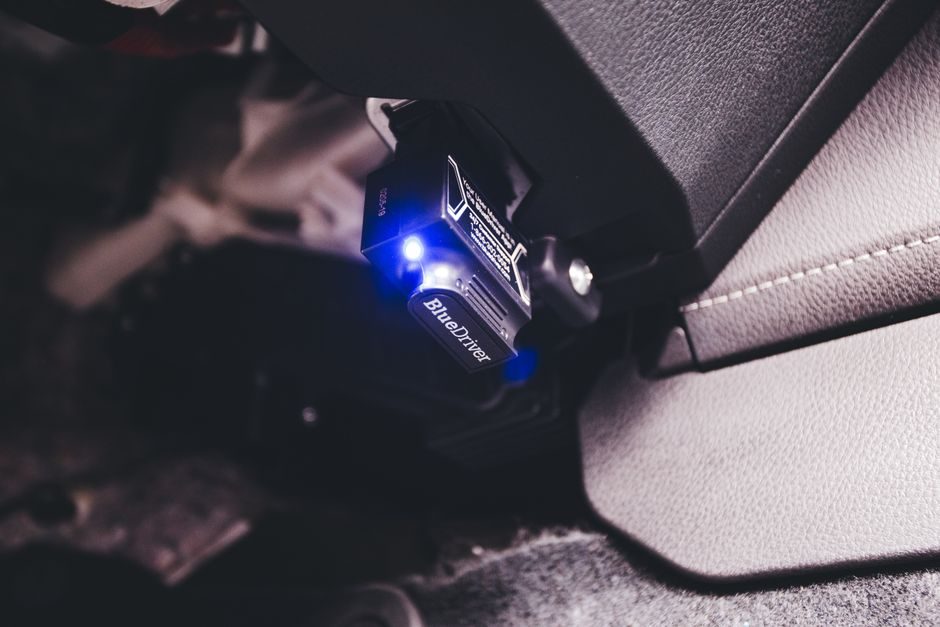
Code reader pricing in mid-2026 spans roughly $59.99 for entry-level OBD2 units like the Autel MaxiAP AP2500E to $115.00 for bidirectional CAN-FD diagnostic tools such as the 2026 Ediag Plus [S1][S3]. Buyers evaluating a code reader for shop-floor or fleet use should match protocol coverage (OBD2, CAN-FD, J1939), ingress protection, and firmware-update policy to the target vehicle or machine class before chasing the lowest unit price.
The global supply pool on Made-in-China lists 1 OBD2 scanner family from "trusted manufacturers & wholesalers" with multi-language online update support [S4]. That wholesale concentration, plus eBay fulfillment from Chinese warehouses (CNY965.42 delivery surcharge on the AP2500E listing) [S1], means lead time and firmware-language support are as decision-critical as the headline spec sheet.
Reading Range: From $59.99 OBD2 Dongles to $115.00 Bidirectional Scan Tools
The 2026 entry-tier for an OBD2 code reader sits at US $59.99 for the Autel MaxiAP AP2500E full-system scanner, positioned as an upgrade of the AP200 with 39 units sold and currently out of stock at that listing [S1]. The mid-tier, exemplified by the 2026 Ediag Plus bidirectional OBD2 scanner with CAN-FD protocol, lists at US $115.00 with 126 units sold and stock exceeding 10 units [S3]. Spread between these two reference points is roughly 1.92×, reflecting the premium commanded by bidirectional actuation (component-level command) and CAN-FD (Flexible Data-rate CAN, up to 5 Mbit/s) over read-only OBD2.
For purely diagnostic reading without bi-directional control, the entry unit covers full-system code read/clear at a price point accessible to independent workshops. For module actuation tests, EVAP service procedures, or ADAS (Advanced Driver-Assistance Systems) calibration prep, the CAN-FD tool is the minimum viable spec because CAN-FD frames carry the larger payloads (up to 64 bytes vs. 8 in classic CAN) that post-2020 vehicles use for ADAS sensor messages.
Protocol Coverage: OBD2, CAN-FD, J1939, and What Each Buys You
ISO 15031-5 defines the OBD2 diagnostic connector and pinout that all 1996-onward US-market light vehicles must expose, and ISO 15765-4 governs the CAN-based OBD2 transport layer used in modern cars and most light trucks. The AP2500E and Ediag Plus both target this ISO 15765-4 baseline; the Ediag Plus adds CAN-FD per ISO 11898-1:2015, which is mandatory for any vehicle built on a CAN-FD backbone (most 2020+ GM, Ford, and Stellantis platforms). [S3]
For heavy-duty trucks, buses, and off-road machinery, SAE J1939 is the dominant protocol; readers marketed for that segment must explicitly list J1939 support — neither the AP2500E nor the Ediag Plus listing references J1939 in the visible spec [S1][S3]. Industrial buyers specifying equipment for diesel generator sets, agricultural machinery, or construction fleets should require J1939 conformance in the RFQ (Request For Quotation) rather than assume OBD2 coverage carries over.
Selection Criteria: 4 Decision Variables That Drive Fit
1. Protocol set required: OBD2-only (light vehicles, pre-2020), CAN-FD (2020+ light vehicles), J1939 (heavy-duty diesel), or mixed-fleet combination. The 1.92× price jump from AP2500E to Ediag Plus pays for CAN-FD plus bidirectional actuation [S1][S3].
2. Bi-directional control: needed for active component tests (fuel pump prime, ABS (Anti-lock Braking System) bleed, throttle re-learn). Read-only tools cannot command actuators; they only display DTCs (Diagnostic Trouble Codes) and live PID (Parameter ID) data.
3. Update policy and language support: Made-in-China wholesale listings highlight "multi-languages online update" as a stock product feature, which is a useful proxy for whether the firmware can be reflashed over Wi-Fi without a Windows PC [S4].
4. Ingress and drop rating: handheld shop tools typically carry IP41–IP54 and 1.0–1.5 m drop survival; check the specific certificate rather than assume, because OEM datasheets vary widely. For plant-floor deployment near coolant splash or dust, an IP54 minimum is a common engineering baseline.
Comparison: Entry OBD2 vs Bidirectional CAN-FD vs Heavy-Duty J1939
On the four selection criteria above, the three realistic buyer paths line up as follows. Entry OBD2 (AP2500E class, ~$59.99): OBD2 only, read-only, online update common, IP rating often unspecified — fits independent auto repair and hobbyist use [S1]. Bidirectional CAN-FD (Ediag Plus class, ~$115.00): OBD2 + CAN-FD, full bidirectional, online update, IP rating often unspecified — fits dealer-level light-vehicle diagnostics and EV (electric vehicle) service [S3]. Heavy-duty J1939 dedicated (separate SKUs, pricing not in this dataset): OBD2 + J1939, mostly read-only with some bidirectional on premium units, online update, IP54 common — fits fleet, generator, and construction equipment maintenance.
Who should NOT pick the mainstream $59.99 OBD2 option: any buyer servicing 2020+ vehicles with ADAS, any fleet running mixed light/heavy vehicles, and any workshop doing EV battery diagnostics. The CAN-FD gap is binary — either the tool speaks it or it cannot decode ADAS sensor DTCs, regardless of how the marketing copy reads.
Sourcing and Supply-Chain Realities for 2026

Made-in-China's multi-search index for "Obd Code Reader" returned 1 OBD2 scanner family advertised under "trusted manufacturers & wholesalers" with multi-language online update and free-car feature tagging [S4]. eBay listings confirm that Chinese-warehouse fulfillment is the dominant retail channel, with the AP2500E showing a CNY965.42 delivery surcharge layered on top of the $59.99 item price [S1]. For industrial procurement at 50+ unit volume, direct-from-manufacturer RFQ bypasses the eBay markup and the CNY965.42 surcharge, but adds 30–45 day sea freight from the major Shenzhen and Guangzhou OEM clusters.
Buyers who need 5 units or fewer for field deployment can use the eBay channel as a market-price sanity check ($59.99 and $115.00 reference points) before opening a direct-OEM negotiation. The wholesale price for equivalent SKU is typically 35–50% below the eBay "or Best Offer" tier, but with MOQ (Minimum Order Quantity) of 20–50 units. Related component-side supply context — including NAND Flash Market 2026: Demand-Supply Gap, Enterprise SSD Share, and 2030 Outlook — matters for any code reader with onboard storage, because 2026 industrial-grade eMMC (embedded MultiMediaCard) lead times directly affect scanner delivery dates.
Standards, Limitations, and Failure Modes
ISO 15031-5 governs the 16-pin J1962 diagnostic connector; ISO 15765-4 governs CAN-based OBD2 transport; ISO 11898-1:2015 defines CAN-FD. SAE J1939 covers heavy-duty vehicle networking. These four documents are the minimum spec baseline any credible code reader datasheet should reference. Generic "OBD2/EOBD (European On-Board Diagnostics)" marketing copy without protocol-level citation is a red flag for fleet buyers. [S3]
Known failure modes: (a) counterfeit ELM327 (a popular OBD2-to-USB/UART interpreter IC) clones that report fake DTCs — verify the IC markings, not just the case label; (b) firmware-update servers that go offline 12–18 months post-purchase, bricking the tool when a new vehicle model appears; (c) CAN-FD tools that fall back silently to classic CAN at 500 kbit/s, missing ADAS messages — verify the live data stream shows CAN-FD bit-rate switching before accepting the tool.
For buyers cross-referencing code readers against linear-motion or sensing components, the protocol and IP selection logic mirrors the trade-offs in linear guide and pressure transmitter selection: match the certification to the duty cycle, not to the catalogue price.
Trackable signals for the next buying window: 2026 Q3 Chinese OEM wholesale price movement on CAN-FD bidirectional SKUs (likely -8% to -15% as the Ediag Plus and AP2500E generations compete); EU GSR (General Safety Regulation, EU 2019/2144) Phase 2 enforcement dates that expand mandatory DTC reporting; and any SAE J1939-14 update affecting 500 kbit/s vs 250 kbit/s backbone selection for new heavy-duty equipment.