
Q1 2026 global NAND Flash manufacturer revenue hit a record 46.0 billion USD, up roughly 3.5x year-over-year and already exceeding the full-year 2023 total, according to Counterpoint Research figures cited in Mizuho's June 9, 2026 note [S1].
Enterprise SSDs now account for 40% of total NAND Flash consumption, with Counterpoint projecting that share to clear 60% by the end of 2026, a structural shift that is pulling wafer allocation away from client and consumer storage channels [S1].
2026-2027 Demand-Supply Math: 18% Demand Growth Against 5% Wafer Contraction
Mizuho analyst Vijay Rakesh's team models 18% NAND Flash demand growth for both 2026 and 2027, while wafer starts are forecast to shrink 5% in 2026 and grow only 3% in 2027, a deliberate capex restraint by the top suppliers [S1].
Bank of America analyst Wamsi Mohan expects NAND contract pricing to trend upward through at least the first half of 2027, with no material new fab capacity coming online before 2028-2029, a setup that supports gross-margin expansion across the major suppliers [S1].
Silicon Motion CEO Gou Jia-Zhang publicly framed the storage shortage at roughly 200% of available supply, citing AI inference workloads as the primary pull and noting 2026 will remain tight, with the 2027 inflection dependent on whether double-booking unwinds [S1].
Enterprise SSD Share Rising From 40% to 60% of NAND Output
Enterprise SSDs took 40% of NAND Flash bit demand entering 2026, and the same Counterpoint dataset projects that figure to exceed 60% by year-end 2026, a 20-percentage-point swing in twelve months driven by hyperscaler AI training and inference fleets [S1].
The mix shift is not theoretical: SanDisk reported a Q2 FY2026 net-income jump of 672% on this same enterprise-pull dynamic, and on November 9, 2025 the company raised November NAND contract prices by 50%, prompting several module makers to halt shipments while repricing inventory [S1].
Bank of America raised its SanDisk price target from 1,550 USD to 2,100 USD and Mizuho lifted the same stock from 1,825 USD to 2,200 USD, with Mizuho simultaneously raising Seagate's target to 1,090 USD, all on the view that bit supply remains gated through 2027 [S1].
New Business Model Contracts Lock One-Third of SanDisk's FY2027 Revenue

SanDisk's multi-year supply agreements, internally branded the New Business Model or NBM, have already locked more than one-third of fiscal-year 2027 revenue at fixed volumes, leaving over 60% of FY2027 NAND bit output still available for spot and contract repricing, per Wamsi Mohan's June 9, 2026 write-up [S1].
The structural read is that the contracted base gives SanDisk predictable gross margin while the uncontracted tail gives operating leverage if contract prices keep climbing, a hybrid that is now being replicated across the supplier base [S1].
For buyers, the practical consequence is that uncontracted enterprise SSD and client SSD allocations in 2026 and 2027 are effectively spot-priced, and lead times on high-density QLC and TLC part numbers have stretched well beyond the historical 8-12 week window [S1].
3D NAND Total Addressable Market: 78.42 Billion USD by 2030
Allied Market Research sizes the global 3D NAND Flash Memory market and projects it will reach 78.42 billion USD by 2030, with layer-count migration past 200 layers and the transition to 300+ layer architectures cited as the principal unit-volume and ASP drivers [S2].
For spec-driven procurement teams, the takeaway is that bit-cost-per-GB in 2026-2027 is being set by layer-count and stack-height decisions made in 2023-2024, not by near-term wafer additions, and that linkage is the structural reason prices are sticky on the way up [S2].
Flash-Based Array Market: 129.68 Billion USD in 2026, 10.9% CAGR to 2033
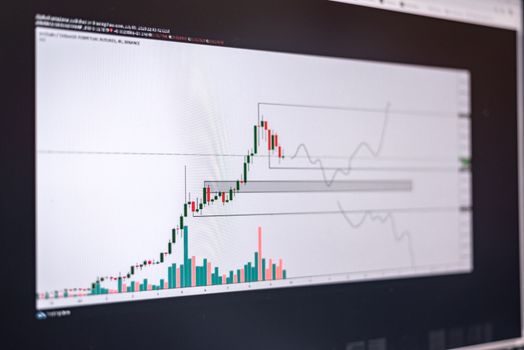
Coherent Market Insights values the flash-based array segment at 129.68 billion USD in 2026 and projects 267.53 billion USD by 2033, a 10.9% CAGR over the 2026-2033 window, with all-flash arrays taking share from hybrid flash arrays in large enterprise and SME deployments [S3].
The 10.9% CAGR compares against NAND bit demand growth of 18% in 2026, which signals that dollar growth in flash arrays is paced more by system ASP and controller-margin layers than by raw bit supply, and that controllers, NVMe-oF fabrics, and software-defined features are the bigger value pools [S3].
End-vertical mix cited in the same dataset runs through BFSI, healthcare, media and entertainment, IT and telecom, retail, and government, with the 100 TB to 500 TB and 500 TB to 1 PB capacity bands moving fastest as AI training clusters and real-time analytics workloads consolidate [S3].
Consumer Channel Spillover: PC and Smartphone Storage Cost Pressure
Because suppliers are prioritizing higher-margin enterprise SSD wafer allocation, consumer SSD and eMMC/UFS channels for desktops, notebooks, smartphones, and tablets are absorbing the residual cost pass-through, and contract prices on consumer part numbers have moved in lockstep with the November 2025 50% enterprise-side hike [S1].
Industry analysts cited in the same research note expect meaningful consumer capacity additions to be deferred until 2027 or later, meaning PC OEMs and handset makers are facing a sustained BOM-cost headwind through the back half of 2026 [S1].
For process and procurement engineers, the near-term decision is whether to lock 12-18 month supply at current contract prices via long-term agreements or to ride spot, a trade-off that the SanDisk NBM framework is now standardizing across the supplier base [S1].
Decision Criteria: Contract, Spot, or NBM-Style Hedge

Three procurement postures are available for NAND-heavy systems: spot buy for flexibility, fixed-price annual contract for budget stability, and NBM-style multi-year volume lock for guaranteed allocation. The right pick depends on whether the workload is AI training (elastic, latency-tolerant on storage), AI inference (latency-critical, allocation-sensitive), or general enterprise (cost-sensitive) [S1].
On cost, spot has the lowest entry price but the highest variance, annual contracts trade 5-12% premium for predictability, and NBM-style locks trade 15-25% premium for hard allocation guarantees through the 2027 supply window [S1].
On allocation security, the dataset shows that contracted enterprise SSD volumes at SanDisk already exceed one-third of FY2027 revenue, which means uncontracted buyers in 2026-2027 will compete for a shrinking residual pool, and that residual pool is where the next round of 20-40% price increases is most likely to land [S1].
Adjacent Pressure Points: Back-End Test and Packaging Capacity
The NAND tightness is not isolated: Morgan Stanley projects ASE Technology, the back-end packaging leader, will raise 2026 advanced-test and packaging prices by 5-20%, above the prior 5-10% expectation, because its advanced-packaging lines are near physical capacity [S1].
That 5-20% back-end test hike compounds on top of NAND die price increases, so any 2026-2027 BOM model should apply the packaging pass-through to the final SSD module ASP, not just the NAND die cost, when forecasting system-level storage spend [S1].
For sensor-heavy industrial systems, the secondary effect is that controllers, pressure transmitters for process gas monitoring, and other auxiliary components shipping on the same constrained back-end lines may also see 5-10% lead-time slippage through 2026 [S1].
Trackable Signals Through Year-End 2026
Three measurable signals to watch: Counterpoint's monthly NAND bit-shipment and enterprise-share print for Q2 and Q3 2026, SanDisk's next NBM contract-coverage disclosure in the Q3 FY2026 earnings cycle, and any incremental 3D NAND layer-count announcements past 300 layers that would shift the 2027 supply curve earlier than the current 2028-2029 baseline [S1][S2].
Above 60% enterprise SSD share by December 2026 would confirm the structural mix shift; a drop in NBM contract coverage below one-third of forward revenue would re-open the spot pool and ease the 2027 supply premium; layer-count jumps past 300 in volume production would be the first credible supply-side relief signal before 2028 [S1][S2].
For related context on the broader memory stack, the HBM supplier landscape for 2026 and the lithography equipment sourcing map are worth tracking in parallel, since HBM fab additions consume advanced-packaging capacity that overlaps with NAND controller test lines [S1].
Component reference pages worth checking: flow meter, and industrial valve.