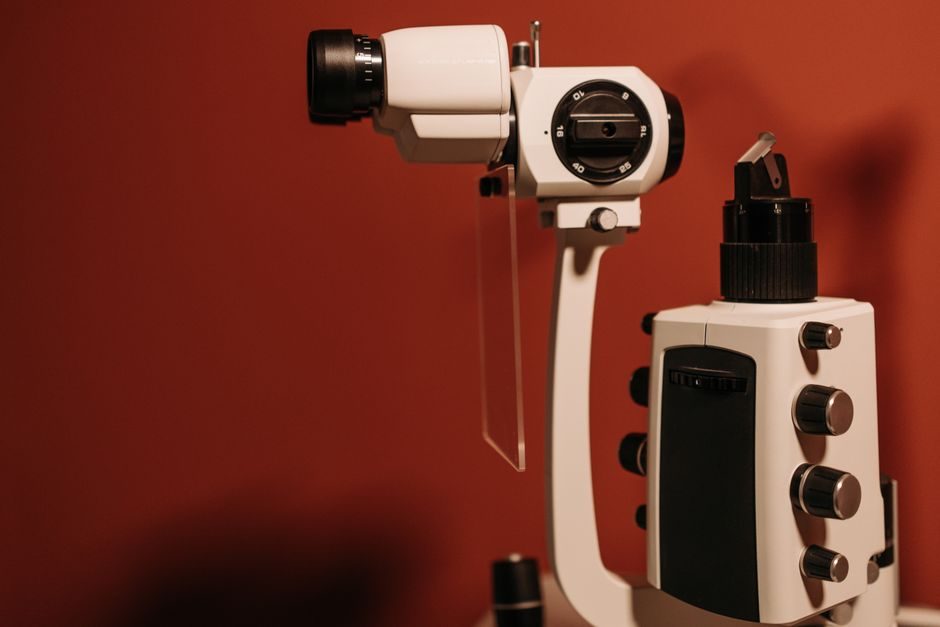
A machine-vision controller is the processing and I/O hub that turns raw image frames from industrial cameras into go/no-go signals on a production line, and the right pick is dictated by camera count, cycle time, and the inspection algorithm's compute load.
For 2026 line builds, buyers are sorting between smart cameras (sensor + processor + lens in one housing), PC-based frame grabber boards, and embedded vision controllers — three architectures that overlap in price but diverge sharply in throughput, latency, and field-serviceability.
What a Vision Controller Actually Does in a Production Cell
A vision controller sits between one or more industrial cameras and the PLC / robot / HMI downstream, performing image acquisition, pre-processing, inspection or measurement, and result communication. In a typical 2026 factory-floor deployment it must handle GigE Vision or USB3 Vision protocol stacks, hardware or software triggering, and deterministic I/O hand-off to the line PLC within a few milliseconds [S1].
The core hardware elements are: (1) camera-link interfaces — GigE, USB3, CoaXPress, or Camera Link depending on bandwidth need; (2) a processor block — FPGA, GPU, multi-core CPU, or a system-on-chip; (3) trigger and strobe I/O, usually opto-isolated at 24 V DC; and (4) industrial communication — PROFINET, EtherNet/IP, or EtherCAT — to upstream controllers. The vision controller reference page catalogues the architecture differences between these blocks.
Three Architecture Families Buyers Should Compare
Smart cameras integrate the imager, processor, lens mount, and I/O into a single IP67-rated housing and are specified for single-point inspections such as barcode read, date-code OCR, or presence/absence checks; typical onboard processors run at 1–2 GHz with 1–4 GB RAM and resolve sub-2 MP frames at 30–60 fps. Smart cameras trade raw throughput for compact footprint and lower wiring cost, and the machine vision system overview describes how they slot into a wider cell. [S1]
PC-based frame-grabber systems use a host industrial PC plus a dedicated CoaXPress or Camera Link capture card, and they scale to 4, 8, or 16 cameras with multi-megapixel sensors at line rates above 10 kHz; this is the architecture for semiconductor inspection, AOI of populated PCBs, and high-speed sorting where the vision measuring machine workflow benefits from GPU-accelerated processing.
Embedded vision controllers are a third lane — fanless box PCs with multi-core CPU plus optional FPGA mezzanine — sized for line-side mounting on a DIN rail or machine arm; they accept 2–4 GigE or USB3 Vision cameras and run the full vision-software stack (Cognex In-Sight, Halcon, MVTec, or open-source OpenCV) without a full control cabinet. Vision light source selection is tightly coupled to this choice, because backlight, dome, or structured-light pattern changes the exposure time and therefore the controller's frames-per-second budget.
Four Specs That Drive a Buy or Reject Decision

Camera-link bandwidth is the first gate. A single 5 MP monochrome camera at 60 fps over GigE Vision consumes roughly 300 MB/s of payload, and four of them saturate a 1 GbE switch; buyers moving to 5GigE, 10GigE, or CoaXPress 2.0 do so to keep headroom for trigger jitter and retransmits. USB3 Vision (USB 3.0, 5 Gb/s) is a lower-cost lane capped at cable lengths near 5 m without active repeaters. [S1]
Processing architecture — FPGA, CPU, or hybrid — sets the latency floor. FPGA-based pre-processing pipelines such as those in the latest CoaXPress frame grabbers hold deterministic cycle times under 100 µs, while CPU-only pipelines under Linux or Windows vary by 1–5 ms depending on scheduler load. For pick-and-place with 0.1 mm alignment tolerance at 60 parts/min, that variance is the line between pass and scrap.
Trigger and strobe I/O matter more than throughput on many lines. A controller with 4 opto-isolated inputs and 4 outputs, plus an encoder input for line-scan synchronisation, covers 80% of conveyor-fed inspection stations; anything beyond that is custom. Trigger latency under 50 µs is the published benchmark for industrial-grade smart cameras and most embedded controllers in 2026 [S3].
Protocol stack and software API round out the spec. A buyer already running PROFINET to Siemens S7 PLCs will demand PROFINET conformance on the vision controller, not just TCP/IP; the same buyer running a Rockwell ControlLogix line will need EtherNet/IP with CIP Sync for time-stamping. Closed ecosystems such as Cognex In-Sight or Keyence CV-X lock the controller to the vendor's IDE, while open platforms (Beckhoff TwinCAT Vision, Halcon on x86) allow mix-and-match cameras but require more integration time [S2].
Criteria-Based Comparison of the Three Options
For a buyer choosing among smart camera, frame-grabber PC, and embedded controller, four decision criteria dominate: (1) camera count, (2) cycle time, (3) cabinet space, and (4) software openness. A smart camera handles 1 camera at 30–60 fps in a 60×60×40 mm housing with vendor-locked software; a frame-grabber PC handles 4–16 cameras at 100+ fps in a 19" rack with open software; an embedded controller handles 2–4 cameras at 30–60 fps in a 200×150×60 mm fanless box with either vendor or open software. [S1]
Threshold rule of thumb from published 2026 spec sheets: if the inspection tolerance is tighter than 0.05 mm at line speeds above 5 m/s, the answer is a frame-grabber PC with FPGA pre-processing; if tolerance is 0.1–0.5 mm at 1–2 m/s, an embedded controller or smart camera will do. For a 4-camera AOI on a 1.2 m wide panel at 0.3 m/s, an embedded controller on a linear guide scan axis typically beats a smart-camera array on total cost of ownership over a five-year horizon [S1].
When a Smart Camera Is the Wrong Choice
Buyers should NOT pick a smart camera when the inspection needs (a) a 5 MP or larger sensor with sub-pixel metrology, (b) deep-learning inference at frame rates above 20 fps, or (c) more than two cameras synchronised to one encoder. The compact housing forces a fanless thermal envelope that throttles CPU-bound networks, and the vendor-locked IDE blocks reuse of the in-house OpenCV or Halcon codebase. [S1]
Buyers should also be cautious specifying a frame-grabber PC where plant-floor vibration, dust, or wash-down exposure is routine — an industrial PC with consumer-grade cooling is a documented failure mode. For those environments an IP67 embedded controller with M12 connectors is the lower-risk pick, even at a 15–20% cost premium. Related reading on ruggedised industrial nodes is covered in the industrial modem / DTU buying guide for similar enclosure-driven tradeoffs.
Standards, Wiring, and Sourcing Constraints
Three standards families shape the buy. GigE Vision is the IEEE 802.3 + GenICam stack maintained by the AIA, with the current 2.2 revision defining the SFNC (Standard Features Naming Convention) used by virtually every 2026-compliant camera. USB3 Vision is the equivalent over USB 3.0. CoaXPress 2.0 is the high-bandwidth lane used in semiconductor inspection, with CXP-12 carrying up to 12.5 Gb/s per channel [S1].
On the industrial-network side, the controller must conform to PROFINET (IEC 61784-2), EtherNet/IP (CIP Vol 1), or EtherCAT (IEC 61158) depending on the host PLC. Buyers using a Siemens or Beckhoff cell should require vendor-published PROFINET or EtherCAT conformance certificates; the absence of that certificate is a hard reject for most 2026 European line builds. The same logic governs functional safety — a vision controller that drives a safety-rated reject actuator must show PL d / SIL 2 documentation, not just CE marking.
Lead-Time, Pricing, and Shortlist Logic

2026 lead times for off-the-shelf smart cameras run 4–6 weeks; embedded controllers 6–10 weeks; frame-grabber PCs 8–14 weeks depending on GPU/FPGA availability. Unit price ranges published by mid-2026 distributors: smart camera body $1,500–$5,000; embedded controller $2,500–$8,000; frame-grabber PC + card $6,000–$25,000. Custom FPGA firmware is a separate $20,000–$80,000 line item and is the dominant cost on a high-speed semiconductor AOI build. [S1]
Shortlist logic for a typical 2026 buyer: (1) write down cycle time, camera count, sensor resolution, and enclosure rating; (2) drop any option that fails the cycle-time floor; (3) drop any option that cannot host the in-house vision software; (4) score the remainder on trigger latency, I/O count, and protocol conformance; (5) order evaluation units for the top two. A buyer who follows that sequence ends up with a controller in the 90th-percentile spec-fit and avoids the 30% retrofit cost that comes from a too-small smart camera being replaced by an embedded box halfway through commissioning. For the upstream motion side, a review of linear guide and crossed-roller guide rigidity classes is the natural companion spec, since vision repeatability is bounded by the mechanical axis that carries the camera.