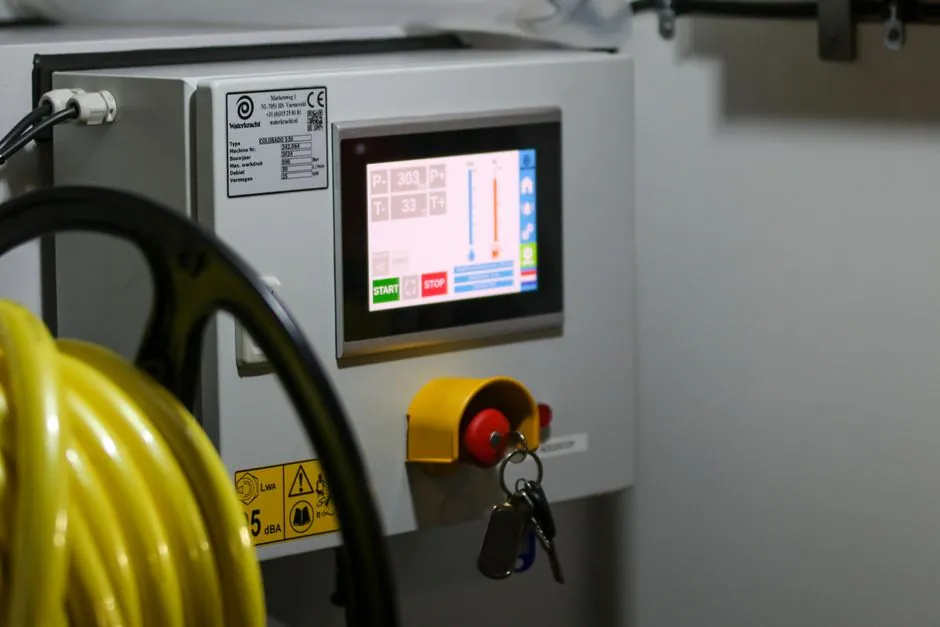
LEIBINGER batch coding machines use continuous inkjet technology, in which a continuous stream of tiny ink droplets is directed onto the print surface [S1].
For a line specified at 120 packs/min, the required coding rate is 2 codes/s, but the complete code, product gap, print area, substrate, ink, sensor, and printhead standoff must be validated under production conditions [S2].
Convert Pack Rate Into Code Rate
A 120-pack/min line requires 120 codes/min, or 2.0 codes/s, before any allowance is made for startup, rejects, stoppages, or a reduced run rate. The selection condition is straightforward: the code must remain legible within the machine operating range for that product and format [S2].
Speed must be checked against every pack format on the line. A 500 ml bottle can pass faster than a 1.5 L bottle, while the larger bottle may provide less clearance around the printhead. Record maximum conveyor speed, product gap, coding area, and full code for each format [S2].
Published performance figures are not interchangeable. Linx offers lot-code solutions capable of printing onto nearly any material or product at high speed, with multiple lines of text [S5].
Choose The Marking Principle
Continuous inkjet is appropriate for non-contact marking of variable data on moving packs, including batch numbers, dates, serial numbers, barcodes, and QR codes. LEIBINGER batch coders use a continuous stream of ink droplets whose deflection creates fixed or variable marks such as text, logos, and barcodes [S1].
Separate Inline And Offline Coding
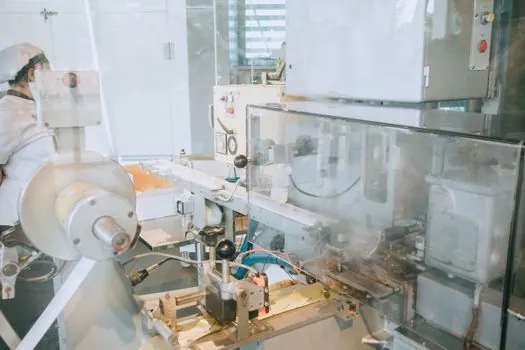
Inline batch coding machines are installed directly on production lines and print as bottles, jars, cans, boxes, or pouches move past the coder. Offline systems code packaging before filling, using a carton feeder to present flat cartons or sleeves to a printer, commonly thermal inkjet [S4].
Inline continuous inkjet suits high-speed, high-volume production because it marks non-contact during movement. Offline TIJ provides flexibility for smaller runs and items that are difficult to code while moving, but it introduces feeding, positioning, and transfer steps that are absent from a direct inline arrangement [S4].
The coding machine is the right equipment class when variable batch, production, expiry, or serial data must be applied directly to a pack. It is not interchangeable with a carton erecting or case packing machine, which build and group packages rather than print variable identity data.
At 120 packs/min, a line with fixed positions can use a product sensor for individual triggers, whereas continuously moving film or cable requires a stable path past the printhead. For flexible materials, sideways movement shifts the code position and vertical or lateral cable movement changes the printhead distance [S2].
Validate Ink Against The Pack
PET bottles, glass jars, aluminium cans, and metal parts do not absorb ink, so adhesion and transfer resistance must be established on the actual surface. Apply the code, allow the same drying time available on the line, and then handle the pack as production does [S2].
A rejected ink setup may transfer during contact with another bottle, smear against a guide, or wipe from the surface. That failure mode is especially relevant at 2.0 codes/s because every pack can become a visible defect rather than an isolated reject [S2].
Linx also specifies ink ranges for durable codes across different materials and through processes such as sterilization [S5].
The related decision on coding machine ink compatibility by substrate should be completed before a production trial, because a speed rating cannot compensate for transfer, poor contrast, or an unstable marking surface.
Account For The Coding Environment

At 120 packs/min, a printhead is exposed to approximately 7,200 product detections per hour when one trigger is used for every pack. Dust can settle on the printhead, product sensor, cooling openings, connectors, and exposed controls, while a coder mounted below a dusty conveyor can receive more contamination than one positioned away from product discharge [S2].
Water and washdown impose a separate enclosure requirement. An IP65 option does not remove the need to locate the coder away from dust accumulation or to verify material compatibility in the actual installation [S2].
For continuous inkjet, unplanned loss of the ink circuit is a specific reliability concern.
Build A Production Acceptance Test
Acceptance testing should use the fastest scheduled pack format at 120 packs/min, including its minimum product gap and the complete production code. Record conveyor speed, code rate, trigger behavior, print position, printheight, standoff distance, ink behavior, and legibility over the intended production window [S2].
Use samples for quality checks that reflect the actual code, including multiple lines, a barcode, or a QR code where applicable. LEIBINGER supports printing plain text, barcodes, QR codes, logos, and other symbols, while Linx lists Data Matrix, QR, and GS1 code-builder functions across its coding families [S1][S5].
Two operating checks are trackable: whether every pack receives one complete code at 2.0 codes/s, and whether the code remains legible after the available drying interval, contact with guides or neighboring packs, and the normal cleaning exposure. Any transfer, smearing, missed trigger, or position drift is a failed setup even if the coding machine meets its published maximum speed [S2].