Anritsu AW9 Series checkweighers provide five models with maximum rates from 400 to 1,000 products per minute and listed maximum conveyor speeds of 110, 132, 165, 180 and 180 m/min [S4].
The AW9 models have maximum rates of 400, 540, 720, 900 and 1,000 products per minute, while another source describes rejection mechanisms supporting throughput exceeding 150 pieces per minute [S4][S6].
Throughput Classes for High-Speed Packaging Lines
Anritsu identifies the AW9 Series as suitable for ultra-high-speed packaging lines for lightweight products, with maximum rates ranging from 400 to 1,000 products per minute [S4].
These figures are not interchangeable capacity claims: the AW9 figures apply to five specified configurations, whereas Wipotec describes the broader E-M-A series without assigning it a specific maximum rate in the supplied excerpt [S4][S5].
AW9 Model Limits Explain the Speed Difference
The AW9 KWA7241APANN model handles 1,000 products per minute at a maximum conveyor speed of 110 m/min, while KWA7245APANN handles 400 products per minute at up to 180 m/min [S4].
The five-model comparison gives maximum product rates of 1,000, 900, 720, 540 and 400 products per minute. Their conveyor-speed limits are 110, 132, 165, 180 and 180 m/min, respectively, and their weighing-conveyor widths range from 70 to 100 mm [S4].
AW9 weighing-conveyor lengths progress from 100 mm to 120, 150, 200 and 270 mm. All five models cover a 1.2 to 660 g weighing range with a 0.002 g scale interval and a stated maximum accuracy of ±0.006 g at 3σ [S4].
AW9 product speed and accuracy vary with the item being weighed and the rejector, while maximum rejector discharge weight also changes with production speed. Therefore, the headline pieces-per-minute rating should be treated as a configuration limit rather than an unconditional production guarantee [S4].
Comparing Published Speed Classes
A comparison by published capacity, belt speed and operating scope shows that checkweigher selection cannot be reduced to a single pieces-per-minute figure. [S5]
The comparison makes the selection trade-off explicit. AW9 provides the highest published product rate and discloses model-level belt speeds, the Mettler Toledo specification covers the broadest stated environmental range, and Wipotec presents a mid-to-high capacity range of up to 650 pieces per minute [S2][S4][S5].
Selection Criteria for a High-Speed Line
A checkweigher must be rated above the planned peak line rate, and product dimensions, weight and spacing determine which of the five AW9 models is technically appropriate [S4][S9].
Conveyor speed alone is not a valid proxy for throughput. The AW9 demonstrates this directly: the model reaching 1,000 products per minute has a maximum belt speed of 110 m/min, while the 400-products-per-minute model reaches 180 m/min [S4]. Product spacing, geometry, stabilization time and reject performance interact with belt velocity.
For high-speed pneumatic rejection, automatic rejection systems can sustain throughput above 150 pieces per minute without creating the designed rejection bottleneck [S6]. Reject timing must also match the product path: AW9 includes a reject-timing correction function that detects a product on the rejection conveyor and corrects the timing when conveyance is disrupted during transfer [S4].
Product Weight, Accuracy and Reject Capacity
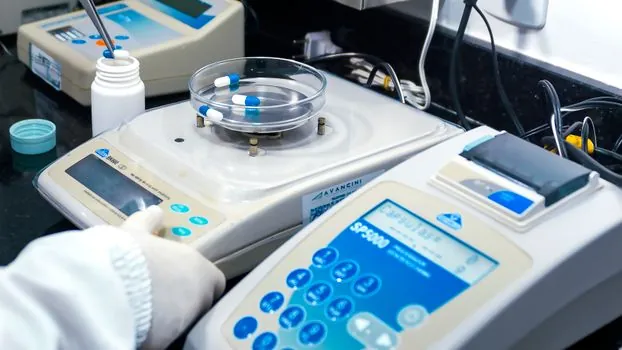
A dedicated air-blast rejector is one AW9 feature, while product disturbance can reduce weighing stability at elevated conveyor speeds. A vibration-resistant frame is included to address the mechanical disturbance associated with ultra-fast operation [S4]. For lightweight packages, air-blast rejection pressure must be set against product mass and rejection reliability rather than selected from line speed alone.
Where Multiple Checkweighers Make Sense
Multiple checkweighers can preserve throughput and accuracy by dividing one production line into parallel weighing paths, although each checkweigher then handles a lower product rate [S7].
This arrangement is useful when a single machine's rated rate is below the required line output, but it adds mechanical, control and reject-system complexity. It also avoids treating an advertised 1,000-products-per-minute rating as if that capacity were available for every product [S4][S7].
The AW9 product lineup comprises five models, five maximum throughput levels from 400 to 1,000 products per minute, five listed maximum conveyor speeds of 110, 132, 165, 180 and 180 m/min, and five weighing-conveyor lengths from 100 to 270 mm [S4].
Operational Limits and Line Integration
High-speed checkweighing supports hundreds of items per minute, but sustained line performance depends on accurate weighing, product presentation and timely rejection rather than conveyor speed alone [S3][S4].
Checkweighers can be integrated with filling machines, labeling systems, conveyor belts and central control systems, creating a sequence in which products are weighed, filled, labeled and packaged with less manual intervention [S3]. Data logging and reports provide an audit trail for the weights recorded on regulated lines [S3].
The practical specification is therefore a verified rate under the real product condition. For an AW9 application, the 400 to 1,000 products-per-minute range is bracketed by model limits, with the 1.2 to 660 g weighing range, 0.002 g scale interval, product dimensions, spacing and rejector discharge capacity included in the final selection [S4].
The next verification step is to run the intended package at the planned peak rate, measure settled weighing performance, verify rejection timing and record the sustainable pieces per minute without exceeding the 180 m/min maximum belt speed shown in the AW9 range [S4].