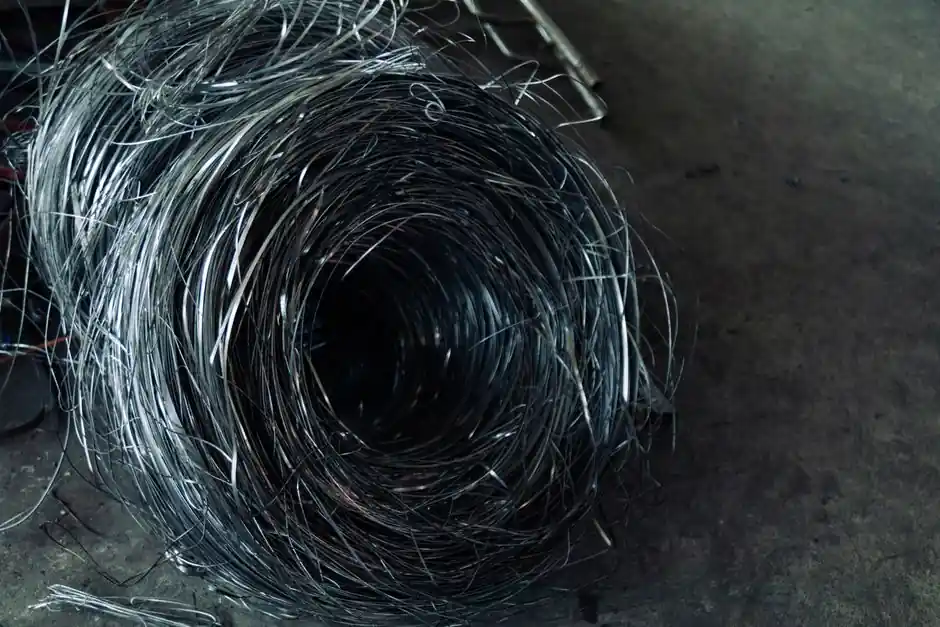
Coil rebar can reduce fabrication loss and handling cost per ton, but scrap savings cannot be separated from the approximately US$40 per ton rebar premium over hot-rolled coil observed in the US market [S1].
The comparison applies to deformed reinforcing steel supplied as spooled coil or straight lengths, with steel content, grade, diameter, delivered location, and fabrication method controlling the final cost per metric ton.
What changes between coil rebar and straight rebar
Coil rebar and straight rebar are the same basic product, but the supply form changes how the fabricator receives, stores, cuts, bends, and installs the steel.
Coil form generally suits projects with many bars of repeated length, automated cut-and-bend equipment, and direct truck or rack unloading. Straight bar fits small work areas, manual fabrication, short bar lists, and projects needing individual lengths immediately.
These benefits describe production and material utilization, not an automatic mill-price discount. A buyer comparing quotations should normalize both options to one basis: US dollars per metric ton of accepted steel delivered to the fabrication or jobsite.
Scrap rate comparison: cut loss versus reusable offcut
Actual loss depends on bar diameter, grade, required lengths, stock lengths, cutting accuracy, end allowances, and whether remnants return to the shop for reuse [S2][S3].
If a required 10 foot bar is cut from a 20 foot straight length, one usable 10 foot length remains and no end scrap is created. A required 19 foot bar from the same 20 foot length leaves a 1 foot remnant that may be reusable, but its value depends on the next cutting plan.
For a defensible calculation, record starting mass, accepted fabricated mass, reusable remnant mass, and true scrap mass separately. The process scrap rate is true scrap divided by starting mass, while the material utilization rate includes accepted bars plus inventory-controlled reusable remnants. Mixing these two measures makes a low reported loss rate look better than the physical result.
Cost per ton: build the delivered comparison

A US rebar conversion cost model dated September 2026 estimates US$663.99 per tonne for approximately 12 mm deformed bar produced by a notional 250,000 tonne per year mill buying billet at US$580 per tonne. The model includes US$609.00 per tonne of billet cost, US$10.50 for delivery, US$25.00 for manpower, US$8.75 for natural gas, US$8.05 for electricity, and a negative US$12.56 scrap credit [S4].
The 2026 rebar conversion cost model lists a total cost of US$663.99 per tonne, comprising US$18.75 per tonne of fixed costs and US$645.24 per tonne of variable costs [S4].
Market pricing also varies by region and delivery term. Rebar prices are quoted per metric ton under terms such as EXW, FOB, CFR, or CIF, but those mill or export prices exclude some freight, duties, inspection, certification, currency exposure, and delivery risk [S3]. Buyers should evaluate landed cost rather than supplier price alone because supplier price may exclude freight, import duties, certification and inspection, currency exposure, and delivery risk [S3].
Decision matrix for procurement and fabrication
On purchase price, coil and straight rebar do not have a universal advantage: the same mill can price both to grade, size, quantity, and delivery schedule, and the observed US rebar premium over HRC was about US$40 per ton [S1].
Who benefits from each supply form

Coil rebar is for fabricators and contractors that repeatedly cut similar bar lengths, operate a cut-and-bend line, or want high material yield from a continuous coil. It is not the natural choice for a small job with limited equipment because the savings from better nesting may be consumed by freight for heavier spools and by coil-handling requirements. [S2]
Straight bar is for crews needing individual bars, small order quantities, manual fabrication, or sites with constrained access. It is also appropriate where an approved supplier cannot guarantee coil availability, grade certification, delivery sequence, or compatibility with the fabricator’s straightener and feeder.
Equipment selection should be matched to the intended feed form. A rebar straightener is relevant where coiled bar must be formed into usable straight lengths, while a rebar cutter is relevant to controlled cut lists and scrap measurement. Automated cutting is only advantageous when setup, nesting, maintenance, and remnant tracking are included in the comparison.
Limitations, contamination, and working-use controls
Rust, adhering concrete, mixed steel grades, paint, galvanizing, and unknown reinforcement can degrade reuse value or prevent direct reuse of demolition steel. Collection, inspection, sorting, processing, melting, purification, and solidification are the main stages identified for recycling reinforcing steel, and material that remains in poor condition is separated before reprocessing [S5].
Reported relative brittleness of some scrap rebar makes direct reuse of unknown demolition material inappropriate without testing and engineering acceptance [S5]. Even mill-produced rebar made from scrap requires mechanical-property and chemical-composition control. Higher-grade products such as B500B, B500C, or ASTM Grade 60 can require tighter composition control, additional testing, and greater compliance cost [S3].
The 2023 study on locally produced reinforcing steel notes that rebar is commonly made from scrap and cites an example in which India produced 50% of its rebar from scrap steel [S6]. That figure describes a national production route, not the scrap content of every rebar order. Procurement should therefore request mill certificates, grade, standard, heat or lot traceability, and conformity documentation rather than infer recycled content from the word “scrap.”
Quote comparison method for one project
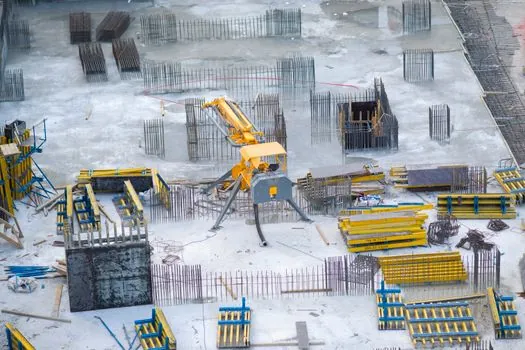
A controlled comparison should use the same grade, diameter, certification, delivery date, destination, and accepted tonnage for both formats. Obtain at least two coil quotations and two straight-bar quotations, then convert every offer to US dollars per metric ton delivered [S3]. Add coil freight, unloading, straightening, feed setup, expected true scrap, and disposal to the coil column; add delivery, manual cutting, end scrap, and storage to the straight-bar column.
Use the observed purchase market only as a sanity check. US rebar spot prices were approximately US$900 to US$910 per ton FOB domestic mill in November 2025, while HRC was US$840 to US$875 per ton, confirming that rebar was priced above flat steel despite both being steel products [S1]. The same date basis matters because comparing a 2025 mill quote with a 2026 model or procurement budget creates false precision.
Track three signals for the next purchase: true scrap mass divided by starting mass, fabrication hours per accepted ton, and delivered cost per accepted ton. If coil remains higher by less than the verified value of yield and labor savings per ton, select straight bar; if the premium is exceeded and handling capacity is available, coil is the stronger industrial choice. The decision should therefore be based on measured project data, not a generic claim that one format always produces less waste.