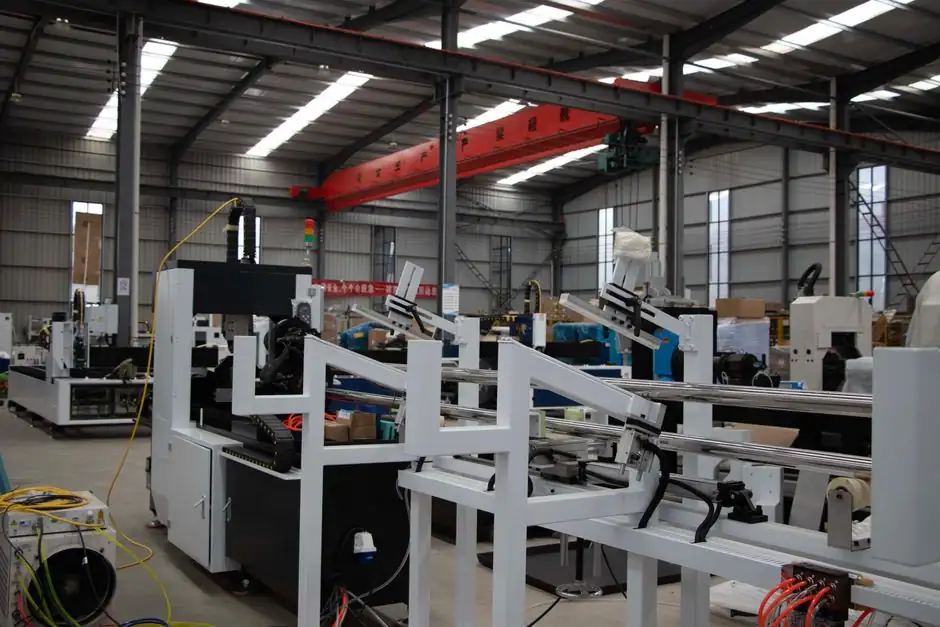
In foundry practice, the words "blowing" and "shooting" describe two mechanically different ways of putting bonded sand into a core box, and the distinction is encoded in the machine class, the sand state, and the box temperature [S3].
The cold box (PU) process, introduced by Ashland Chemicals in 1968, accounts for over 60% of sand-core production in Europe, which is why the blowing vs shooting question keeps coming up on production-engineering forums [S5]. This article lays out the mechanical, thermal, and process-control differences, with criteria so a process engineer can match the machine to the part.
What each machine class actually does
Core blowing and core pouring machines handle flowable, dry shell-mould material; the dry sand is poured or blown into a hot core box held between 250 and 350 °C, and a low pressure of 0.2 to 0.4 MPa is enough to fill the cavity because the resin-coated sand flows easily [S3]. Core shooting machines, by contrast, project the mould material at high speed so that a limited volume of compressed air expands suddenly inside the box, which packs the sand against the contour; both damp and dry mixes can be shot into either cold or hot boxes depending on the binder system [S3].
The German foundry lexicon groups the equipment into three families: blowing/pouring machines for dry, free-flowing shell sand, shooting machines for damp cold-box mixes and dry hot-box mixes, and continuous mixers for dry bulk feed [S3]. For a quick reference of the cold box core machine class used on most PU lines, the same source treats the cold-box workflow as a two-stage job, shooting followed by amine gassing, with the gassing head (GS = supply source, gas pipe, gassing head) brought in only after the shooting unit has retracted [S3][S5].
Pressure, sand state, and box temperature compared
The deciding variables are inlet pressure, sand flowability, and box temperature, and the table below lines them up against the three common machine types using values that appear in the source material [S1][S3]:
Cold core shooter (PU no-bake, cold box): sand pre-mixed with two-part phenolic/isocyanate resin binder; shot at high velocity into a cold core box; cure via amine gassing (TEA/DMEA) and air purge; no added heating of the box; box clamped hydraulically to resist shooting and gassing forces [S1][S3][S5].
Hot core shooter (hot box): resin-coated sand shot under pressure into a pre-heated core box; the box heat cures the resin; heating temperature and curing time are adjustable per resin system; typically used where higher dimensional accuracy is required [S1].
Shell core shooter (Croning): dry, resin-coated sand dropped or blown at low pressure (0.2-0.4 MPa) into a hot core box at 250-350 °C; layer thickness set by dwell time, usually 40-120 s; the uncured sand returns to the hopper for reuse, leaving a sintered shell bonded to the contour [S3]. The hot box core machine line overlaps this technology but uses a fully filled, thermoset-cured core rather than a thin shell.
Process sequence inside a PU cold box shooting cell
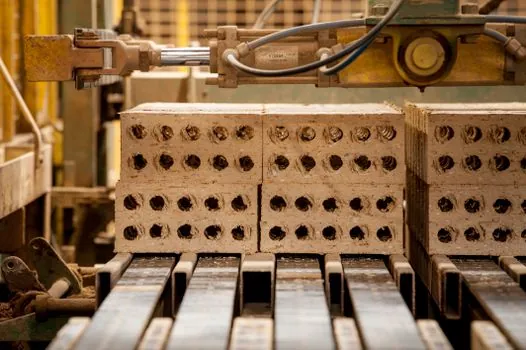
A typical cold-box coremaking machine has a hopper, shooting nozzle, core box, vent system, and a gassing system comprising the supply source, gas pipe, and gassing head, all governed by a process-control unit that sets air pressure, shooting time, amine quantity, and curing time [S5]. The binder is a two-component system: phenol-formaldehyde (P1) and isocyanate (P2), mixed with the sand inside the hopper just before shooting [S5].
Stage one is shooting: air pressure applied to the hopper drives the sand-binder mix through the nozzles into the core box; the box is clamped during both shooting and gassing so it does not move under the impulse load [S3][S5]. Stage two is curing, which itself has two sub-stages: amine gassing, where high-pressure air carries a tertiary amine catalyst into the box to harden the loose mix, followed by air purging, where clean compressed air is fed through the vents to sweep out residual amine [S5]. Poor sealing of the gassing plate, incomplete purging, and under-cure are the three failure modes most often flagged in technical webinars on cold-box shooting and curing [S4].
Common technical challenges and where simulations help
Complex cold-box cores are particularly prone to incomplete cure, which shows up as soft spots, low tensile strength, or veining in the casting; simulation work published in 2025 used an augmented simulation approach to map the curing stage against measurable bench data [S4][S5]. MAGMASOFT and FLOW-3D CAST both model the cold-box workflow alongside hot box and inorganic binder systems, and both let engineers vary shooting characteristics such as sand density, air pressure, and gassing time before cutting tooling [S4][S6].
For an at-a-glance sense of how the same sand-binder mix behaves under different cure regimes, the warm box vs hot box curing logic comparison breaks down catalyst chemistry and bench temperatures, which is a useful reference when the question is whether to add a heated platen to an existing cold-box shooting cell. The broader machine-class map, including cold chamber die casting where metal rather than sand is the working fluid, is kept on a separate page so the sand-side and metal-side references do not get conflated.
Selection criteria: when blowing is the right call vs when shooting wins

Choose core blowing (or pouring) when the mould material is dry and free-flowing, the binder is thermally activated (Croning/phenolic resin-coated sand), and the box is held at 250-350 °C; the low inlet pressure of 0.2-0.4 MPa is enough because flowability does the filling [S3]. Choose core shooting when the mix is damp (cold-box PU, no-bake, or sodium-silicate/CO2), the box is cold or only mildly warm, and you need the kinetic compaction of a high-velocity impulse to hit density and surface-finish targets [S1][S3].
For a PU cold-box line, the shooting machine is mandatory: the two-part resin is mixed in the hopper and must reach every cavity before the binder starts to react, which only a high-velocity shot delivers reliably; a blower would let the mix stratify and leave soft patches [S3][S5]. For a shell (Croning) line, a blower or pour-blow unit is preferred, because the dry coated sand needs to contact the hot contour without being over-compacted, and the 40-120 s dwell time controls shell thickness [S3]. Hybrid cells that share a single frame between a shooting head and a gassing head are the norm on PU lines, and the curing sub-stages are the same regardless of whether the box is vertical or horizontal [S3][S5].
What to verify on the shop floor before quoting a machine class
Confirm the binder system, because the wrong machine class on the wrong binder is the most common root cause of scrap; PU cold box always pairs with a shooting unit plus amine gassing, hot box always pairs with a shooting unit into a pre-heated box, and Croning always pairs with a blowing/pouring unit into a box at 250-350 °C [S1][S3][S5]. Confirm the box material and parting line, since the shooting unit presses onto the box and the gassing plate has to seal against it; wood, plastic, and metal tools are all used, with material choice driven by series size [S3].
Confirm the process-control parameters that the machine has to log and repeat: air pressure, shooting time, amine quantity, curing time, and purge duration, all of which are standard inputs on a modern PU control panel [S5]. Confirm the simulation toolchain, because cold-box shooting and curing can be modelled numerically to cut the trial loop, and both MAGMASOFT and FLOW-3D CAST offer cold-box workspaces that sit alongside hot box and inorganic modules [S4][S6]. The next signal to track is the 2025-era augmented-simulation literature, which is starting to replace trial-and-error amine-quantity tuning with virtual DOE, and the cold-box curing review published in 2024-2025 is the entry point [S5].