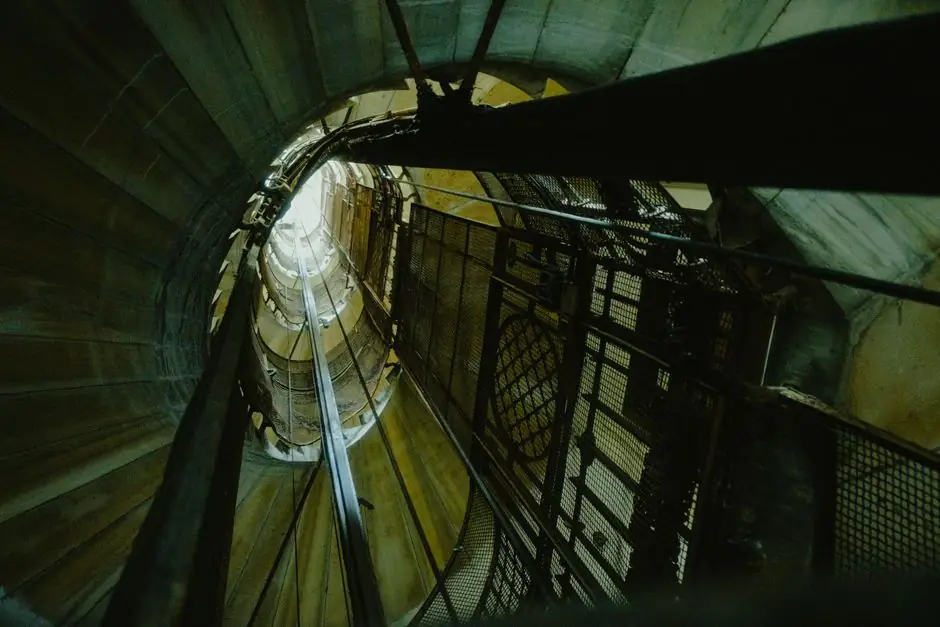
Charge hanging and bridging in a cupola shaft are physical obstructions inside the melting column that interrupt the steady descent of the burden, most often triggered by a combination of oversized scrap, uneven layering, low coke-bed temperature, and slag/refractory accretion inside the stack.
The cupola is a vertical shaft furnace in which alternate layers of metallic charge, coke fuel, and limestone flux are fed through a charging door, preheated by ascending combustion gases, and melted as the burden descends past tuyeres located above the hearth; typical internal diameters run 450-2000 mm and melt rates 1-30 t/h [S4]. A stable bed height and uniform permeability are what keep that counter-current flow going, and any disturbance of those two parameters is what produces a hang or a bridge.
Sizing, Geometry, and the 1:3 Rule for Charge Length
Charge length should not exceed roughly one third of the cupola internal diameter; pieces longer than that bridge across the shaft, lock against the refractory, and form a self-supporting arch that the descending column cannot break [S4]. For a 1000 mm (about 40 in) ID cupola, that ceiling sits near 330 mm (about 13 in) per piece, and the same ratio scales to 600 mm for 1800 mm (about 70 in) furnaces.
Bulky returns such as heavy steel plate, ingot butts, and large machine-shop scrap are the usual offenders, because their flat faces mat together and the coke fines that should separate each layer cannot penetrate the pile. Foundry practice is to shear, flame-cut, or break such returns so no single piece approaches the 1:3 limit, and to keep the charge-to-coke layering sequence as strict as the furnace geometry allows [S5]. For background on the cupola furnace anatomy that this ratio protects, the shaft stack is essentially a refractory-lined cylinder whose only function is to let gas up and burden down; any lump that breaks that geometry breaks the furnace.
Coke Bed Height, Blast Rate, and Thermal Sticking
A low coke bed or an under-coked charge column drops the melting-zone temperature below the threshold where slag stays fluid, and the half-melted pasty mass then glues adjacent pieces of metal together instead of letting them drip freely into the hearth; this is the thermal half of every hang [S3]. The cure sits in the C-burnt:iron ratio (the more accurate name for what old texts call the coke:metal ratio), which is held in a narrow band of roughly 8-12 percent for most gray iron work, with higher values for cold-blast, lower for hot-blast operation.
Blast rate ties directly to the same symptom: at a fixed C-burnt:iron ratio, raising blast volume raises both melt rate and metal temperature, and the same lever that pushes the tap temperature up also keeps the pre-melt zone above the slag-freezing point so the burden keeps sliding [S3]. When operators instead reduce blast to slow the furnace, the melting zone cools, slag viscosity spikes, and the column stalls; conversely over-blowing without re-coking punches hot spots through the bed and burns the bottom out of the coke layer, after which the charge above sags onto a thin ash floor and re-bridges. Refractory choice compounds this: an acidic lining (universal in North American cupolas) is eaten by basic slag, while a basic lining is eaten by acidic oxides, so the lining-slag pair must be matched or the working lining thins unevenly and creates a shelf that traps descending scrap [S2].
Burden Distribution, Flux Placement, and Limestone Function

Even burden distribution depends on charging the same weight of metal, the same weight of coke, and the same weight of limestone on every cycle, then dropping the bucket close to the centre of the stack so the cone builds symmetrically; an off-centre charge leaves one side of the column permeable and the other packed tight, and the tight side bridges first [S5].
Limestone flux (typically 3-5 percent of the metallic charge) belongs in a discrete layer on top of each coke layer, never mixed into the metal layer, because the flux's job is to flux the coke ash and the iron oxide scale (FeO) generated as the burden descends, and the CO2 it releases also helps cool the upper stack. When the flux is dumped with the metal, it sits on cold scrap, never reaches operating temperature, and the resulting slag arrives at the tuyeres as a viscous high-melt that freezes on the walls and progressively narrows the shaft. Operating discipline around shaft fastening of the charging-door skip and shaft collar alignment of the charging platform directly controls how concentric each layer lands, and a mis-level skip is one of the silent causes of a one-sided bridge.
Refractory Build-up, Scaffold Formation, and Tramp Accretion
Refractory build-up, scaffold formation, and tramp-element accretion are the chronic, slow-acting causes that turn a one-off hang into a recurring outage. Scaffold is a layered mass of half-fused sand, slag, and metal that grows on the working lining wherever the gas flow stagnates, and once a scaffold reaches a few hundred millimetres of radial thickness it cuts the effective ID and forces a smaller charge size, which then raises the unit cost of melting [S1].
Tramp-element accretion is a related but distinct mechanism: copper, tin, chromium, and other non-ferrous residuals in mixed shop scrap form high-melting intermetallics that do not dissolve in the iron bath and instead plate out on the walls, on the tuyeres, and on the coke; these accretions act as rebar inside a scaffold and make the bridge mechanically far stronger than a slag-only one. Acidic oxide build-up from an over-basic slag, or vice versa, is the third leg: a slag that is not chemically matched to the lining attacks the hot face, and the dissolved refractory redeposits a few centimetres downstream as a glassy ring that the next charge catches on. Operators read these problems off the backpressure trace (a rising baseline with the same blast volume) and off the tuyeres going dark one at a time as the gas redistributes around the obstruction [S2].
Comparison of Main Charge-Related Faults and Their Cures

Foundry engineers separate the four common charge-side faults by the symptom they produce and the parameter they are tied to; the table below condenses the decision logic a melter runs at the charging platform. [S2]
Fault vs. dominant cause vs. typical signal vs. corrective action: (1) Oversize scrap, dominant cause 1:3 length-to-diameter violation, signal arches of unmelted metal visible at charging door after blast-on, action shear or cut returns to under one third of ID. (2) Low bed temperature, dominant cause C-burnt:iron ratio below 8 percent, signal tap temperature drops 30-50 degrees F and tuyeres darken, action add 50-100 kg coke per charge until ratio restored. (3) Off-centre burden, dominant cause skip misalignment or door operator inattention, signal one side of bed drops faster than the other, action re-level skip and re-train door operator. (4) Scaffold on lining, dominant cause acidic/basic lining-slag mismatch, signal rising backpressure and falling melt rate at constant blast, action shut down, water-quench, and mechanically chip the working lining before re-lining.
The cure that catches all four at once is a documented burden card per cupola diameter, listing piece-size limits, charge weights per bucket, and the coke/iron/limestone sequence; when the card exists and is followed, charge hangs drop from a weekly occurrence to a once-a-quarter event on most gray-iron cupolas [S5].
Operator Signals, Detection Windows, and Recovery Actions
The 30-60 minute residence time of a charge in a working cupola is the fundamental delay that makes early detection valuable, because a hang detected in the first ten minutes can often be cleared by poking the charge through the charging door with a bar, while one detected at tap-out requires a controlled shutdown [S2]. The backpressure trace, the tuyere-eye colour (bright orange versus dull red), the audio pitch of the blast, and the water-out temperature of any cooling ring are the four live signals the operator uses.
A rising backpressure with falling tap temperature is the classic signature of scaffold growth, while a sudden backpressure spike with steady tap temperature usually means a single large piece has bridged and can be cleared by rodding. Operators also watch the checking and testing apparatus outputs (CO/CO2 ratio in the stack gas, chill-test wedge on the floor) for early drift, because both shift before the iron chemistry does and give a 15-20 minute lead time on a developing hang. Where the cure is structural, replacing a 25 mm (1 in) thick scaffolded lining section back to its design 115-150 mm (about 4.5-6 in) refractory thickness restores the original shaft cross-section and the original charge-size allowance.
Trackable signals for the next operating cycle: hold a tight 1:3 length-to-ID charge limit, keep the C-burnt:iron ratio inside the 8-12 percent band, and watch the backpressure trace for any baseline drift above about 5 percent between campaigns. Related coverage on the upstream side of the same melt shop is in Water-cooled copper tuyere leak detection: flow-meter spec, alarm thresholds, and 2026, and the post-melt discharge behaviour that the burden drop enables is laid out in Vibrating vs Rotary Shakeout Machine: Foundry Selection Guide.
