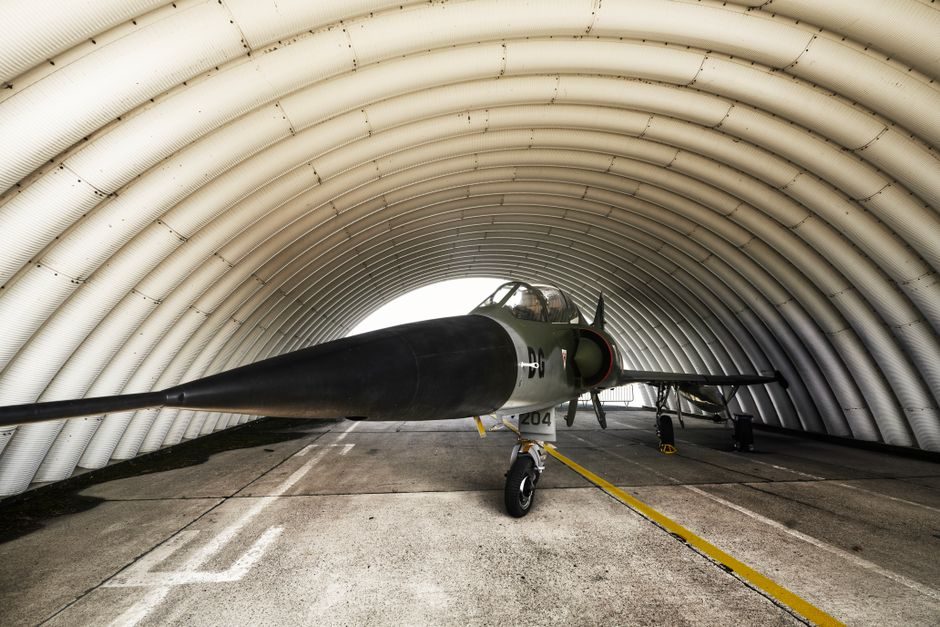
A cold box core shooter sized for aerospace-class cores — turbine blade clusters, combustor liners, investment-cast master patterns — typically needs a 50-100 L shot chamber, 0.4-0.7 MPa shooting pressure, and a core box envelope of 600×500×400 mm minimum, with PLC-controlled amine/CO2 purge sequencing per foundry process specs [S1].
Indian and Chinese shops running aerospace tier-2/3 work now list rotary cold box, universal cold box, and CO2-cured variants from one Pune-based manufacturer portfolio [S1].
Why Cold Box, Not Shell, for Aerospace Sand Cores
Shell core shooters cure phenolic resin at 200-280 °C on a heated pattern plate, which is fine for high-volume automotive and pump bodies but tight for aerospace thin-wall cores where thermal distortion warps the print beyond ±0.20 mm [S1][S6].
Cores cure cold, hold ±0.10-0.20 mm on most aerospace prints, and strip without heat-induced stress — a core reason cold box dominates the flight-critical casting tier.
Process-engineer view: pick cold box for blade clusters, nozzle vanes, and combustor liner cores where the print survives a 1500 °C pour; pick shell for exhaust manifold and gearbox housings where production rate, not surface flatness, is the binding constraint.
Decision Criteria: Shot Size, Box Envelope, and Cure Sequencing
Three numbers gate a cold box core shooter for aerospace: shot chamber volume (L), blowing pressure (MPa), and core box platen size (mm). The Pune-based manufacturer portfolio explicitly lists Rotary, Universal, and Top-Blow configurations to cover that envelope range [S1].
Typical aerospace spec bands and the rationale behind each:
• Shot chamber 50-100 L: covers 5-25 kg core weight range needed for single-piece turbine blades up to small combustor liner segments; below 30 L, you cannot blow a 10 kg chromite core in a single shot without density gradients.
• Blowing air 0.4-0.7 MPa at 0.5-1.5 m³/min: the pressure window that drives resin-coated sand into thin-section prints (1-3 mm web) without gas-pocket voids; below 0.4 MPa leaves underfills, above 0.7 MPa blows the box seal and causes flash.
• Platen/box envelope ≥ 600×500×400 mm: matches the cluster-core sizes typical of HPT blade, combustor, and inlet guide vane work; smaller envelopes force parting-line splits that add print-shift tolerance stack-up.
• PLC amine/CO2 purge sequence with 3-5 gassing ports: required for uniform cure across the box; a single-port gun works on toy cores but leaves soft centres on 10 kg+ aerospace cores.
Type Comparison: Rotary, Universal, and Top-Blow vs Dedicated Hot Box
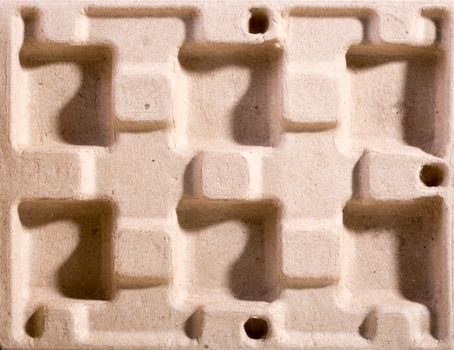
Four variants compete for the aerospace sand-core slot. A side-by-side look at the decision criteria process engineers actually use: [S1]
• Rotary Cold Box Core Shooter: 4-station rotary table, 30-90 s cycle, best for medium-to-high volume of small-to-mid cores (5-15 kg). Tooling cost is high, but per-core cost drops fast on runs above 10 000 cores/month [S1].
• Universal Cold Box Core Shooter: single-station, swing-arm or roll-over design, flexible box changeover, best for low-volume aerospace tier-1 work where changeover time dominates. Cycle 45-120 s [S1].
• Top-Blow Cold Box Core Shooter: vertical blow head above the box, gravity-assisted fill, good for deep-draw thin-section prints, lower blowing-pressure demand (0.3-0.5 MPa), but limited to 60-70 L shot class.
• Hot Box Core Shooter: phenolic resin cured at 200-260 °C on a heated pattern — faster cycle (20-40 s) but thermal distortion of thin-section prints rules it out for blade-cluster cores [S6].
For aerospace foundries running a mix of prototype, low-rate production, and steady-state output, the Universal configuration is the most common starting point because it takes a 600×500×400 mm box without retooling cost — a similar flexibility logic to how expansion joint selection hinges on movement envelope and material band rather than a single spec.
Use Cases: Turbine Blades, Combustor Liners, and IGV Clusters
Aerospace sand-core applications that the cold box process serves well share three traits: thin walls (1-3 mm), high dimensional accuracy (±0.15 mm or better), and thermal-shock survival through a 1450-1550 °C pour. [S2]
Real work-horse applications:
• Combustor liner cores: large thin-wall cores (300-800 mm length, 2-4 mm wall), 10-30 kg, often backed by a refractory coating; shot capacity ≥ 60 L and box length ≥ 700 mm typically required.
• Inlet guide vane clusters: complex multi-cavity core prints, 5-10 kg each, shot from a 30-50 L chamber, cure uniformity gated by ≥ 3 gassing ports.
• Investment-cast master patterns: large silica-sand cores used as wax-pattern backers; same 50-100 L class machine, but binder loading drops to 1.0-1.2 % to keep burnout clean.
For foundries branching from automotive to aerospace, the binder-system upgrade (phenol-urethane Part 1/2 to amine gas cure) and shot-capacity step-up (20-30 L to 50-100 L) are the two real hardware blockers; the rest is process tuning, which is why cold box core machine spec work is the main engineering gate.
Limitations, Failure Modes, and What a Cold Box Will Not Do

Cold box cores have four hard limits on aerospace work that engineers should write into the URS before vendor talks. [S3]
• Amine scrubber / ventilation: tertiary amine gassing requires a wet scrubber, ≥ 2 000 m³/h exhaust, and operator amine-vapour monitoring; without it, the bench is a regulatory non-starter under most plant-safety codes.
• Shelf life of mixed sand: 1-4 hours from mixer to box; aerospace cores with 5-15 kg mass and intricate thin sections have very little rework window, so sand-to-bench cycle time must stay tight.
• Not for ≥ 50 kg single cores: shot chamber physics, blowing-pressure distribution, and gas-cure uniformity all break down above that mass; for large single cores, switch to hand-rammed core box or bonded sand assembly.
• Print-shift on parting line: ±0.10-0.20 mm across the parting line is achievable; tighter than that requires matched-metal tooling and pin-located boxes, which is an added cost item often missed at the URS stage.
A useful cross-reference point: the spec-band and sourcing-window logic in ISO 20ft tank container selection is similar — capacity, pressure rating, and material band drive the URS, not the vendor's catalogue page.
Sourcing Map: Where the 50-100 L Class Machines Sit in 2026
The 2026 sourcing map for cold box core shooters in the aerospace-capable class is dominated by Indian (Pune cluster) and Chinese (Shandong, Jiangsu, Zhejiang) shops, with German and Italian brands holding the high-end ±0.10 mm tolerance slot. The Pune-based manufacturer portfolio explicitly covers rotary, universal, top-blow, and roll-over variants under one roof, which is the kind of supplier footprint aerospace tier-2 buyers favour for spares and field service [S1].
Process-engineer sourcing checklist for 2026:
• Confirm shot chamber volume matches the heaviest single-core job (50 L minimum for mid-class turbine, 100 L for combustor liner class).
• Confirm blowing pressure 0.4-0.7 MPa and PLC amine/CO2 purge sequencing (3-5 gassing ports, 1-3 s gassing, 30-60 s purge).
• Confirm box platen size 600×500×400 mm or larger, with pin-located alignment and quick-clamp frame.
• Ask for documented cycle-time data on a 10 kg chromite core, not just catalogue shot-volume claims.
• Verify amine scrubber / exhaust spec and operator amine-vapour monitoring at the URS stage.
The cross-vendor comparison logic — capacity vs pressure vs envelope vs cycle time — mirrors the jaw coupling selection approach, where torque band, spider grade, and misalignment budget gate the URS before any brand is named.
A second node to watch is the binder-system supply chain — PU resin Part 1/2 availability in India and the EU remains the binding constraint on cycle time and shelf-life windows through 2026.