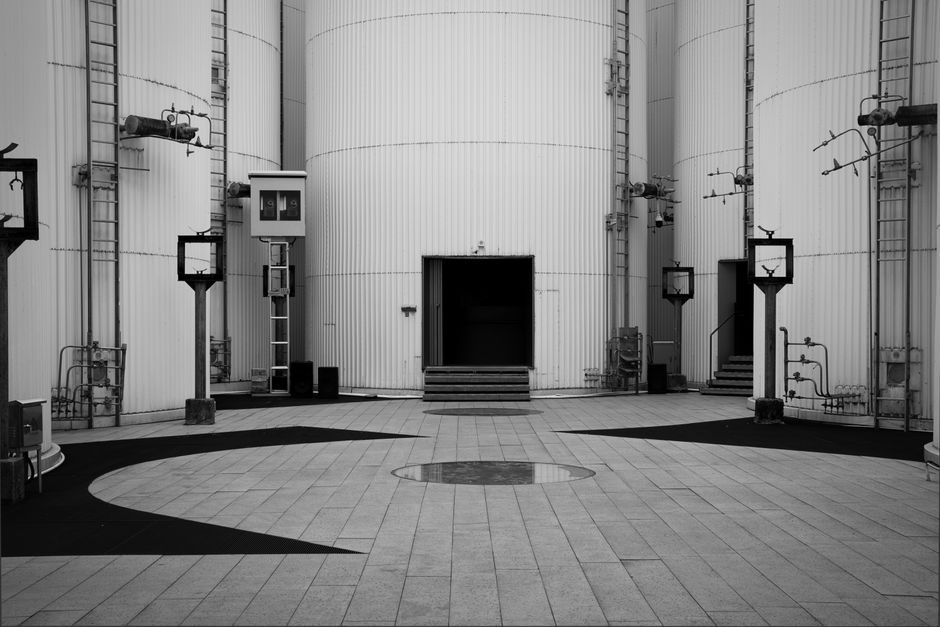
ISO 20ft tank containers specified for crude, diesel and specialty-gas service are 6,058 mm long × 2,438 mm wide × 2,591 mm high, hold a nominal 21,000–26,000 L, weigh 3,650–4,200 kg Tare, and run a 4 bar MAWP (Maximum Allowable Working Pressure) with a 6 bar test pressure under the CSC (International Convention for Safe Containers) plate and IMDG (International Maritime Dangerous Goods) Code framework [S1][S4].
The frame, valves and manways are dictated by the cargo: bitumen, lube additives, diesel, AdBlue and food-grade liquids all use the same shell envelope, but differ in heating-coil surface, gasket material and bottom-outlet spec, with the 1000–10,000 m³ fixed storage tank sitting in a different envelope as the field benchmark [S1][S4].
Coding, Capacity and Pressure Envelope
Every ISO 20ft swap-body tank carries a CSC plate, a T-Code (T1–T22) from the UN/ADR scheme (a four-digit hazard identifier that pins a vessel to a permitted cargo family) and an MAWP banded 1.5–6 bar depending on service; dangerous-goods hydrocarbons and Class 3 flammable liquids usually land at 4 bar MAWP / 6 bar test, while inert lube bases can drop to 1.5–2.65 bar to cut frame weight [S1][S4].
Real data points: Tongyang — founded 1990, holding the Chinese Class A2 / Class III pressure-vessel manufacturing licence from the State Administration for Market Regulation — supplies 50–120 m³ LPG bullets and 1000–100,000 m³ vertical crude tanks, a range that brackets the smaller ISO swap-body envelope [S2]. A blank 20ft ISO tank pad sits at 6,058 × 2,438 × 2,591 mm, fits four-high stack on a 40 ft flat-rack ship cell, and accepts a 30,500 kg max gross when dimensioned to ISO 1496/3 [S4].
Material Stack and Corrosion Bands
Internal roughness targets Ra ≤ 0.8 µm for food/pharma tanks, Ra ≤ 1.6 µm for chemical, and Ra ≤ 3.2 µm for crude; tank-bogie frames are hot-dip galvanised to ASTM A123 (85 µm average coating) when shipping into C5-M marine atmospheres (the highest corrosivity category in ISO 12944, coastal / offshore) [S2][S4]. Bitumen service specifies a 4–6 kW finned-tube heating coil running 0.8–1.0 m² per 10,000 L of payload to keep viscosity below 1,000 cP at pump suction [S4].
Heating, Insulation and Lining Options
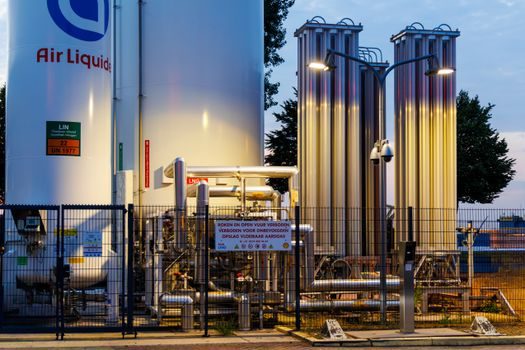
Steam-coil (0.4 MPa, 150 °C saturated) and thermal-oil (0.6 MPa, 200 °C) coils are the two main heating families; the 4 kW / 6 kW / 9 kW tiers correspond to bitumen at 1,000 cP, heavy fuel oil at 380 cP and light gas-oil at 12 cP at 50 °C [S4]. Insulation is 50 mm mineral wool (k = 0.04 W/m·K) or 80 mm PU foam (k = 0.024 W/m·K) and adds 80–120 kg shell weight per ISO frame.
Inner linings: PTFE (Polytetrafluoroethylene, 260 °C ceiling, 1.5 mm sprayed) for HF (hydrofluoric) alkylation acid; rubber-clad (3 mm natural rubber, 80 °C limit) for HCl (hydrochloric acid) and H₂SO₄ (sulphuric acid) service; phenolic (180 °C cure, 200 µm film) for refined-product purity [S1][S2]. Compatibility pitfalls are real: galvanised coils fail on fatty-acid transport within 4–6 months, and silicone gaskets swell in toluene by 8–12% volume — spec FKM (Fluoroelastomer, e.g. Viton) or PTFE for aromatic service [S1][S2].
Valve Train, Manway and Safety Gear
Bottom outlet is a 3-inch butterfly or 80 mm ball valve in stainless 316 with PTFE seats, sized for a 600–900 L/min discharge at 2 m head; top is a 500 mm DIN (Deutsches Institut für Normung) manway with a quick-open forged-steel cover and a 6 bar-rated pressure-vacuum relief (set 0.21 / -0.02 bar, flame-arrester optional for crude) [S1][S4].
Rupture disc burst is 110% of MAWP; secondary containment uses a 110% capacity drip pan, and ADR/RID (the European road / rail dangerous-goods regulations) requires a T-Code plate plus orange hazard panel on every frame. The 1000–10,000 m³ field tank reference architecture uses an inverted-assembly construction method (倒装法) — roof-down, fan-pressurised — to cut at-height welding hours on shop builds, a method imported to the swap-body production line for shells above 3,000 mm OD (Outer Diameter) [S4].
OEM Landscape and Shandong Cluster
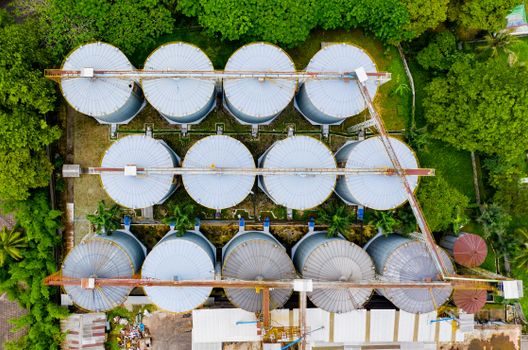
Shandong province hosts the densest OEM cluster for flexitank and IBC (Intermediate Bulk Container) supply in the East-China market, with BLT Flexitank Industrial Co. BLT Flexitank Industrial Co., Ltd. (Shandong, China) lists flexitanks, flexibags, IBCs and bulk liners at 10-set MOQ and 300-set-per-day throughput [S3]. For multi-trip 20ft ISO service, Tongyang, CIMC (China International Marine Containers) Sinopacific and Nantong Tank container occupy the same vendor shortlist, all holding Class III / Class A2 Chinese pressure-vessel papers and exporting under ASME U-stamp or KGS (Korea Gas Safety) codes [S2][S3].
For a deeper code-by-code walkthrough of build certification, see the ISO 20ft certification spec map, and for the in-service side, the calibration and test-interval bands are the matching reference. Cleaners and operators sizing washdown gear should cross-check the tank cleaning machine datasheet guide.
Selection Criteria, Mis-specs and Failure Modes
Decision matrix: for crude/bitumen, spec carbon-steel + 4 kW steam coil + 50 mm mineral wool + SS316 bottom valve; for AdBlue (32.5% urea-water, DEF — Diesel Exhaust Fluid) or pharma glycerine, spec SS316L + PTFE seal + CIP (Clean-In-Place) spray ball + Ra ≤ 0.8 µm; for offshore backload, spec galvanised bogie + C5-M paint + closed-loop vapour return [S1][S2][S4].
Common mis-specs: ordering a 1.5 bar MAWP shell for a 4 bar vapour-pressure crude service, buying a 2-inch outlet where pump curves require 3-inch (5–8% throughput loss), and pairing FKM gaskets with MTBE (Methyl tert-butyl ether — a gasoline-blending ether that attacks fluoroelastomers) — use EPDM peroxide-cure for oxygenated fuel blending. The atmospheric-corrosion trap is the silent killer: a tank cycled between humid deck and dry storage loses 0.1–0.3 mm/year of wall thickness and reaches the 1.0 mm pit-depth rejection limit inside 7–10 years without galvanic-protection work [S2][S4].
Trackable signals: monitor the CSC plate revision window — the IMO (International Maritime Organization) cycle closes mid-2026 and is the next hard check; the ADR 2025 amendment stream remains open for hydrogen / ammonia tanks and will fold into swap-body coding through 2026; and the Shandong flexitank-versus-ISO-bulk freight spread (a US$0.04–0.06/L gap on Asia-Europe lanes) is the spread to watch for the rest of 2026 [S1][S3][S4].
For component-level specifications, see tank container, industrial gas, and oil seal.