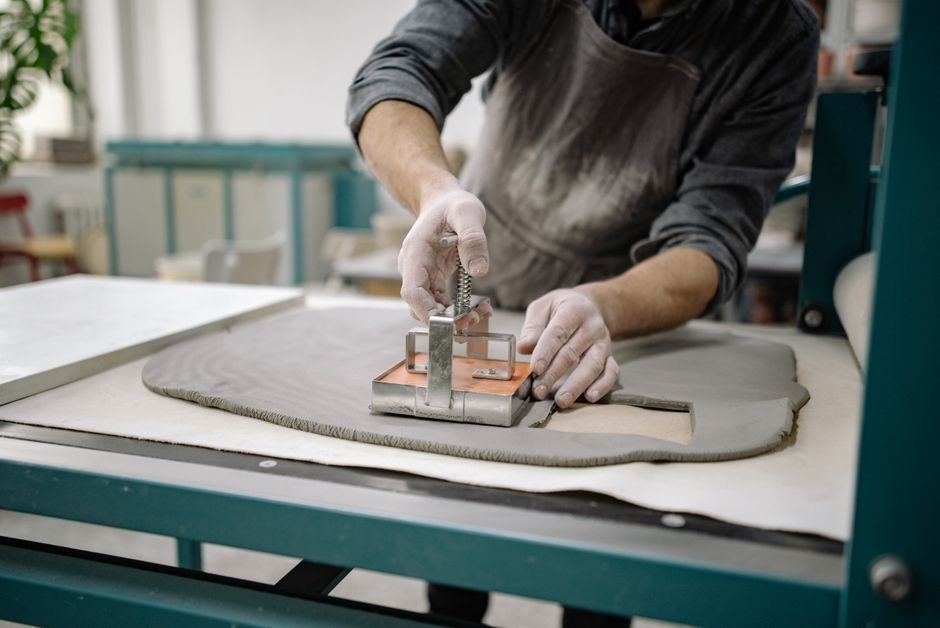
For ferrous castings in the 5-50 kg shot weight band, the practical shell molding machine envelope runs platen sizes from roughly 600x500 mm up to 1200x1000 mm, with cure-air pressures set at 0.4-0.6 MPa and pattern surface temperatures between 200 and 280 deg C on a heated pattern platen [S4]. The machine class is sometimes marketed as a shell core shooter when sized for small cores below 5 kg, but the same core box hardware, dump-box geometry and resin-sand ratio apply.
A shell molding machine is a match-plate process unit: it dumps resin-coated sand onto a heated pattern, inverts the box, cures the sand against the hot die for a controlled dwell, and ejects a hollow shell that is then clamped, poured and de-flasked downstream. The selection problem is therefore not "which brand is best" but "which shot weight, platen envelope, cure-air spec, and automation tier fits the part mix and the molding line cadence behind it."
Shot weight and platen envelope: anchor the spec to part mass, not catalog horsepower
The first decision variable is shot weight. A 600x500 mm platen is a workable fit for shell weights up to roughly 10 kg per half, while a 1200x1000 mm platen handles shells in the 30-50 kg band that map to medium-pattern castings such as valve bodies, pump housings and gearbox covers [S4]. The Chinese market lists single-station vertical automatic units in this 600-1200 mm platen range with dump-box capacities that scale with platen footprint, typically a 80-150 liter sand hopper for the smaller platen and 200-400 liter for the upper end.
Skip the catalog "max shot weight" headline number and request the machine's shot weight at 0.4 MPa cure air with a stated pattern temperature, because the dwell time to reach full shell cure is what actually bounds throughput. A practical reference is 30-90 s total cycle for shells in the 5-50 kg range, with thicker walls (12-25 mm) on the upper end of the band [S4].
Cure air, pattern temperature and resin-sand ratio: three knobs that interact
Cure air is the second lever. Pneumatic dumping at 0.4-0.6 MPa is the default band; the higher end gives sharper edge definition on fine pattern features, the lower end is acceptable for coarse, drafty patterns [S4]. Drop below 0.35 MPa and you start seeing unfilled pattern corners on long, narrow core prints, which translates into shell repair labor downstream.
Pattern temperature is the third knob and it is not independent of cure-air pressure. A heated pattern platen running 200-280 deg C is the common operating window; 200-230 deg C is paired with the 0.6 MPa air side for thin shells under 8 mm wall, while 250-280 deg C pairs with 0.4 MPa for thicker shells where the longer cure window matters more than packing pressure [S4]. The phenolic resin-coated sand ratio is typically kept in the 2-4% resin range by mass; step outside 2-3.5% and the shell either under-cures (low hot strength) or over-cures (brittle edge chip during ejection).
Manual, semi-automatic and automatic: pick the tier that matches your labor and cadence
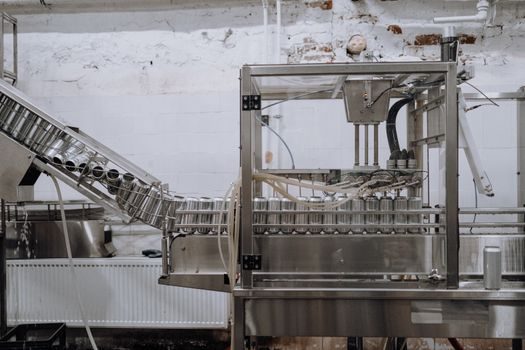
Three machine tiers are actively sold into the global market: manual dump-and-eject units, semi-automatic units with PLC-controlled dump and cure dwell, and fully automatic units integrated into a shell molding line with robotic shell handling [S4][S1]. Manual units are still viable for job shops below 200 shells/shift where labor cost is the dominant variable. Semi-automatic PLC units are the workhorse tier for 200-800 shells/shift. Above 800 shells/shift, the payback on a fully automatic line is typically inside 18 months on labor alone, before scrap and shell-quality gains are counted.
The same logic that drives injection-molding supplier selection applies here: evaluate on production capacity, vertical integration of casting, and service network, not headline price [S1]. For a foundry running a mixed part mix, a static-pressure molding machine for the larger green-sand castings plus a shell line for the cored, thin-wall work is a more common dual-process layout than trying to force one machine class to cover both.
Shell quality, post-cure and the limits of the process
Shell molding is a near-net-shape process, but it is not a tolerance process. Expect 0.3-0.8 mm/shell wall thickness variation across the pattern, and accept that shells above 25 mm wall thickness start showing cure-gradient problems at the cold face. For ductile iron and steel castings above roughly 50 kg per shell, the typical fallback is a shell-core machine in core-only mode plus a separate green-sand or shell molding machine for the outer mold, not a single oversized platen. [S1]
Edge fidelity is the failure mode that costs the most rework: a 0.5 MPa air drop or a 10 deg C pattern under-temp both translate to rounded pattern corners and back-filled shell edges, which show up as machined-surface defects on the casting. Set the dump-box geometry, not just the air regulator, when you see this pattern: a deeper, narrower dump box gives higher local fill velocity than a wide, shallow one at the same supply pressure.
Standards, supplier evaluation and sourcing data points
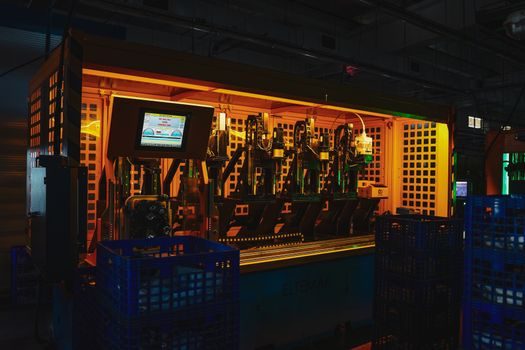
There is no single ISO or ASTM standard that pins a shell molding machine specification; instead, foundries verify the machine against internal casting-quality KPIs (shell weight tolerance, edge acuity, shell strength) and against the resin system supplier's published cure-window data. The supplier-evaluation lens that works for any molding-machine purchase is capacity, vertical integration and service [S1][S3]. On the Chinese supply side, the same vertical-integration pattern shows up across molding-machine classes: a maker that produces 90% of mechanical components in-house, including base structure, tends to ship on tighter tolerances than a pure assembly shop [S3].
On price benchmarks, Chinese-market FOB bands published in mid-2026 cluster manual single-station shell machines in the USD 8,000-18,000 range, semi-automatic PLC units in the USD 20,000-55,000 range, and fully automatic lines in the USD 80,000-250,000 range depending on platen size, dump-box volume, and downstream shell-handling scope [S4]. For broader sourcing logic across automatic molding, the 2026 automatic molding line supplier map carries a side-by-side FOB-band comparison that reads cleanly against this shell-machine tier data.
For whom this machine class is and is not the right tool
Shell molding machines fit foundries producing 5-50 kg net-shape or near-net-shape castings with consistent part geometry, low-to-medium pattern changeover frequency, and a tolerance budget of roughly CT 7-9 (ISO 8062-3). They are not the right tool for short-run, high-mix prototype work under 20 unique patterns, where a shell-core machine plus hand-rammed cope-and-drag is faster and cheaper; they are also not the right tool for castings above 50 kg, where static-pressure green-sand molding or no-bake flask lines outperform on throughput and shell cost per kg. [S2]
Inside the green-sand and flask line segment, the Automatic Molding Line Sizing and Selection Guide walks through platen, jolt-squeeze, and flask-handling logic that mirrors the same shot-weight vs. platen trade-off that drives shell-machine selection. The narrow overlap zone is foundries running 10-30 kg castings with both cored and non-cored features, where a hybrid cell with a shell line for cored work and a static-pressure molding machine for the rest is the standard 2026 layout in mid-volume iron and steel job shops.
Final selection discipline: pin the spec to one target casting's shot weight, platen footprint and wall thickness; verify the cure-air and pattern-temperature band against the resin supplier's data sheet; and benchmark the supplier on vertical integration, service network and post-shipment spare-parts lead time, not on the headline FOB number [S1][S3]. Track as a confirmable signal the resin-sand supplier's published cure-window revision, typically refreshed annually, and any 2026 cycle-time claims above 90 s/shell on a 30 kg+ platen from a non-vertically integrated maker; both are good leading indicators of whether the FOB band you were quoted is realistic.