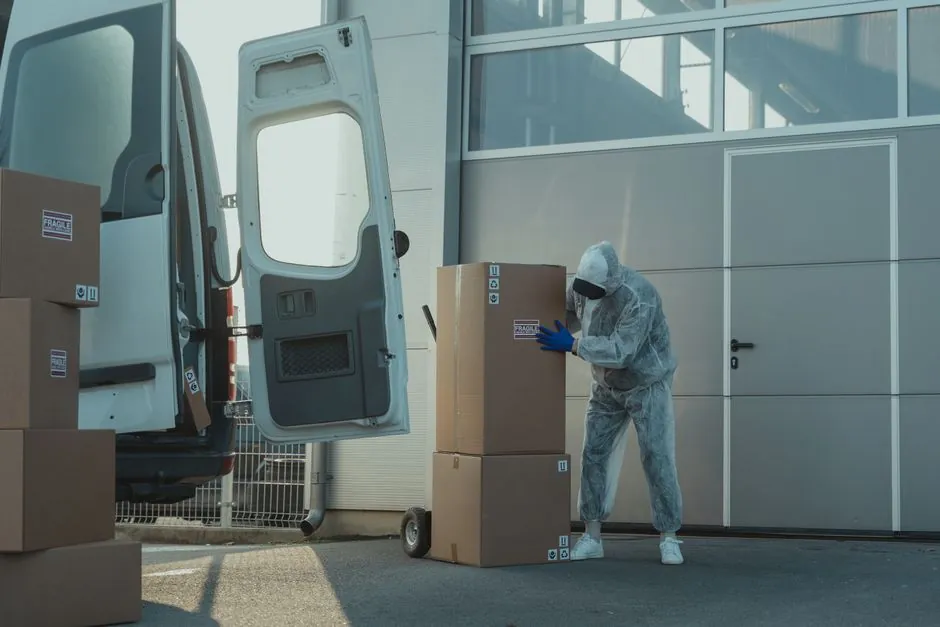
A passive insulated carton is a thermal system, not a cardboard box, and it must be qualified against payload mass, target temperature, route duration, and handover count before procurement scales up [S5].
Forced product fit and dimensional-weight discipline cut cold-chain cost without sacrificing hold time: oversize raises DIM charges, undersize risks temperature drift, so internal dimensions should match product plus 1/8 in cushioning per side plus insulation thickness [S2].
Three Insulation Cores and Their Hold-Time Windows
Three insulation families dominate passive cold-chain cartons, and each maps to a different transit window. Expanded Polystyrene (EPS) covers roughly 35 to 46 °F (2 to 8 °C) for up to 24 hours and is the cheapest per cubic foot but the bulkiest option [S2][S8]. Polyurethane (PUF) panels reach -4 to 46 °F (-20 to 8 °C) and hold for up to 48 hours, which is the common workhorse for 2 to 8 °C pharmaceutical lanes [S2]. Vacuum Insulated Panels (VIP) extend the window to -60 to 46 °F (-51 to 8 °C) for up to 120 hours, at a higher unit cost and stricter damage-handling rules [S2].
These three tiers can be lined up against the four criteria most procurement teams actually weigh. On cost per liter, EPS is lowest and VIP is highest. On temperature range, EPS sits in the 2-8 °C band only, PUF straddles chilled and frozen, and VIP covers ultra-low (-80 °C) lanes. On duration, EPS tops out near 24 h, PUF near 48 h, and VIP can reach 120 h, which is the longest passive hold commonly cited. On payload density tolerance, EPS tolerates rough handling best, while VIP is the most sensitive to panel puncture and must be protected by an outer carton box rated for the route's stacking load.
Payload Mass Cap and the 50 kg Handling Rule
No matter the insulation core, a passive insulated carton should weigh less than 50 kg fully packed, because the carton is loaded and offloaded manually at handovers and any heavier unit breaks that workflow [S1]. This 50 kg figure is independent of insulation choice and is a function of single-person lift ergonomics under WHO prequalification guidance for cold-chain carriers [S1].
Where volume exceeds what a 50 kg carton can carry, the spec should step up to a pallet shipper, not a larger hand-loaded box. Pallet shippers run to standard ISO pallet footprints and are capped at 160 cm external height to fit a single unit inside most commercial aircraft, and they must never be de-palletized or double-stacked in transit [S1]. For a logistics packaging buyer, the rule is simple: anything above 50 kg or any single-ULD air shipment belongs on a pallet shipper, not in a hand cartoned system.
WHO Class A, B, C and the Temperature Bands They Lock Down
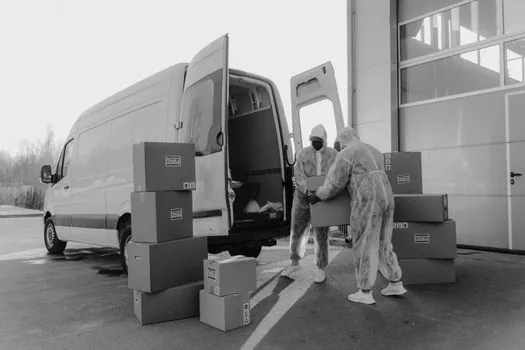
International air freight of cold-chain medical products is governed by three packaging classes that dictate thermal performance under defined ambient stress. Class A holds the payload below +8 °C for at least 48 hours at an ambient of +43 °C; Class B keeps the payload below +30 °C and above +2 °C for at least 48 hours across +43 °C and -5 °C swings; Class C provides no upper-temperature guarantee but must keep the payload above +2 °C for at least 48 hours at -5 °C ambient [S1]. These classes are the test envelope, not the box description, and the same physical carton can qualify for different classes depending on the coolant load and packout [S1].
Procurement should therefore write the requirement as a class plus a route profile, not as a brand. A 2-8 °C vaccine lane through tropical hubs is a Class A scenario, and that routes the spec toward PUF or VIP cores with documented 48-hour hold data at +43 °C ambient rather than a generic "insulated carton" [S1]. For audit trails, the same supplier evidence that supports a Class A box also supports a Class C assignment, but the reverse does not hold.
Cost Discipline: Total Landed, Not Unit Price
Unit price on the box alone is a poor comparator when one quote includes reinforced export cartons, monitoring devices, qualification data, and Incoterm DDP, while another leaves each line out [S5]. The cost stack that matters runs: box and coolant, pack labor, temperature monitoring, qualification testing, route service, delay contingency, training, reverse logistics, cleaning, and the expected loss-and-damage rate [S5].
Two operational levers move the most money on the box itself. First, cartonization software trims void fill and right-sizes the outer to the payload, which directly cuts both DIM surcharge and coolant waste, and is documented as a route to "reduce waste, protect products, and cut fulfillment costs" in cold-chain packing [S3]. Second, swapping EPS for PUF doubles the hold time per roughly 1.5 to 2× material cost, while VIP pushes hold time to 120 h but requires more careful handling and a sturdier outer carton erecting machine line to avoid panel damage during packout [S2][S8].
Coolant, Dry Ice, and Phase Change Material Choices
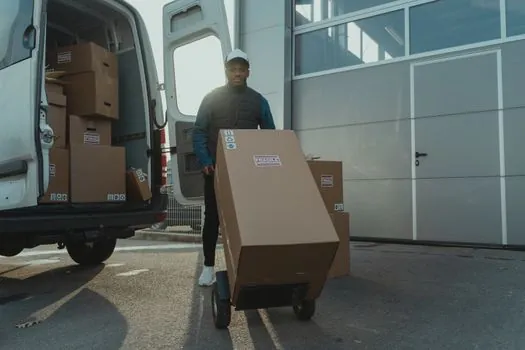
Coolant choice sets the actual temperature band, not the box label. Gel packs hold a chilled band, dry ice holds -78 °C and is regulated as a hazardous material on aircraft with quantity limits per package, and phase change materials (PCMs) hold engineered set points such as +5 °C, -21 °C, or -32 °C with tighter swing than water-based gels [S4]. The insulation core and the PCM must be matched to the route: PUF plus a +5 °C PCM is a standard 2-8 °C pharmaceutical packout, while VIP plus a -21 °C PCM extends lane length into multi-day cross-continental transit [S4].
A second decision is whether the coolant is single-use or reusable. Reusable PCMs require a reverse logistics loop and a documented reconditioning procedure, which adds operating cost but cuts consumable spend on high-frequency lanes [S5]. For a low-frequency clinical trial lane, single-use water-based gel packs keep the qualification paperwork simple and avoid any return-kit reconciliation [S5].
Fit, Cushioning, and the 1/8 in Rule
Dimensional fit is the cheapest risk to control. Internal dimensions must accommodate the product plus insulation thickness plus about 1/8 in (≈3 mm) cushioning per side, recorded as L × W × H in inches before box selection [S2]. Skipping the cushioning budget is the most common cause of in-transit product shift, which then opens cold-air paths and accelerates temperature drift inside the packout [S2].
For tight-tolerance lanes such as cell and gene therapy, where a single excursion can destroy a batch, the cushioning budget is doubled, and a cold box core machine line is preferred over hand-packed EPS because it controls core density and lid compression, two variables that drive real-world hold time more than the brochure rating does [S4]. For lower-stakes fresh produce, a 1/8 in cushion plus standard EPS is typically sufficient and keeps the unit cost in line with retail margins [S8].
Validation, Monitoring, and the Receipt-Side Decision

Validated insulated packaging is the term that separates a shipping container from a qualified shipping system, and it depends on tested hold time under real ambient stress, not catalog claims [S4]. A packout without a temperature data logger on the receipt side is not a validated shipment; it is a container with an assumption, and excursion review will reject the load if the data is missing [S4].
On the operations side, a general pre-shipment and in-transit checklist should cover: shielding from direct sunlight, clearance from engine or ambient heat sources, a transport-time budget kept under two-thirds of the container's rated hold time, advance notice to the receiver, and a written decision rule for what happens on receipt if the logger shows an excursion [S1]. A buyer-facing check on the supplier side is whether the box and packout have been qualified together, and whether the same supplier can support a cold chamber machine preconditioning step at origin if the lane requires it [S5].
Sustainability, Reusability, and the Cold-Chain Trade-Off
Reusable cold-chain packaging reduces single-use waste but raises reverse logistics cost and requires a cleaning, inspection, and re-qualification loop on every return [S5]. A reusable EPS or PUF shell pays back only when the lane frequency is high enough that single-use consumable spend would exceed the cleaning and reverse freight, a threshold most guides place in the 8 to 12 round trips per shell range, though exact figures vary by lane [S5].
For shippers under published sustainability targets, the cleaner trade is usually a hybrid: reusable outer shell with single-use coolant and disposable inner liner, which captures the waste reduction on the bulky part and keeps the qualification simple on the consumable part [S5]. For shippers where validation cost dominates, single-use remains the right call because the qualification evidence is one-directional and does not have to be defended across cleaning cycles [S5].
The selection below sums up the four-way trade across common cold-chain lanes. Short-haul fresh produce sits with EPS cores, single-use gel packs, and a Class C-style brief; mid-haul pharmaceutical 2-8 °C goes with PUF, +5 °C PCM, and Class A evidence; long-haul biologics with -20 °C or colder targets need VIP plus engineered PCM and Class A qualification; and high-frequency lanes with a closed loop should run reusable PUF shells with replaceable PCM and a written cleaning SOP [S1][S2][S4][S5]. Trackable signals for the next 6 to 12 months include any tightening of the WHO prequalification hold-time data for Class A cartons, the release of consolidated PCM-plus-VIP performance data from at least two major suppliers, and any move by major carriers to publish a 160 cm pallet-shipper cap on new ULD types [S1][S5]. A practical cross-reference for pallet selection on the same cold-chain routes sits in the plastic pallet selection for cold chain spec map, since the pallet under the pallet shipper is part of the same thermal system and must be specced to the same temperature and humidity band.