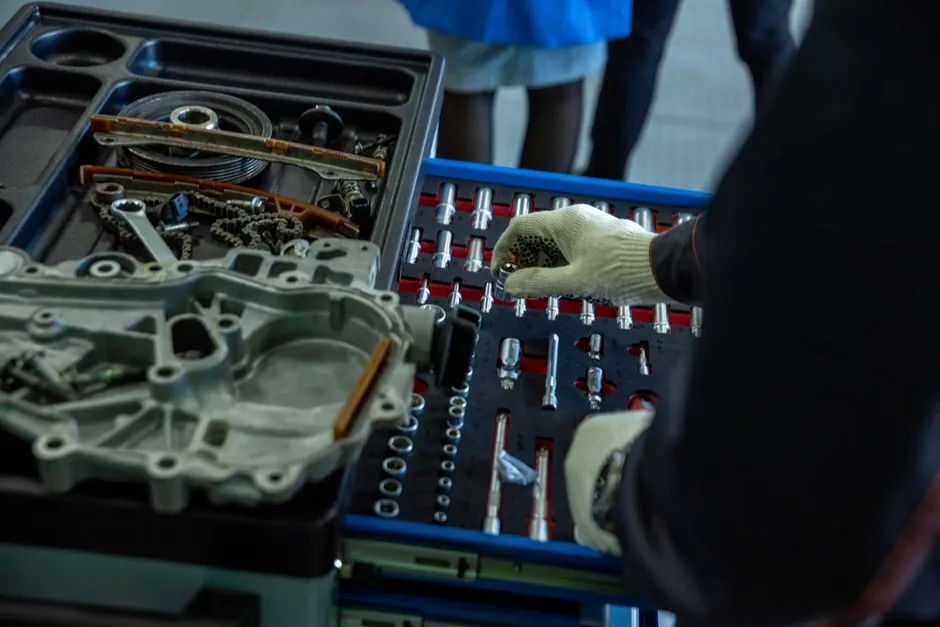
Automotive plastic pallet programs in 2026 are built around the 48x45 in footprint, HDPE or PP thermoformed decks, and closed-loop returnable cycles that can exceed 50 trips before replacement [S2][S4][S5].
Selection is driven by four intersecting constraints: assembly-plant cube utilization, just-in-time delivery windows, in-load slippage prevention, and integration with KLT boxes, sleeve packs, and bulk containers already approved at the OEM [S1][S6][S7].
Standard 48x45 Footprint and Adjacent Automotive Sizes
The 48x45 in (1219x1143 mm) footprint is the de-facto automotive pallet base because it aligns with returnable container pools, milk-run trailer loading, and rack bay dimensions at most North American assembly plants [S4]. A 48x40 in footprint is also widely specified where mixed non-automotive freight must share the pool, while a 60x48 in industrial pallet pattern has emerged for heavier subassemblies such as battery trays and bumper fascias [S2][S3].
Footprint selection cascades into every downstream decision: deck board spacing, fork tine entry height, and the height of any matched bulk box or collapsible sleeve pack that stacks on top [S6][S7]. A 48x45 pallet that is 6 in tall is the most common starting point, but 5.5 in nestable profiles dominate inbound line-side sequences where empty-pallet return cube must be minimized [S4].
Material Selection: HDPE vs PP vs Composite
HDPE (high-density polyethylene) and PP (polypropylene) are the two polymers that dominate thermoformed automotive pallets, with HDPE favored for cold-impact toughness and PP for higher continuous-use temperature (commonly up to around 100-120 C) and stiffness [S2]. Twin-sheet thermoformed HDPE pallets are the most common platform for tier-1 and tier-2 automotive suppliers, while injection-molded PP is often chosen where higher load-to-weight ratios or longer creep life under static racking loads are required [S2][S5].
For applications exposed to metal-forming fluids, battery electrolyte splash, or underbody coatings, chemical resistance of HDPE and PP to lubricants and mild acids is a decisive factor: both resist moisture absorption and will not splinter or warp in the way wood does during steam-cleaning cycles common at tier-1 stamping plants [S2][S5]. Composite or glass-filled PP is used selectively for steel-coil and engine-block dunnage where static deck deflection under long-term racking loads must stay below approximately 6-8 mm at rated load [S2].
Load Rating, Deck Style, and Forklift Compatibility
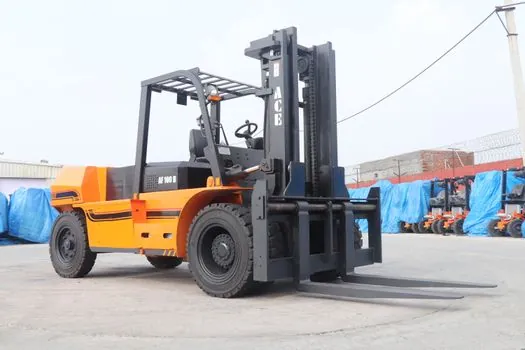
Dynamic load ratings for automotive plastic pallets typically fall in the 2,500-5,000 lb (1,100-2,300 kg) range, with static rack ratings often 2x to 4x higher depending on runner configuration [S2][S3]. Rackable automotive pallets must be specified separately from stackable-only versions, and the decision usually lands in standard pallet rack bays that demand a minimum of 4-way fork entry and a recognized rack-test certificate [S4].
Open-deck designs reduce weight and ease wash-down, but closed-deck (solid top) decks are required for small parts such as fasteners, sensors, and connectors that can fall through gaps into conveyor rollers or pallet stacker lift mechanisms [S4][S6]. Anti-slip top surfaces, often branded as high-friction or TruGrip-style textures, are now standard on automotive pallets handling stacked totes, because the durometer and surface texture combination is engineered to keep in-load slippage within tight limits during sudden braking on truck decks [S5].
Container and Bulk-Box Integration: KLT, Sleeve Packs, and Pallet Boxes
Automotive pallets are rarely specified in isolation; the load unit almost always combines the pallet with a KLT (Kleinladungsträger small-load carrier), a plastic sleeve pack, or a rigid pallet box [S1][S6][S7]. Sleeve packs use a three-part structure: a plastic pallet base, a PP or honeycomb sleeve, and a lid, and they offer roughly 3:1 return-cube reduction when collapsed, which is why they dominate export loops and tier-2 inbound milk runs [S6].
Rigid pallet boxes are the default for heavy parts such as engine blocks, transmission housings, and battery modules, where dynamic loads in the 1,000-1,500 kg range and sidewall rigidity are required to prevent load shift during line-side delivery [S7]. For battery and EV drivetrain components, pallet-box programs increasingly specify conductive or anti-static PP to manage surface resistivity around lithium cells, while still meeting the same 48x45 or 60x48 footprint that matches returnable container pools already in service [S3][S7].
Selection Criteria: Comparing the Main Automotive Pallet Options
Four platform types cover most automotive programs, and they line up against the decision criteria that drive spec sheets [S2][S3][S4][S6]:
1) Twin-sheet thermoformed HDPE (48x45 rackable): best for general tier-1 inbound loops, dynamic load 2,500-3,500 lb, deck style open or closed, expected life 50+ trips, integration with KLT and sleeve packs.
2) Injection-molded PP (48x45 rackable, often stackable-nestable): best for higher-temperature wash-down and longer creep life, dynamic load 3,000-5,000 lb, deck style open preferred, expected life 80+ trips, integration with rigid pallet boxes and battery dunnage.
3) Nestable stack-only HDPE (often 48x40 or 48x45): best for line-side sequences where empty return cube is critical, dynamic load 2,000-3,000 lb, deck style open, expected life 40+ trips, integration with one-way or returnable top caps.
4) Composite / glass-filled PP (often 60x48): best for heavy subassemblies and steel coils, dynamic load 4,000-5,000+ lb, deck style closed, expected life 100+ trips, integration with rigid bulk boxes and racked battery storage [S2][S3][S4].
Who the 48x45 Automotive Pallet Is For, and Where It Falls Short
The 48x45 automotive pallet is built for tier-1 and tier-2 suppliers feeding high-volume assembly plants that run just-in-time or sequenced line-side delivery, and for closed-loop returnable programs where a single OEM controls the pool [S2][S4][S8]. It is the right call when the part mix includes heavy, fragile, or sequence-sensitive components such as cylinder heads, brake rotors, plastic fascias, wiring harnesses, and electronic modules [S4].
It is the wrong platform where shipment volumes are too low to sustain a returnable loop, where export packaging must meet ISPM 15 heat-treatment or fumigation rules that plastic sidesteps by default, or where load weights exceed roughly 1,500 kg dynamic on a single-deck plastic pallet without stepping up to a steel-reinforced or composite platform [S2][S8]. Specifiers should also avoid 48x45 rackable HDPE pallets in freezer applications below roughly -20 C without verifying cold-rated polymer grades, because standard HDPE loses impact toughness at deep-freeze temperatures [S2].
Standards, Sourcing, and Closed-Loop Economics
EPAL (European Pallet Association) license programs dominate European automotive loops, while in North America the 48x45 footprint and the related plastic pallet standards remain a de-facto convention enforced by OEM packaging specifications rather than a single mandatory standard [S8]. ISO container and packaging standards, alongside OEM-specific packaging manuals (typically released as controlled documents to tier-1 suppliers), govern dimensional and load-test protocols, and the buy-back / recycle economics of HDPE and PP make a 10-12x reuse factor over wood the core financial case for conversion [S2][S5][S8].
Spec writers in 2026 should anchor every release on a documented dynamic load test, a deck-style call (open vs closed), a footprint alignment check against existing KLT and bulk-box pools, and a return-loop or one-way decision. The cleanest cross-check is the same one used in adjacent spec maps for pharmaceutical distribution and food and beverage: material grade, dynamic load in kg, deck style, footprint, and the wash-down or cold-chain rating that the program actually needs [S1][S2][S4].