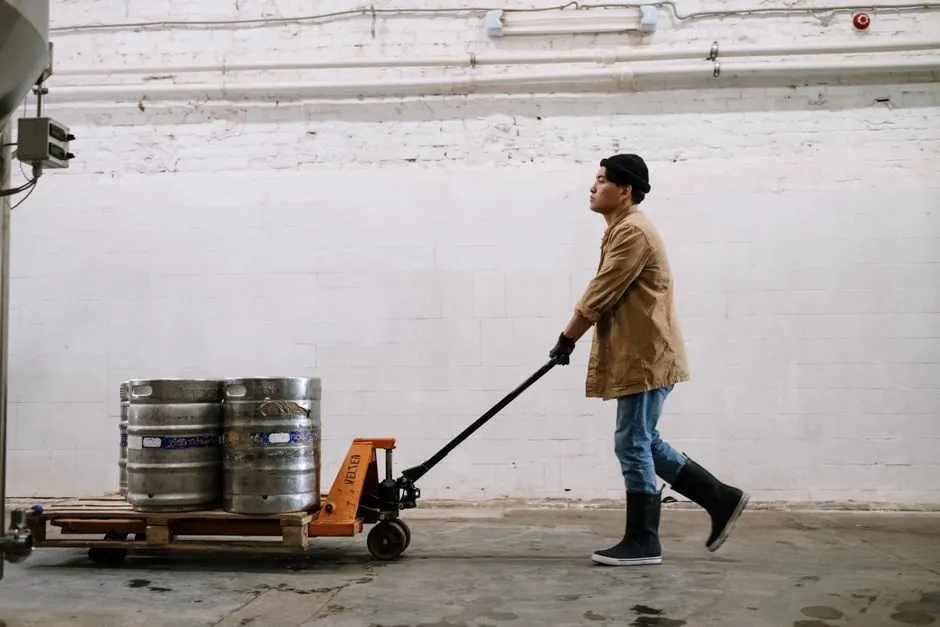
For cold chain operations, a fit-for-purpose platform trolley runs 150–500 kg load capacity, a stainless or hot-dip galvanized frame, polyurethane (PU) or nylon wheels rated to roughly −30 °C, and a smooth, food-safe powder or electropolished finish; motorized 500 kg+ sensor-equipped units are now appearing in reefer-dock and blast-freezer transfer duties per 2026 supplier catalogs [S1][S2].
This spec map covers manual and motorized platform trolleys used inside cold stores, between refrigerated loading bays, and on the production-floor side of meat, dairy, seafood, and pharmaceutical lines, drawing on the HUPRO platform trolley selection framework [S3] and the 2026 supplier landscape published between May and August 2026 [S1][S2].
Load Class, Frame Material, and Where Each Fits
Three load classes cover the cold-chain trolley estate: 150–300 kg light-duty folding units for parcel and tote transfer between chilled aisles, 300–500 kg mid-duty fixed platform units for crate and case handling at reefer docks, and 500 kg+ heavy-duty or motorized units for pallet-scale moves between blast freezers and cold rooms [S1][S2].
Frame material tracks the hygiene tier. Galvanized steel is the workhorse for produce, dairy, and general cold-store duty; 304 stainless frames are specified for meat, seafood, and pharmaceutical cells where caustic washdowns occur; aluminum alloy appears on light-duty folding units where trolley mass matters more than corrosion margin [S1][S2]. Buyers comparing options against decision criteria should weigh load (kg) vs frame mass (kg), corrosion class, and fold-flat storage height side by side; a 150 kg folding galvanized unit typically fits a 2.0–2.4 m³ pallet footprint when stowed, while a 500 kg stainless flatbed rarely folds below 250 mm deck height [S1][S3].
Wheel Specification for Sub-Zero Floors
Wheel selection is the single highest-impact decision in cold-chain duty. PU tread wheels on cast iron or polymer centers are the 2026 default for −20 to −30 °C cells because PU retains elasticity below the rubber brittle point and resists the condensation that forms on steel hubs during door transitions [S1][S2].
For deep-freeze rooms below −25 °C, nylon and phenolic wheels are commonly substituted for PU because pure PU hardens and loses damping at sustained low temperature, increasing rolling resistance and operator push force [S1]. High-strength nylon and PU wheel compounds are explicitly called out by Chinese OEM catalogues as preferred for low-noise, long-life cold-room service [S1]. Brake specification is equally important: at least two swivel castors should carry an EN-standard foot brake, and in blast-freezer cells where surface ice forms, conductive or anti-static PU is often specified to prevent spark risk near refrigerant line work [S1][S2].
Food-Safe Finishes, Sanitation, and Compliance Hooks

Cold-chain trolleys must clear two parallel compliance tracks: food-contact hygiene and occupational safety. Food-safe powder coating over galvanized steel passes the washdown, condensation, and chloride-exposure tests typical of meat and seafood cells; 304 stainless with an electropolished or 2B mill finish is used where daily caustic or quaternary-ammonium sanitizers are applied [S1][S2].
Documentation hooks buyers should demand from any cold-chain platform trolley supplier include ISO 9001 factory certification, CE marking for the EU market, and conformance to ANSI/BIFMA performance and finish tests for North American buyers; two of the largest Chinese OEM exporters also publish REACH and RoHS statements as a baseline for European procurement [S2]. Wheel, brake, and structural weld testing should be referenceable to EN 1757 (hand trucks, EN 1757-3 platform trolleys) or to a comparable BIFMA X5.5 / X5.1 test method for utility and powered carts; the supplier should supply a test report per lot, not a generic certificate [S2].
Manual vs Motorized: TCO and Throughput Trade-Off
Manual folding platform trolleys in the 150–300 kg class remain the highest-volume SKU, with sub-15 kg unladen mass, single-operator push, and OEM list pricing that fits a 24-month ROI on a single-operator reefer-dock shuttle cycle [S1][S2]. Mid-duty 300–500 kg fixed platform carts add welded corner gussets, a reinforced handle, and 125–200 mm PU wheels; they are the workhorse for case and tote movement between chillers and dispatch [S1][S2].
Motorized 500 kg+ platform trolleys with collision-avoidance sensors, brushless DC drives, and lithium battery packs are now appearing in 2026 OEM catalogs for blast-freezer transfer and inter-zone cold-room shuttle, primarily where operator push force on iced floors exceeds ergonomic limits or where WMS-directed pick routes justify a semi-autonomous unit [S1]. The 2026 Inbound Logistics Top 100 list confirms that AI-driven warehouse decision agents and visibility platforms (AutoScheduler.AI, Aera Technology, Agistix) are being layered over the physical fleet, so any motorized trolley procurement should specify API or WMS-ready telematics hooks at RFQ stage [S5].
Cold-Chain Use Cases and Failure Modes
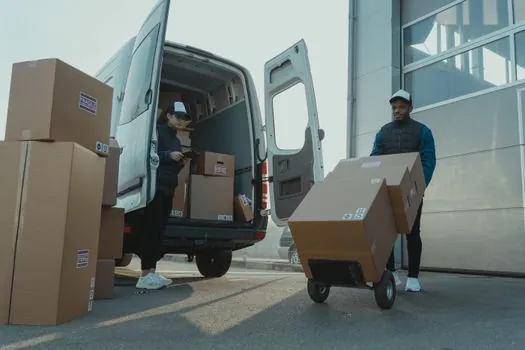
Three failure modes dominate cold-chain trolley returns: (1) PU wheel delamination when the wheel is spec'd above its temperature rating, (2) galvanized frame white-rust creep under daily chlorinated washdown, and (3) brake-lever freezing in unheated transition corridors, which is mitigated by enclosed linkage or stainless brake hardware [S1][S2]. For seafood, meat, and pharmaceutical cells, 304 stainless with PU or nylon wheels and enclosed brakes is the conservative baseline; for produce and dairy, hot-dip galvanized with PU wheels is the cost-optimized baseline [S1].
A platform trolley integrates into broader logistics packaging flows at the palletizer, dock, and cold-room interfaces, and a well-spec'd platform trolley sits alongside the manual pallet jack layer in any reefer operation; a recent spec walkthrough of manual pallet jack selection for warehouse automation shows the same load/wheel/finish logic that drives cold-chain trolley sourcing decisions. For frozen-food plants building a new cell, the 2026 OEM baseline is a 300–500 kg galvanized or 304 stainless fixed platform with 160–200 mm PU wheels, two swivel castors with foot brakes, and food-safe powder coat; motorized 500 kg+ units with sensor payload enter the spec only when ergonomic or WMS-robotics cases are documented [S1][S2][S5].
RFQ Checklist and Sourcing Signals
The 2026 HUPRO platform trolley series catalog formalizes the cold-chain RFQ around a fixed review framework: dimensions, load capacity, structure, wheels and brake, doors, shelves, mesh, surface treatment, label plate, stacking or folding method, and export packing, all confirmed by drawing, sample photo, or written project requirement rather than by a published "standard spec" [S3]. Buyers should refuse any quotation that fixes these parameters without a drawing or sample, and should require weld and load test reports traceable to EN 1757 or BIFMA X5.5 / X5.1 [S2][S3].
Two verifiable signals worth tracking: (a) at least two Chinese OEM platform trolley exporters published updated 2026 catalogs in May and July with motorized 500 kg+ and sensor-equipped models in their premium tier [S1][S2]; and (b) cold-chain AI and telematics vendors (Aera, Agistix, AutoScheduler.AI) on the 2026 Inbound Logistics Top 100 list are explicitly aligning with warehouse robotics and visibility platforms, so cold-chain trolley RFQs issued in Q3–Q4 2026 should already carry API and WMS telematics as line items, not optional extras [S5].
Detailed specification references: cold chamber machine.