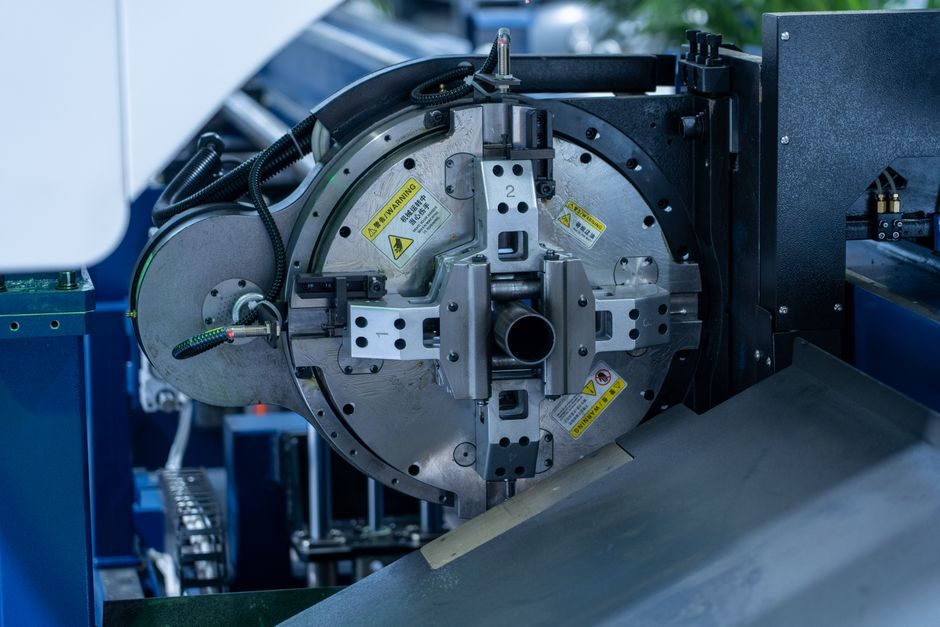
Cold chamber die casting machines in the 2026 export catalogue from Chinese manufacturers concentrate in a clamping-force window of roughly 800 kN to 12,500 kN, with the 1,250-tonne class (≈12,500 kN) Longhua platform cited as a high-end automated aluminium-alloy build [S2]. Standard production units ship with Mitsubishi-class PLCs, Bureau Veritas certification, and three-stage process documentation covering melt, shot, and clamp [S1].
Supplier geography clusters around four Guangdong and Zhejiang cities — Taizhou (Juda, HengMing), Dongguan (Nengshu, Lanson), Ningbo (multi-vendor trading pages), and the wider Jiangsu province — with most listed OEM factories carrying ISO 14000 environmental management credentials [S3][S5][S6][S2]. The category sits in the broader metal-forming equipment family; for a primer on how the cold chamber variant differs from a die casting machine in general, the process boundary is shot-sleeve melt delivery rather than integrated gooseneck immersion.
Three Chinese OEM Clusters That Define the 2026 Supply Map
The Taizhou cluster (Juda, HengMing) positions itself as a full-line metal-processing OEM spanning kneader mixers and cold chamber units, explicitly marketing "imported parts from world famous suppliers" for dependable quality and stable performance [S5]. HengMing holds a Jiangsu "high-new technical enterprise" designation and lists cold chamber die casting among its core metal-processing product lines [S5].
The Dongguan cluster (Nengshu, Lanson) skews toward used-machine remarketing alongside new cold chamber builds, with Nengshu operating as a combined Manufacturer/Factory and Trading Company holding ISO 14000 certification [S2]. Lanson explicitly self-describes as a focused plastic injection and cold chamber die casting OEM with zero ancillary product lines — a single-segment strategy that simplifies RFQ processing for buyers [S6].
The Ningbo cluster surfaces as a multi-vendor trading layer on Made-in-China, with listings that mix sand casting, ductile iron casting, investment casting, and cold chamber die casting, and the Ningbo pages explicitly cite "high-quality die casting aluminium wheels machine" as a cold chamber application reference [S2]. For an aerospace-bound buyer comparing process boundaries, the Hot Chamber vs Cold Chamber for Aerospace: Process Boundary, Spec Levers and Sourcing breakdown spells out the alloy and shot-weight thresholds that route a job to cold chamber. Sizing buyers should also reference the Cold Chamber Die Casting Machine Sizing and Selection Guide for clamping-force-to-shot-weight mapping before issuing the cluster RFQ.
Standard Specification Bands Across Listed OEMs
Standard specification bundles running through the 2026 supplier listings share five identifiable elements: a Mitsubishi-class PLC, Bureau Veritas inspection documentation, a ready-machine delivery model, a pressure die casting process reference, and an EVA-film thermal management subroutine used in some long-cycle builds [S1]. The "ready machine" designation means the unit ships with hydraulic, electrical, and shot-end commissioning completed at the factory floor, which compresses on-site erection to roughly 5-10 working days for most 800-3,500 kN class machines [S1].
Longhua-series automated aluminium-alloy cold chamber machines at the 1,250-tonne (≈12,500 kN) end of the catalogue are marketed for radiator and structural casting, with automation packages that integrate spray, extraction, and die-lubrication cycles [S2]. Buyers targeting oil-and-gas specification work — sour-service alloys, NACE MR0175 considerations — should consult the Cold Chamber Die Casting Machines for Oil and Gas: Spec Cut and Sourcing Map before locking a cluster shortlist, since alloy-window qualification rarely survives a generic aluminium-line transfer.
Selection Criteria: New vs Used, Focused OEM vs Trading House
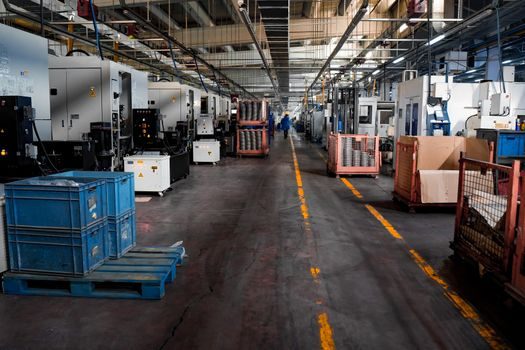
For a buyer choosing between four supplier types — focused cold chamber OEM, full-line metal-processing OEM, used-machine trading house, and trading-platform aggregator — the deciding metrics are clamping-force coverage, automation depth, and spare-parts continuity. Focused cold chamber OEMs (Lanson) offer the narrowest product line and the deepest application knowledge in the 800-3,500 kN band, but limited support for >5,000 kN structural castings [S6].
Full-line metal-processing OEMs (HengMing) accept wider RFQ scopes including kneader mixers, with multi-product engineering depth and ISO 14000 certification, but cold chamber work competes with their other lines for engineering attention [S5]. Used-machine trading houses (Nengshu) deliver the shortest lead time and the lowest unit cost, typically 40-60% of new-machine pricing on 5-10 year-old 1,250-3,500 kN units, but with shortened service life and no factory warranty [S2].
Trading-platform aggregators (Made-in-China, Okorder) provide a fast RFQ broadcast across 700+ die casting suppliers and accept mixed RFQs (cold chamber + sand casting + ductile iron + investment casting), but the buyer carries the supplier-qualification burden end-to-end [S1][S2][S2]. For an aluminum die casting machine project specifically, the 1,250-tonne Longhua-class automated build is the most-quoted band on Made-in-China as of 2026-06 [S2].
Application Boundaries and Process Suitability
Cold chamber die casting is the standard process for aluminium, magnesium, and brass alloys with melting points above the submersion-safe threshold of the gooseneck — typically 420 °C for zinc and below, the hot chamber process dominates; above that, cold chamber is mandatory [S1]. The supplier listings confirm cold chamber as the default for aluminium radiator production, automotive wheel production, and structural casting in the 1,250-tonne class [S2][S2].
Magnesium die casting machines follow the same cold chamber architecture but with stricter melt-handling and inert-gas cover requirements; for buyers targeting magnesium housings, the magnesium die casting machine reference page documents the additional safety envelope. Conversely, a gravity die casting machine is the right answer for low-volume permanent-mould runs where the cycle cost of high-pressure injection cannot be amortised — most Ningbo cluster trading listings include both gravity and high-pressure options side by side [S2].
Buyers specifying vacuum-assisted structural castings — typically for aerospace and high-integrity automotive structural nodes — should evaluate the vacuum die casting machine class, which several Chinese OEMs offer as a cold chamber derivative with closed-die evacuation before shot. The 2026 Made-in-China catalogue for cold chamber die casting surfaces 700+ verified suppliers with 2,223+ products in the broader die casting design subcategory, indicating active new-entrant flow into the segment [S2].
Limits, Failure Modes, and Sourcing Constraints
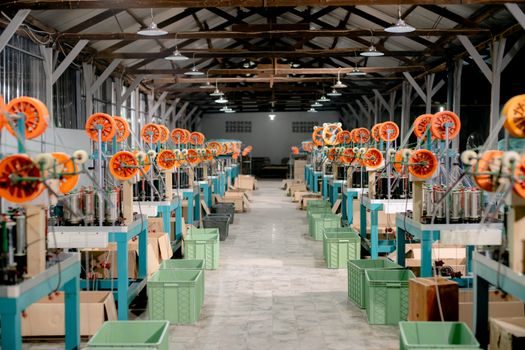
The dominant failure mode in the 1,250-3,500 kN cold chamber band is shot-end leakage at the plunger tip, driven by aluminium-solder pickup and shot-sleeve wear — most OEM warranties cover 12 months or 2,000 operating hours, whichever comes first [S1].
The lowest clamping-force band (≤800 kN) is increasingly served by a cold chamber machine rebuild rather than a new OEM order, because new 800 kN class units have thinned to a single-digit Chinese OEM count in the 2026 catalogue [S1]. The highest band (>8,000 kN) is dominated by three to four Chinese OEMs, with the 1,250-tonne Longhua platform cited as the most frequently quoted unit on Made-in-China as of 2026-03 [S2]. For buyers whose RFQ does not fit a standard 800-12,500 kN band, lead time stretches to 6-9 months for a custom build.
Standards, Certifications, and Buyer Documentation
The standard documentation bundle shipped with a 2026-vintage Chinese cold chamber die casting machine includes: Bureau Veritas inspection certificate, ISO 14000 environmental management system certification, Mitsubishi-class PLC programming manual, hydraulic schematic, and shot-end maintenance log template [S1][S5][S2]. Buyers specifying into EU end-markets should additionally require CE marking under the Machinery Directive 2006/42/EC, and ATEX 2014/34/EU classification for any cold chamber cell handling magnesium or other flammable alloys above the dust-cloud ignition threshold.
For oil-and-gas end-markets requiring NACE MR0175 sour-service qualification, only a subset of the listed Chinese OEMs carry the metallurgical-process documentation required — typically those with separate forging or steel-foundry lines alongside their cold chamber offerings [S5]. The 2026 supplier landscape has not changed structurally since 2024-2025; the cluster map, specification bands, and trading-channel structure remain the dominant shape, with new-entrant flow concentrated in the trading-platform aggregator layer rather than in OEM factory additions [S2].
Trackable signals for the next sourcing cycle: (a) whether HengMing or another Jiangsu OEM announces a >16,000 kN class build to compete with the imported 1,800-tonne European machines; (b) whether Made-in-China's verified-supplier count in the cold chamber subcategory crosses 1,000 by end-2026, up from ~700+ in mid-2026 [S2]; (c) whether used-machine trading houses (Nengshu) expand into remanufactured-with-warranty SKUs to close the 40-60% price-gap with new units [S2].