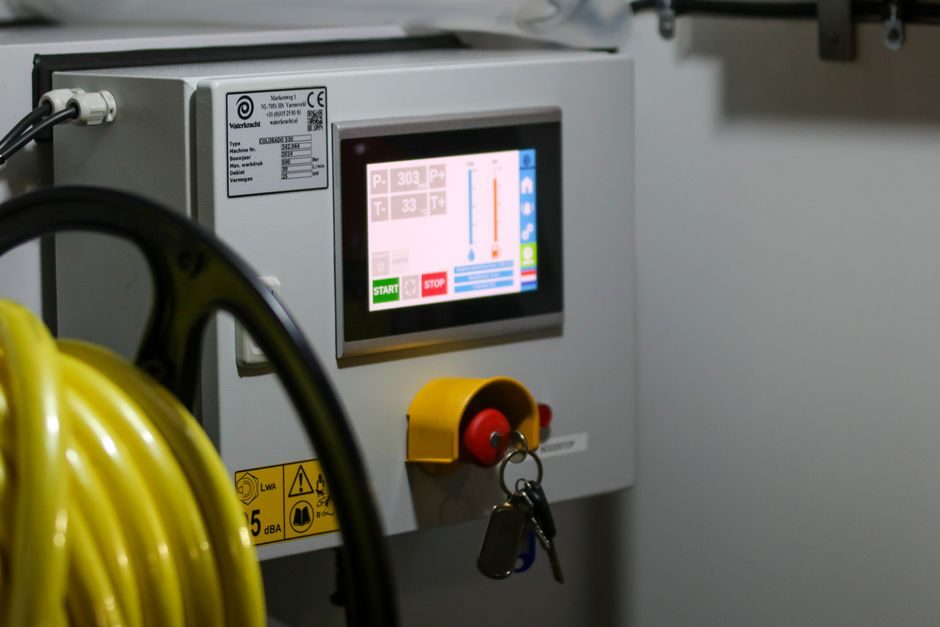
A cold chamber die casting machine is defined by a separate melting furnace feeding a horizontal cold shot sleeve, distinguishing it from hot chamber units that submerge the gooseneck in molten zinc or magnesium; the architecture is mandatory for alloys whose liquidus exceeds roughly 650 °C because iron-based shot components cannot survive sustained immersion in aluminum or copper melt [S1][S4].
Standard clamping-force tiers in 2026 commercial catalogs range from 140 t aluminum cold-chamber units to 5000 t mega-presses such as the Yizumi HII-S series, with mainstream industrial builds clustered between 650 t and 1600 t for automotive structural castings [S1][S2][S4][S9].
Operating Principle and Where the Cold Chamber Architecture Becomes Mandatory
Molten metal is ladled by an automatic or manual pour into the shot sleeve only at the start of each cycle, so the sleeve, plunger tip, and shot chamber stay at a temperature well below the alloy liquidus between shots [S4].
This separation is the reason cold chamber aluminum die casting machine platforms dominate structural parts in chassis, EV battery trays, and large 3C housings, while a hot chamber zinc or magnesium unit handles small zinc alloy hardware at shorter cycle times [S2][S4].
Three alloy families are addressed in current supplier catalogs: aluminum (most common, alloys such as A380, A383, ADC12), magnesium (AZ91D, AM60B), and copper alloys (brass, bronze), with melt temperatures typically in the 580-700 °C range for Al, 580-650 °C for Mg, and 880-980 °C for Cu, which is the thermal reason the cold chamber path is non-negotiable for the latter two [S1][S4].
Tonnage Classification and Machine Family Map
Suppliers segment cold chamber platforms by clamping tonnage, which directly maps to projected casting area and shot weight, and the 2026 product pages show a clear five-tier segmentation. [S9]
Small (140-400 t): 140-ton aluminum cold-chamber units for lamp housings, small motor rotors, and zipper/zamak-adjacent hardware such as the 220 t aluminum press listed by Hubei Youdun [S2]. Medium (650-900 t): the Lanson medium cold chamber line covers 650-900 t and is the workhorse for general aluminum hardware, brackets, and small structural nodes [S9]. Large (1000-1800 t): 1600 t-class units such as the Longhua LH-HPDC 1600T target large-scale casting industries and integrated EV structural nodes [S4][S8]. Heavy (2000-3500 t): used for large automotive subframes, gearbox housings, and 5G base-station heat sinks. Mega (4000-5000 t): the Yizumi HII-S 1000-5000T series caps the range and is positioned for integrated mega-die structural parts where single-piece castings replace welded assemblies [S1].
The Yizumi HII-S specification block cites a re-engineered toggle system with increased rigidity, an optimized hydraulic drive design that shortens cycle time and reduces energy consumption, and HPM technology input for stability, all features that scale linearly with tonnage [S1].
Material-Specific Machine Variants
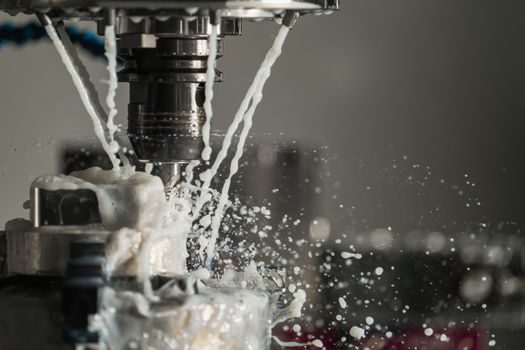
Aluminum cold chamber machines are the most numerous and span the full 140-5000 t range, typically equipped with pre-fill chambers, vacuum-ready sealed shot sleeves, and intensifier-assisted injection to keep air entrapment under control on thin-wall structural nodes [S1][S2][S4].
Magnesium cold chamber variants are a narrower but growing family; the magnesium-specific magnesium die casting machine line typically adds SF6 cover-gas handling, dedicated melt pumps, and anti-flash tooling because magnesium is more reactive at ladle temperature than aluminum [S1].
Copper and brass cold chamber units are built with high-temperature shot sleeve alloys, water-cooled plunger rods, and intensified injection pressure above 90 MPa to push the higher-density melt; these are far less numerous but well represented in plumbing and electrical hardware catalogs [S1][S4].
Vacuum-ready cold chamber machines, including the vacuum die casting machine subset, add a sealed shot sleeve, fast vacuum valve, and leak-rate spec to evacuate cavity air before injection, and are increasingly specified for safety-critical automotive nodes where porosity tolerance is below 1% [S1][S7].
Application Map by Industry
Automotive remains the largest downstream, and the cold chamber machine platform is the default choice for engine blocks, gearbox housings, subframes, EV battery tray lower shells, motor end-shields, and large steering knuckles in the 1000-3500 t segment [S4][S7].
3C electronics: laptop and tablet unibody shells, large server heat sinks, and 5G base-station filter housings are typical applications; the 800-1800 t tier dominates here because the projected area is large but the wall thickness is typically 1.5-3 mm, requiring precision rather than tonnage extremes [S1][S4][S7].
Home appliances and hardware: compressor housings, motor rotors, pump bodies, and bathroom fixture bodies are produced on 400-1600 t units, often paired with an automatic ladler and rotary sprayer such as the CENS-listed cold chamber peripheral set [S6].
Industrial equipment: pneumatic and hydraulic valve bodies, transmission cases, and agricultural machinery housings sit in the 650-1800 t range; piston casting is a documented sub-segment, with Alibaba listing dedicated piston casting machines under the cold chamber technology tag [S7].
Selection Criteria: Cold Chamber vs Hot Chamber vs Other Casting Paths
On four decision criteria the cold chamber path is the clear winner only when the alloy liquidus rules out iron-immersion gooseneck hardware, and a process engineer should weigh these dimensions side by side before spec approval. [S1]
Alloy liquidus: cold chamber handles Al, Mg, Cu (>380 °C melt), hot chamber handles Zn, Pb, low-temp Mg (<420 °C) [S2][S3][S4]. Part size and projected area: cold chamber reaches 5000 t and supports mega-die structural parts, hot chamber tops out near 800 t for small hardware [S1][S2]. Cycle time and thermal efficiency: hot chamber wins on cycle time because the melt is already inside the machine, cold chamber pays a ladling overhead per cycle [S2][S4]. Die life and steel cost: cold chamber dies typically run H11 or H13 tool steel with vacuum-ready surface treatments; Yizumi cites improved rigidity and design for every application and a longer machine service life on the HII-S platform [S1].
Where neither cold nor hot chamber fits, a gravity die casting machine is the alternative for lower-volume, lower-pressure aluminum and bronze parts where porosity and pressure tightness are non-critical, and this trade-off is the primary reason the cold chamber retains dominance in safety-critical structural nodes [S4].
Peripherals, Automation, and Specification Discipline
Current 2026 catalogs list cold chamber machines together with their standard peripheral set: automatic ladler (pneumatic or servo-driven), automatic sprayer in rotary or fixed configurations, melt holding furnace, die-temperature control unit, and trim press; the CENS product page bundles a cold chamber machine with an automatic lader and rotary-type automatic sprayer as a turnkey line [S6].
Two specification numbers discipline every cold chamber quotation: clamping force in tonnes (the headline tonnage) and shot weight in kilograms, plus the injection pressure in MPa and the maximum die dimensions in mm; the Yizumi HII-S page emphasizes a reduced pressure build-up time and top line acceleration as cycle-time differentiators rather than headline tonnage [S1].
Mainland China remains the dominant supply base: Bengbu Long Hua, Yizumi, Lanson, and Hubei Youdun all list FOB, CIF, LC, T/T and D/P terms, off-season lead time within 15 workdays and peak-season lead time of one month as the commercial envelope for standard cold chamber models in 2026 [S2][S8][S9].
Limitations, Failure Modes, and Sourcing Signals
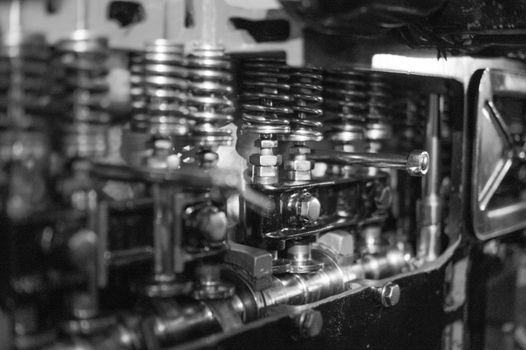
The cold chamber architecture has three persistent failure modes: cold-shut defects from insufficient melt temperature in the sleeve, solder and oxide inclusions from manual ladling, and die wear accelerated by the high injection pressures of 60-100 MPa typical of aluminum cold chamber units [S1][S4].
Vacuum-leakage on sealed-shot cold chamber builds is a documented limitation because every cycle reseals the shot sleeve, and any leak past the plunger tip degrades the porosity outcome; users therefore monitor vacuum decay time as a daily KPI rather than as a commissioning check [S1].
Two trackable signals for 2026 sourcing: the 2026 Yizumi HII-S product line continues to advertise modular tested modules in inventory for fast delivery, and Bengbu Longhua's 2026 product list carries OEM/ODM service with sample availability, both of which compress lead time for non-standard tonnage [S1][S8].
For a process engineer weighing whether to use cold chamber, hot chamber, gravity, or vacuum, the alloy liquidus, projected part area, and porosity tolerance are the three numbers that decide; for a broader look at how die casting sits inside the wider metal-forming chain, see the Sand Casting Mold TCO: Cost Drivers, Spec Gates, and 5-Year Buy Map, and for the die-steel selection logic that the cold chamber die set rides on, Tool Steel vs Alloy Steel: 2026 Selection Map by Grade, Hardness, and Duty lays out the grade and hardness decision.