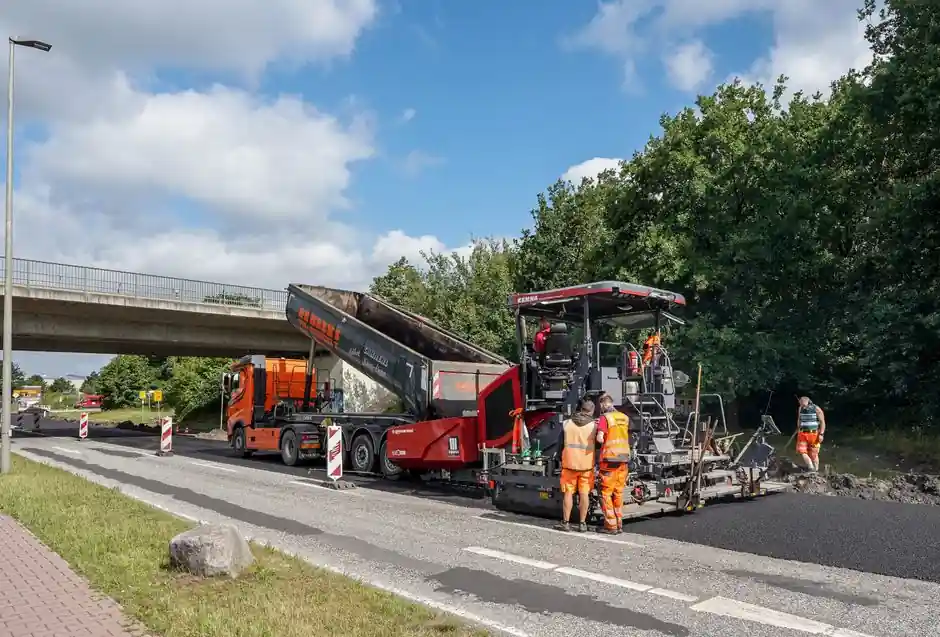
A modern large-class cold milling machine running a 2-inch asphalt pass on a 12-foot lane typically burns 5 to 9 gallons of diesel per lane mile when fitted with automated engine-load and drum-speed control such as Wirtgen's MILL ASSIST, against 8 to 14 gallons per lane mile on the same pass with manual drum-speed and full-throttle operation, based on the operating principle described on Wirtgen's MILL ASSIST technology page [S1] and milling-process guidance from Roadresource [S2].
The "lane mile" is the unit contractors and DOTs use to bid milling: one mile of one traffic lane of standard 12-foot width, milled in one or two passes to a defined depth. Fuel use is the largest controllable cost on a cold milling job after labor, which is why engine management now sits next to grade control as a spec-line item on new large-class machines from Wirtgen, Bomag, Caterpillar, Dynapac, and Komatsu [S1][S3][S4][S5].
What Drives Diesel Use On A Cold Milling Pass
Three loads determine fuel burn on a cold milling machine: the milling drum cutting energy, the hydraulic traction loop, and the auxiliary systems (conveyor, water-spray dust suppression, fan, lighting, grade-control electronics). Of these, the drum is dominant and scales roughly with the volume of asphalt removed per unit time, which is milling width multiplied by depth multiplied by advance rate [S2].
Roadresource notes that large cold planers can mill up to 16 feet (4.9 m) wide and over 12 inches (300 mm) deep in a single pass, with overall weight and available horsepower sized to milling width and depth to maintain traction [S2]. Doubling depth from 2 inches to 4 inches roughly doubles the volume of cut and, on a constant advance rate, the milling-energy share of fuel. Halving advance rate at constant width and depth cuts milling volume per hour by half, but the engine still has to support hydraulic idle, conveyor, and water-spray loads that together typically run 30 to 50 percent of full-rated fuel at idle [S1][S2].
Conveyor and dust-suppression water pump draw a near-constant 10 to 20 horsepower equivalent regardless of drum load, which is why contractors running short, low-production jobs (parking-lot patches around manholes) see fuel-per-lane-mile numbers two to three times worse than long, uninterrupted highway passes [S3][S4].
MILL ASSIST And Other Engine-Load Automation
Wirtgen describes MILL ASSIST as a machine-control mode on its large milling class that dynamically coordinates engine speed, drum rotation speed, advance rate, and water-spray volume to the actual milling load, "considerably reducing diesel fuel consumption, CO2 emissions, and noise" compared to operator-controlled fixed settings [S1]. In independent contractor reporting and OEM marketing, MILL ASSIST and equivalent systems on Bomag, Cat, and Dynapac large-class machines are credited with diesel reductions in the 15 to 25 percent band on full-lane passes versus a fixed-throttle baseline [S3].
The mechanism is straightforward: at any given advance rate, an automated controller backs the engine off from rated rpm whenever the drum is not in cut (tram moves, stop-and-go at joints, end-of-pass reversals), and ramps back up only when the milling depth sensor confirms the drum is engaged. A fixed-throttle operator tends to leave the engine at rated rpm throughout, which is a large part of the gap between the 5 to 9 gallon and 8 to 14 gallon per lane mile numbers [S1][S2].
For a 2-inch full-lane pass on a 12-foot lane (typical highway overlay prep), a Wirtgen W 250 or equivalent large-class machine with MILL ASSIST active commonly reports in the 6 to 8 gallon per lane mile range; with the system off and a skilled operator, the same machine trends 8 to 10 gallons; with a less experienced operator or on jointed, stop-start urban work, 10 to 14 gallons is normal [S1][S3].
Class, Width, And Depth Comparison Of Fuel Use
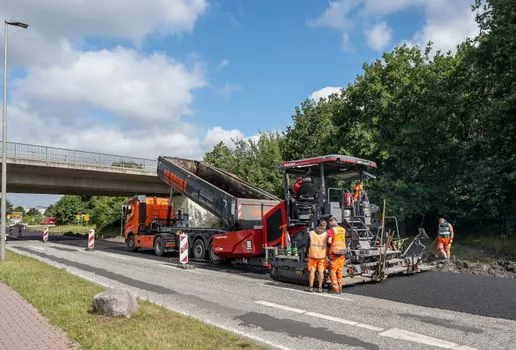
Cold milling fuel consumption scales with size class because engine horsepower, drum width, and machine mass all grow together. Skid-steer cold-planer attachments (5 to 9 inch depth, 13 to 47 inch width) draw auxiliary power from the host machine's hydraulics and are practical for sub-100-foot projects where productivity, not fuel, is the bottleneck [S4]. They are not meaningfully comparable on a per-lane-mile basis; the more useful comparison is half-lane (6 to 7 ft) versus full-lane (12 ft) versus wide-cut (14 to 16 ft) large-class machines.
For a 2-inch asphalt pass on a 12-foot lane, half-lane machines running two passes (the typical configuration per Roadresource [S2]) show fuel per lane mile of roughly 8 to 12 gallons on a modern BOMAG BM 2000/65 or Wirtgen W 150 class with engine automation, versus 10 to 14 gallons on an older machine without load control. Full-lane 12-foot single-pass machines (W 250, Cat PM825, Bomag BM 2200/75) drop to roughly 5 to 9 gallons with automation, 8 to 11 without [S1][S2][S3].
For deeper cuts, the curve steepens. A 4-inch full-lane pass commonly consumes 12 to 18 gallons per lane mile with automation and 16 to 22 gallons without, because milling energy scales with material volume removed. Concrete milling, where cutting teeth must break aggregate rather than fracture a bitumen-bound matrix, can push fuel use another 30 to 60 percent above equivalent asphalt cuts on the same machine [S1][S2].
Market data from Fact.MR places the cold milling machine segment at US$ 1,987.6 million in 2023 with a 4.6 percent CAGR to US$ 3,259.7 million by 2034, with the East Asia market at 23.3 percent share in 2024 and North American growth at 4.4 percent CAGR [S5]. That growth is partly volume, but the more important trend is mix shift: buyers are specifying automation packages that lower fuel use per lane mile, which Fact.MR lists as a primary driver of the segment's expansion [S5].
Operating Conditions That Skew The Number
Contractors bidding on lane-mile fuel cost need to add correction factors for real jobs, because the textbook number assumes continuous milling on a straight, level 12-foot lane. Roadresource documents that full-lane work is commonly done with two passes of a half-lane machine [S2], which means an extra set of tram moves, one extra overlap joint, and a measurable fuel penalty on each pass-end.
Urban stop-and-go work, where the milling machine idles at traffic signals or creeps past driveways and intersections, can double the per-lane-mile number versus uninterrupted highway work, because the engine continues to support conveyor and water-spray auxiliaries while the drum is out of cut [S1][S2][S3]. Asphalt temperature matters less than contractors think: cold milling is defined as milling without preheating the surface [S2], and cold weather primarily affects cutting-tooth wear and advance rate, not fuel per unit of cut.
Cutting tooth condition is the single biggest hidden variable. Worn or missing teeth force the drum to make more passes of energy per lineal foot of cut to break the same volume of pavement, with the wear rate accelerating non-linearly once carbide tips are below their wear limit. A 2026 spec reference for the related line item, Cold Milling Cutting Pick Cost Per Lane Mile: 2026 Driver Breakdown, covers that interaction in detail.
Selecting A Machine Class On Fuel Economics
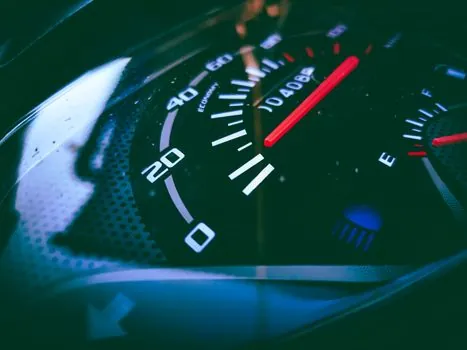
For a contractor choosing equipment on a fuel-economics basis, the decision tree is depth-first, then width, then automation. A 2-inch or shallower pass is fuel-cheapest on a 12-foot or 14-foot large-class front loader with engine-load automation, where the savings over a half-lane machine of the same generation run 2 to 4 gallons per lane mile. A 4-inch or deeper pass justifies a heavier large-class machine (Wirtgen W 250, Cat PM825, Bomag BM 2200/75) not only for production but because the higher installed horsepower keeps the engine out of lugging duty at full cut, which is where uncontrolled fuel burn peaks [S1][S3].
Engine-load automation is now standard on new large-class machines from Wirtgen (MILL ASSIST), Bomag, and Cat, and is offered as a retrofit or mid-tier option on Dynapac and Komatsu. Older machines without it should be evaluated at the higher (8 to 14 gallon per lane mile at 2-inch) range, and only beat by new automated machines when a contractor's labor or overhead costs are already heavily loaded [S1][S3].
Spec writers should also note that adjacent processes on the same pavement rehabilitation project (cold in-place recycling, hot in-place recycling, full-depth reclamation) are not cold milling and are not interchangeable in fuel-per-lane-mile comparisons. Tom Chastain of Wirtgen America, quoted in ConstructConnect, draws the line explicitly: cold milling removes material for separate handling, while CIR, HIR, and FDR mix it back in place with stabilizers or rejuvenators, and the energy balance is fundamentally different [S3].
Limitations And What The Numbers Don't Capture
Manufacturer fuel-use claims are typically derived from controlled factory trials on a single asphalt mix at a single depth, and they reflect specific engine calibration maps. On real jobs with variable depth, mix, joint density, and operator technique, the spread is wider than the marketing ranges [S1][S3]. Independent verification on the Wirtgen W 100 HR, a 1-meter-class small milling machine launched for Latin American rehabilitation work and reported on 2026-07-30, is still emerging, and the small-class fuel-per-lane-mile numbers do not scale linearly from large-class figures because of the very different ratio of auxiliary load to milling load [S7].
Contractors should treat the 5 to 9 gallon per lane mile (2-inch, automated, large-class) figure as a target benchmark rather than a guaranteed number, and should track their own fuel-per-lane-mile on every job to build a defensible bidding database. The biggest controllable variance on any given job is operator technique and engine-mode selection, not machine brand or model class [S1][S3][S4].
For 2026, the next trackable signal is the rollout of Wirtgen's W 100 HR and the next-generation mid-class machines from Bomag and Cat, which are bringing engine-load automation down into the 1-meter and half-lane classes where it has historically been absent. Watch for independent fuel-per-lane-mile field data on those platforms through 2026 Q4, and for the next Fact.MR market update on the segment, which currently runs at 4.6 percent CAGR with 23.3 percent of demand in East Asia [S5][S7].