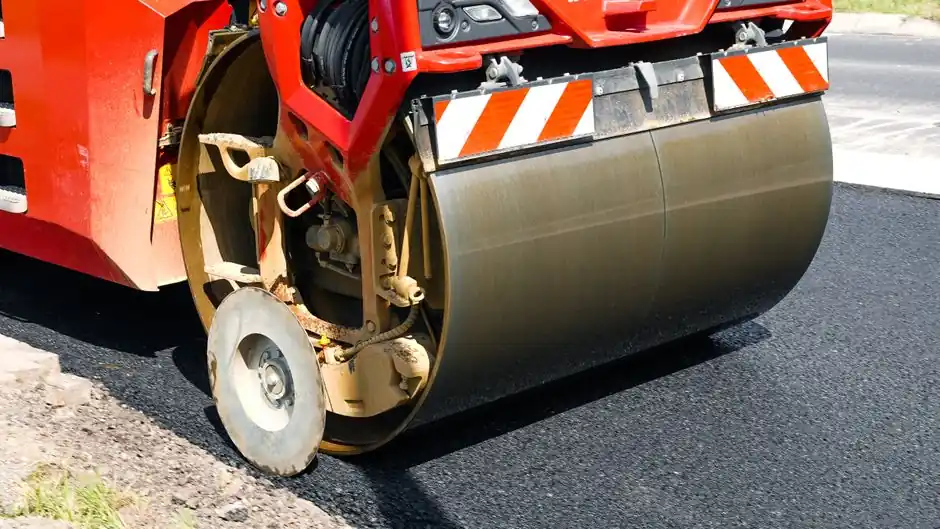
A standard conical tungsten-carbide cold milling pick on the open market retails between $3 and $8 per tooth in 2026, with engineered or diamond-tipped variants reaching $12 to $25 each, so pick consumption per lane mile becomes the dominant variable in the tooling line of a milling bid [S3][S4].
A 12 ft (3.7 m) wide large-class milling drum carrying roughly 120 to 180 picks at standard line-spacing (about 15 mm / 0.6 in pitch) consumes between 25 and 80 picks per lane mile on typical 2 to 4 inch asphalt work, which places per-mile pick spend in a working band of $80 to $300 before factoring in holder and drum-wear costs [S1][S3].
What drives pick cost per lane mile
Four variables move the per-mile tooling number: tooth grade, milling depth, abrasive aggregate content, and operator aggression on the down-pressure circuit [S1][S3].
Conical tungsten-carbide picks are the baseline tooling on every Wirtgen-class cold milling machine drum, with bit body diameters of 20 mm (0.79 in) and a hex shank matched to the holder block [S3]. Premium or diamond-impregnated tips extend tool life by 30 to 100 percent on hard aggregate but lift the per-tooth price from the $3 to $8 commodity band to $12 to $25 each [S3].
Doubling milling depth from 2 in to 4 in on the same pavement does not simply double pick wear, it increases tooth loading on the order of 1.5 to 2.0x per cubic yard of material removed, because the cut geometry changes and more energy is dissipated as heat at the tip [S5].
A contractor running 4 in or deeper cuts, abrasive granite or chert aggregate, and minimal water suppression can expect pick consumption at the high end of the band; a shallow 1 to 2 in micro-mill pass with a fine-milling drum at roughly 5 mm (3/16 in) tooth spacing falls at the low end [S3][S5].
Bid-tab reality vs catalog tooling price
Public 2026 bid data shows the line item "COLD MILLING ASPHALT PAVEMENT" ranged from $0.60 to $20.00 per square yard inside a single Arkansas DOT letting (1/21/2026), a 33x spread that has very little to do with the per-tooth cost and almost everything to do with job size, mobilization, and traffic control scope [S5].
Separating picks from the unit price is not straightforward because contractors typically bury tooling inside the milling line item or roll it into a mobilization allowance, so the per-square-yard price in a bid tab should be read as a black-box number, not a clean pass-through of the $3 to $25 tooth cost [S5].
For reference, the S5 contractor table places typical milling-only rates at $2.50 to $5.00 per square yard for 1 to 2 in depth, $5.00 to $8.00 for 2 to 4 in, and $8.00 to $12.00 for 4 in and up, which on a 12 ft lane (1 lane mile = 7,040 square yards of surface) corresponds to roughly $17,600 to $84,500 of milling per lane mile before asphalt overlay is added [S5].
A 2 to 4 percent tooling allowance inside that range, the share that picks, holders, and water-nozzle consumables normally consume, lines up with the $80 to $300 per-mile pick-spend band calculated from per-tooth price and consumption above [S1][S3][S5].
Pick consumables compared by job type
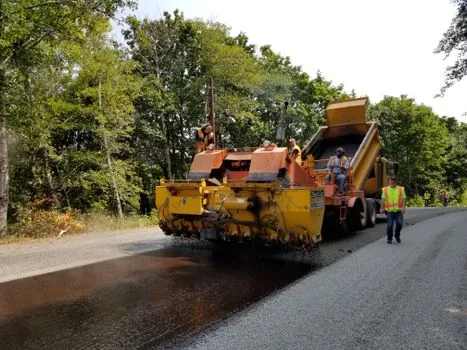
Three milling job profiles dominate the demand mix: full-depth highway removal, 1 to 2 in resurfacing prep, and micro-milling for surface texture, and each carries a different pick-economics profile [S1][S3][S5].
Full-depth highway work uses large-class machines such as the W 250 Fi or W 380 Fi (milling widths up to 12 ft 6 in, depths up to 14 in, operating weights above 90,000 lb), where a deeper pass and a heavier duty cycle push consumption to 60 to 80 picks per lane mile and pull per-mile pick spend toward the $250 to $600 range when premium tips are specified [S1].
Standard 2 in resurfacing prep on state routes uses compact and large milling machines in the 3 ft 3 in to 6 ft 7 in width range, where the 25 to 50 picks per lane mile figure and a $3 to $8 commodity pick keep per-mile spend in the $80 to $250 window and is the configuration most often referenced in public bid tabs [S1][S5].
Micro-milling with a fine-milling drum at 5 mm (3/16 in) tooth spacing roughly triples pick count on the drum but runs at 1 in or shallower depth, which leaves cut energy per tooth lower and total pick consumption close to 30 to 60 per lane mile even with the increased line count, a key reason micro-mill is a separate bid line in many agency schedules [S3].
Total cost of ownership beyond the pick price
The tooth itself is the visible line item, but holder blocks, drum bearing wear, and downtime from bit changes routinely add 20 to 40 percent on top of raw pick spend over the life of a drum [S1][S3][S4].
Holder blocks for a 20 mm shank pick typically run $25 to $60 each and a heavy-duty project can consume 2 to 5 holders per lane mile as the steel wears around the retention clip, so a 50-tooth-per-mile bit job on a 140-tooth drum should budget an extra $50 to $200 per lane mile in holders alone [S1].
Downtime is the second hidden cost: a pneumatic or hydraulic bit-change tool cycles in 10 to 20 seconds per pick, but the production loss while a half-lane machine sits idle is typically valued at $4 to $10 per minute in contractor cost models, and a full drum re-toothing at 140 picks adds 25 to 45 minutes of lost production per cycle [S1][S5].
Water-suppression nozzle wear and cutter-housing liner consumption are a third cost vector; nozzles that plug or wear increase dust and tip temperature, which shortens carbide life by an estimated 10 to 25 percent, so a deferred maintenance approach on water systems shows up directly in the pick line over the next shift [S3].
Who needs a per-mile pick model and who does not
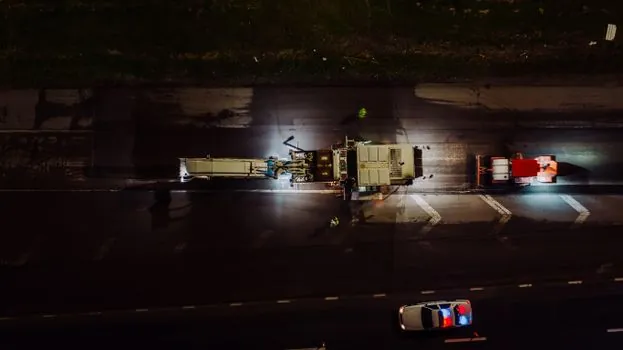
Contractors bidding per lane mile on DOT work need this model; rental-only operators and small parking-lot outfits do not, because the pick spend is hidden inside the rental rate or the daily rate of an asphalt paver-adjacent crew [S2][S5].
For a paving general contractor bidding cold milling as a subcontracted scope, isolating the per-mile pick number enables a tighter risk margin and protects against aggregate surprises on regional aggregate, since RAP disposal, haul distance, and traffic control are billed separately and should not be commingled with tooling cost [S5].
For an agency estimator building a 2026 schedule of values, the per-mile pick cost matters less than the milling line item itself, but the model is useful as a sanity check when a low bid comes in 20 to 30 percent under the engineer's estimate, because an unrealistically low number often signals the contractor is underestimating pick or holder consumption [S5].
Standards and sourcing for milling tooth selection
Cutting teeth are consumable parts and are not themselves ATEX- or IECEx-certified components; the standards regime that governs milling operations sits at the machine and job level (operator certification, silica-dust suppression under OSHA 1926.1153, and applicable state DOT specifications for surface texture) [S3].
Picks are designed for quick field replacement without drum removal, and the modern cold planer couples the bit to a holder block that is indexed into the drum helix, with line spacing and wrap angle set by the drum manufacturer for the intended depth and material [S1][S3]. The most common bit in service is conical with a tungsten-carbide tip, with diamond-tip variants gaining share in 2024 to 2026 on hard aggregate [S3].
For an estimator tracking the 2026 market, three signals are worth watching: agency bid tabs (which already show 33x intra-state spread), OEM drum-and-pick package pricing through the Wirtgen / Caterpillar / Roadtec / BOMAG dealer network, and the diesel-fuel index, since milling is a fuel-dense operation and pick-spend models should flex with fuel above roughly $4 per gallon [S1][S5]. A more detailed treatment of large-class equipment demand sits in this site's cold milling machine demand drivers brief.