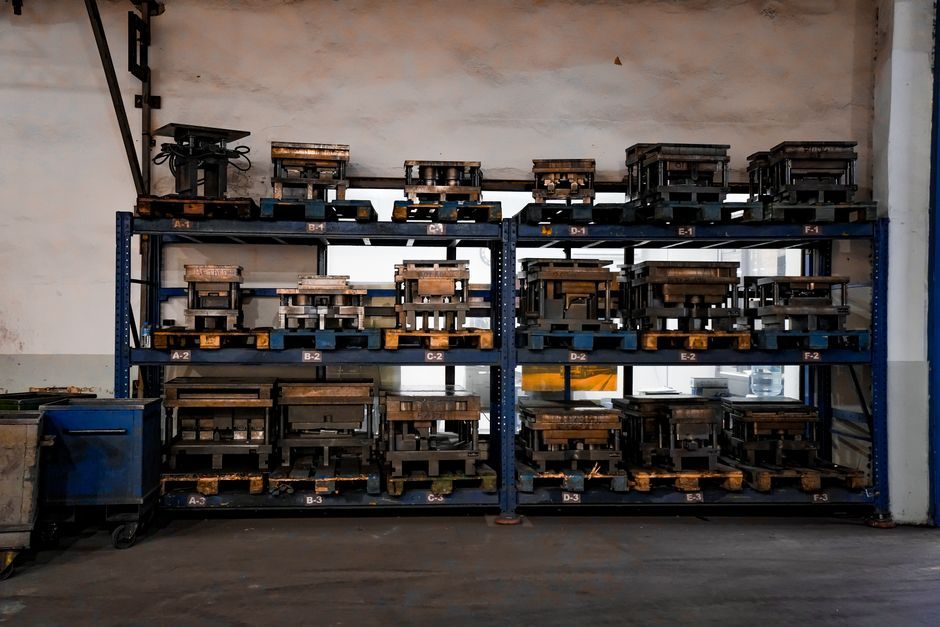
Selective pallet rack is the most commonly installed warehouse racking system and provides maximum flexibility and versatility, per Harley Industrial's 2025 service description [S9]. Installers handling projects on the scale of a 400,000 sq ft distribution center routinely complete the full uprights-beams-wire-deck build-out in roughly two to three weeks with a 6-8 person certified crew, per Pro Material Handling project claims published 2026-07-13 [S1].
Scope, governing standards, and pre-install gates: the installer is responsible for floor survey, base-plate anchor pattern, frame plumb (1:500 typical), beam safety-clip engagement, row spacer verification, and load-sign placement before the first pallet lands — a sequence that maps directly to RMI (USA), AS4084 (Australia), and FEM (Europe) specification regimes referenced by major OEM suppliers [S3]. A full walkthrough of the system types you may be specifying (selective, drive-in, push-back, pallet flow, cantilever) sits in this pallet rack types field guide.
Pre-Install Site Survey and Floor Condition
Floor flatness of 3 mm over 3 m and concrete compressive strength of at least 25 MPa (3,600 psi) are the starting gates for any selective rack build, and slabs outside that envelope must be patched or re-poured before the first base plate is set [S2]. Survey work also has to capture ceiling height, column spacing, sprinkler head clearance, and the future forklift mast envelope — Pro Material Handling's 15-year installer base treats that data set as the non-negotiable input to a stamped rack layout [S1].
For brownfield sites, the survey must also map existing rack from previous tenants, because mixing frame and beam SKUs from different manufacturers is the single most common cause of beam-to-upright mismatch failures flagged during commissioning audits [S2]. A full facility tear-out before the new install — typically 1-2 weeks for a 100,000 sq ft footprint — is a separately quoted scope, and ATB Material Handling positions it as a core service line alongside the rack build itself [S2].
Anchor Pattern, Base Plates and Frame Plumb
Standard base-plate anchoring uses 1/2 in. or 5/8 in. wedge anchors, two per plate minimum, set into the slab with a hammer-drill and a torque-tested expansion shell; under-sized anchors are the most frequent audit finding on used-rack re-installations [S2]. Frame plumb tolerance after standing is the metric a spec engineer can actually check on site — a 1:500 ratio (about 3 mm per 1.5 m of frame height) is the accepted installation ceiling across RMI, AS4084, and FEM-aligned work [S3].
Row spacers belong on every adjacent frame pair above the first beam level — typically at the top and at the mid-height brace row — and they are not optional even when the aisle looks square, because a forklift impact on the end frame will rack the entire bay without them [S2]. On tall frames (24 ft and above, per Seattle Pallet Racking's used upright inventory listing of 8 ft to 24 ft heights), the installer should also spec a heavier 3 in. x 1-5/8 in. column profile and a 4-anchor base plate rather than the 2-anchor economy plate [S5].
Beam Connection, Safety Clips and Load Signage
Every beam must be seated fully into the upright slot and locked with the manufacturer-supplied safety clip (a pin or beam-lock style) before the installer walks away from the bay — this is the single most documented compliance gap in third-party rack-safety inspections [S2][S4]. Beam capacity is then communicated on a load sign riveted to the end frame of each bay, listing permissible uniform load per pair of beams in kg or lb, and that sign has to match the engineered drawing, not the procurement invoice [S3].
Wire decks, where used, go on top of the beams with a manufacturer-supplied waterfall edge that drops into the beam step, and they must be pinned or clipped to prevent uplift when a forklift drags a pallet off the rack [S2]. A spec engineer reviewing the as-built should reject any beam that shows more than 2 mm of permanent deflection after the first loaded cycle — that is the practical field signal that the beam section is under-spec for the actual unit load [S3].
Compliance to RMI, AS4084 and FEM
Major OEM rack lines are engineered to comply simultaneously with RMI (US), AS4084 (Australia), and FEM (Europe), which is why a single product code can ship into all three regions with only the load sign and anchor pattern changing [S3]. Chinese manufacturers exporting turnkey warehouse builds — T Racking alone claims 200,000+ sq m of manufacturing capacity and 15-day order-to-ship lead time on standard selective rack — bundle design, anchor calcs, and stamped drawings to that trilateral spec set [S3].
For a US install, the practical implication is that the engineer of record signs to RMI/ANSI MH16.1, while a Melbourne or Sydney project signs to AS4084-2012 and a Düsseldorf build signs to FEM 10.2.04 — the beam deflection limit, the anchor pull-out calc, and the frame plumb tolerance all reconcile, but the load sign wording and the seismic zone factor do not [S3][S9]. Skipping that reconciliation at the design stage is how projects end up with rejected permit sets and reinstalled signage.
Commissioning Checks Before First Pallet
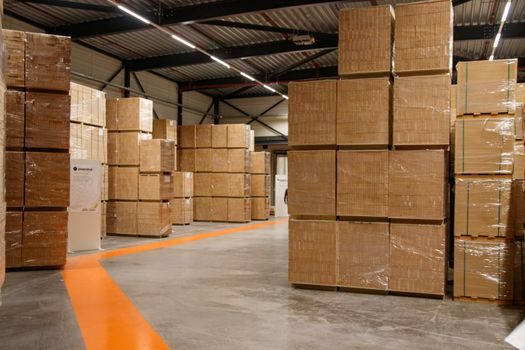
Commissioning the rack is a discrete, sign-off step — the installer's foreman and the customer's warehouse manager walk the build bay-by-bay, check frame plumb, beam-clip engagement, base-plate torque, row-spacer presence, and load-sign placement, and only then release the aisle for forklift traffic [S2]. Tucson Pallet Racking and Seattle Pallet Racking both market post-install safety inspections as a standalone service line, which is the practical sign that the original install is rarely accepted by the customer without a third-party walk [S4][S5].
On the operations side, the warehouse manager needs a documented SOP that bans climbing on beams, caps unit loads at the sign-rated figure, and requires immediate re-inspection of any frame after a forklift impact — that SOP and the rack layout drawing are what the local authority having jurisdiction (AHJ) will ask for at the next fire-safety walk [S2]. Where the rack is the load-bearing structure for an automated stacker crane or AGV aisle, the commissioning checklist tightens further into foundation tolerance and laser-survey alignment — see the stacker crane installation gates and AGV installation layout references for those adjacent scopes.
Install Timeline and Crew Sizing for 2026 Builds
Realistic 2026 install rates, drawn from the published footprints of US West Coast installers: a 50,000 sq ft selective rack build with 800-1,200 pallet positions runs 8-12 working days with a 4-6 person crew, and a 400,000 sq ft build — the size Pro Material Handling cites as a completed project — runs 6-10 weeks at the same crew ratio [S1][S4][S5]. Decommissioning of an equivalent prior tenant's rack is sequenced ahead of the new install and typically takes 1-2 weeks for the same 50,000 sq ft footprint [S2].
Crew certification is the gating constraint on the labor side: Pro Material Handling advertises a 100% safety-focused operation across 500+ completed projects, and ATB Material Handling notes licensed and insured installation crews with 100+ years of combined experience — both signals that the rate-limiting step is the certified installer pool, not the rack delivery [S1][S2]. For owners comparing bidders, a 5-10% price spread between two qualified installers is normal and almost always explained by anchor spec, row-spacer count, and whether the load signs are riveted or adhesive-backed.
Trackable next signal: the 2026 wave of West Coast warehouse lease turnovers (Los Angeles, Tucson, Seattle metros) is creating a bundled install + decommission queue at ATB, Pro Material Handling, Tucson Pallet Racking, and Seattle Pallet Racking that runs into Q4 2026, and lead times for stamped engineering drawings have stretched from a typical 5 business days to 10-15 business days at the larger shops [S2][S4][S5]. Spec engineers pushing new projects to award before September 2026 will see materially shorter permit-to-install windows than projects awarded in the November-December window.
For component-level specifications, see pallet rack, linear guide, and storage rack.