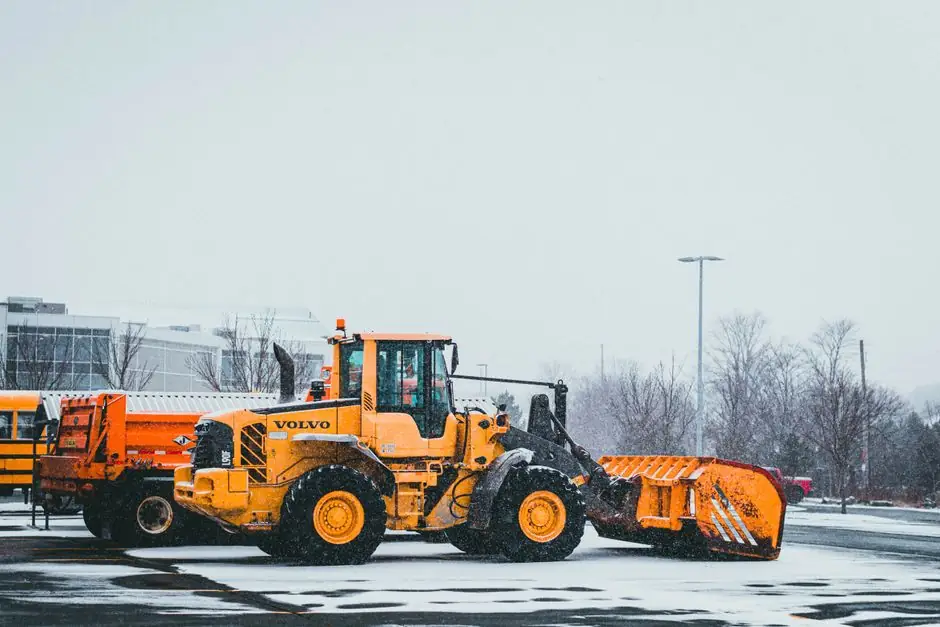
A Wirtgen W 200 F moved from Richland, PA to Saluda, SC is classified as a super load because of its oversize and overweight envelope, and a lowboy trailer was selected as the only practical carrier for that move [S3]. That single case captures the wider rule: small cold milling machines weighing around 10,252–16,424 lbs can roll on lighter trailers, while compact and large units from roughly 32,500 lbs upward push straight into the 60,000–90,000 lb band that requires a 4-axle lowboy [S2][S5].
Bridge and width laws dictate the rest of the equation: a standard lowboy runs 8 ft 6 in wide (102 in), with a deck only 18 to 24 in off the ground, and that low deck is what lets a loaded cold miller stay under the common 13 ft 6 in bridge clearance [S4]. Wirtgen's current small-class line covers working widths from 14 in (W 35 XRi) up to 3 ft 11 in (W 120 Ri), and the compact class climbs to 4 ft 11 in (W 150 Fi) at operating weights of 44,092–47,179 lbs [S2].
Operating Weight Bands: Where Each Class Sits on the Trailer
Wirtgen small milling machines weigh 10,252 lbs (W 35 XRi, 14 in milling width, 60 hp) up to 33,951 lbs (W 120 Ri, 3 ft 11 in, 215 hp) under the CE operating weight specification [S2]. Compact machines jump to 44,092–47,179 lbs across the W 100 Fi through W 150 Fi, with milling widths of 3 ft 3 in to 4 ft 11 in and milling depths capped at 13 in [S2]. Cold planer shipping guidance published 2026-09 confirms that machines in the 60,000–90,000 lb range demand 4-axle lowboy trailers, which lines up with the upper compact and most large-class Wirtgen models [S5].
The 35,000–48,000 lb range is the comfort zone for a two-axle lowboy rated around 40,000 lbs, and tri-axle units carry 60,000 to 80,000 lbs once jeeps and boosters are added to push a combination toward the 80-ton legal envelope [S4]. A typical super-load move like the W 200 F takes longer than a normal haul because the loaded trailer cannot move at highway speed under oversize restrictions, and permit acquisition alone can stretch the total transit to 2–4 weeks across multiple states [S3][S5].
Width Constraints: 8 ft 6 in Legal Deck vs 4 ft 11 in Working Width
The legal lowboy deck is 8 ft 6 in (102 in) wide, and anything beyond that triggers an over-width permit plus route planning through every state DOT on the corridor [S4]. Cold milling machines themselves are narrower than that legal ceiling: the widest Wirtgen compact unit shown, the W 150 Fi at 4 ft 11 in milling width, leaves roughly 3 ft 7 in of deck to spare, so the load almost never blows the width envelope on its own [S2].
What blows the envelope is the discharge conveyor: a height-adjustable, slewing loading conveyor on most small and compact cold milling machines adds length and offset that the trailer has to absorb, which is why lowboy overall length runs 48 to 53 ft, with a usable low well of 24 to 29 ft and the rest taken up by gooseneck and rear axle group [S2][S4]. For self-propelled iron like milling machines, pavers, and asphalt pavers, a removable-gooseneck (RGN) lowboy is the practical choice because the deck ramps to the ground and the unit drives on under its own power [S4].
Height and Bridge Clearance: Why the Lowboy Deck Is the Decisive Number
A standard lowboy well sits 18 to 24 in off the ground, which is the entire reason the equipment is called a lowboy: the low deck buys back enough vertical room to carry machines up to roughly 11 ft 6 in to 12 ft tall while staying under the 13 ft 6 in to 14 ft common bridge limit [S4]. A Wirtgen small miller like the W 100 Fi is far shorter than that, but the rule still governs transport prep because rear-loaders carry a folded discharge conveyor that adds a few feet of overall height at the back [S2].
Taller than 13 ft 6 in loaded and the move drops into a flagged, permitted super-load category with escort vehicles and route surveys, exactly the path the W 200 F super-load move took when permits were applied for before pickup [S3][S4]. FMCSA regulations require state-by-state DOT oversize permits, escort vehicles, and mandatory border inspections for cold planer moves of this size, which is why planners need roughly 2–4 weeks of lead time for a long-distance haul [S5].
Trailer Matching by Class: From Light Dolly to 4-Axle Lowboy
For a small milling machine in the 10,252–16,424 lb band (W 35 XRi through W 60 Ri, milling widths 14 in to 2 ft), a 2-axle lowboy at roughly 40,000 lb capacity is sufficient and avoids the multi-state permit chain [S2][S4]. The mid-range 32,518–33,951 lb W 100 Ri and W 120 Ri small-class units can still run on a tri-axle lowboy at 60,000–80,000 lb rating, with no jeeps or boosters needed for short hauls [S2][S4].
Compact-class units at 44,092–47,179 lbs sit right at the boundary: a tri-axle can technically carry them, but fleet practice is to add jeep or booster axles to spread the load and stay under per-axle weight laws, with notations like 2-2-2 describing the tractor-trailer-booster grouping [S2][S4]. Above 60,000 lbs, the cold-planer shipping guidance is explicit: a 4-axle lowboy is required, which matches the W 130 Fi, W 150 XFi, W 150 Fi, and any large-class miller carrying wider drums or more engine mass [S2][S5]. The maximum envelope on the heavy-haul side is 150,000+ lbs at 53 ft length and 8.5 ft width for a removable-gooseneck combination, which covers even the largest Wirtgen-class machines once a booster is added [S1].
Loading Method and Securing: Drive-On RGN vs Winch-On Standard
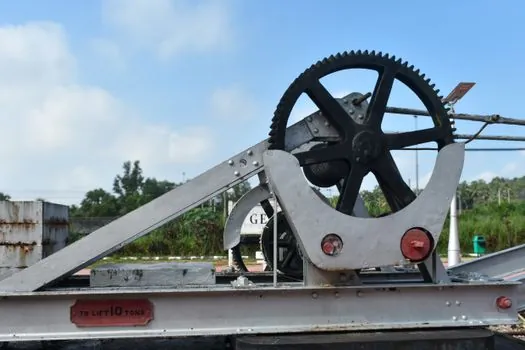
A removable-gooseneck lowboy detaches the neck hydraulically or mechanically and drops the front to ground level, creating a ramp the cold miller drives up under its own crawler or wheel power, after which the neck reconnects and lifts for transit [S4]. This drive-on path is why contractors running self-propelled iron, including cold milling machines, excavators, and bulldozers, standardise their fleets on RGNs rather than standard lowboys [S4].
For non-RGN lowboys, the miller is winched on with chains and binders, which is the procedure used on the W 200 F move, where the driver carefully loaded and secured the machine on a standard lowboy before dispatch from Richland, PA [S3]. Either way, the deck and machine must be checked against per-axle weight laws before the truck clears the yard, since the same envelope that keeps a load under the 13 ft 6 in bridge law can also put a 2-axle lowboy over its 40,000 lb rating if the wrong axle count is on the trailer [S4].
Permit, Escort, and Lead-Time Reality for Oversize Moves
An oversize cold planer move typically takes 2–4 weeks to complete door-to-door, because state-by-state DOT oversize permits, escort vehicles, and border inspections all sit on the critical path [S5]. The W 200 F case ran on that exact pattern, with permits applied for first, paperwork prepared in parallel, the machine fully insured, and only after a couple of weeks did the shipping permits arrive and the loaded lowboy roll out of Richland, PA toward Saluda, SC via I-81 S and I-77 S [S3].
Cold planer shipping costs vary significantly by distance and fuel rates, but the trailer spec is locked in by weight: 4-axle lowboy for 60,000–90,000 lb units, with everything heavier pushed into the super-load category that demands escorts, route surveys, and slower posted speeds [S3][S5]. For contractors moving cold milling machines regularly, the practical takeaway is to keep the make, model, size, weight, and dimensions on file before the first call to a heavy-haul broker, since that data is what determines whether a 2-axle, tri-axle, or 4-axle lowboy is dispatched, and whether the move is a routine haul or a multi-week super-load project [S1][S5].
The next trackable signal is any 2026 update to FMCSA bridge-formula guidance for 4-axle lowboy configurations, since current 60,000–90,000 lb cold planer moves sit close to per-axle weight limits on routes that cross multiple states, and a single state-level permit change can shift the trailer class needed for a given Wirtgen W 130 Fi or W 150 Fi move. For related operating-weight context on similar self-propelled iron, see the tracked vs wheeled undercarriage comparison for cold milling machines.