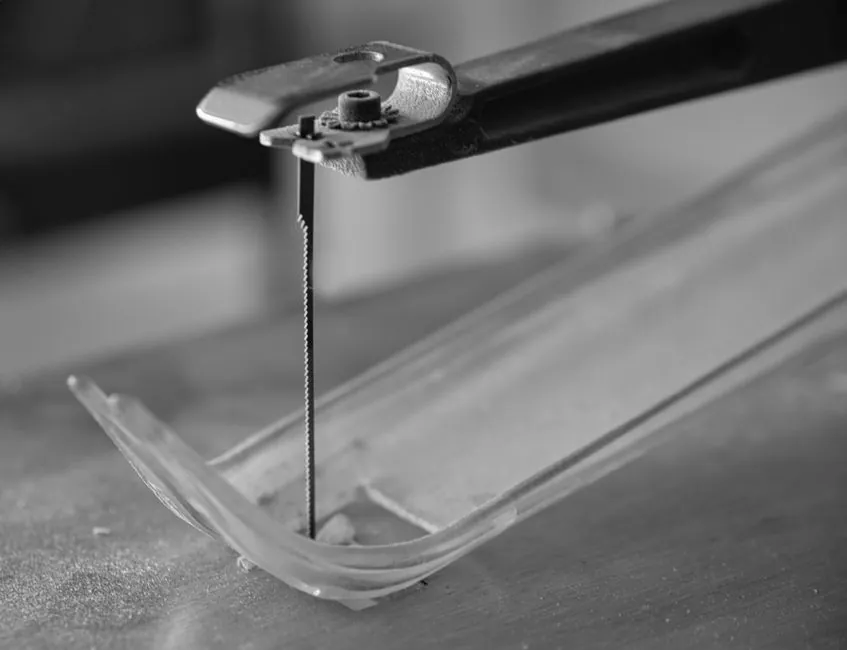
Abrasive-wheel chop saws spin at over 3,000 RPM and grind through stock with aluminum-oxide or silicon-carbide discs, while cold saws use toothed high-speed steel or carbide-tipped blades running between 20 and 150 RPM (recommended 120 RPM) with flood coolant, making the cut effectively cold [S3].
The two machines address the same basic job, severing metal stock, but with opposite physics: the chop saw uses friction and abrasion to remove material, whereas the cold saw shears metal with discrete teeth and carries the heat away in the chip and the coolant film [S1][S3]. That single difference cascades into blade life, cut quality, tolerances, sparks, fire risk, and per-cut cost, which is why a fabrication shop picks one over the other rather than treating them as interchangeable. For a primer on the machine category itself, see the cutting machine reference page.
How the Two Cutting Methods Actually Work
A cold saw blade is a circular, toothed disc, either solid HSS or carbide-tipped, driven by a motor spindle and flooded with cutting fluid. The teeth shear a chip, and the heat of deformation is carried out inside that chip, so the blade body and the workpiece stay near ambient [S1]. The same effect is why the process is called cold cutting: metallurgically, the cut edge retains its original temper, hardness, and grain structure [S3].
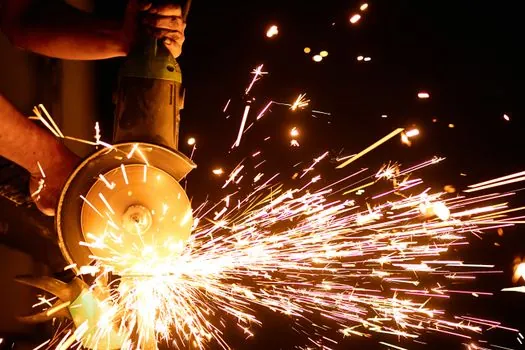
An abrasive chop saw has no teeth. Its 14-inch disc is a bonded matrix of aluminum-oxide or silicon-carbide particles that grind stock by friction at high surface speed, throwing sparks and hot dust in the process [S1][S2]. Heat is dumped into the workpiece as well as the disc, which is why the kerf zone shows discoloration and why blade life drops as the bond breaks down.
Blade, Speed, and Heat: Side-by-Side Numbers
The operating windows are so different that the two machines rarely compete on the same job. A cold saw runs 20-150 RPM with 120 RPM as a common recommended setpoint, and uses 6-1/2", 7-1/4", 10", 12", or 14" diameter toothed blades [S1][S3]. An abrasive chop saw typically exceeds 3,000 RPM, with one 1980s-era 14" Black & Decker bench machine documented at 5,000 RPM no-load [S4].
Heat follows the same pattern. The cold saw's flood coolant keeps the workpiece and blade at near-ambient temperature; chips leave the cut blue-free, and the kerf shows no heat-affected zone [S1][S5]. The abrasive disc heats both itself and the workpiece, the kerf edge discolors, and the disc itself expands under temperature, which is part of why straight cuts tend to wander on a chop saw [S5].
For a closer look at the saw family that uses bonded abrasive wheels for non-metal applications, see the circular saw encyclopedia entry.
Cut Quality: Burrs, Tolerance, and Metallurgy
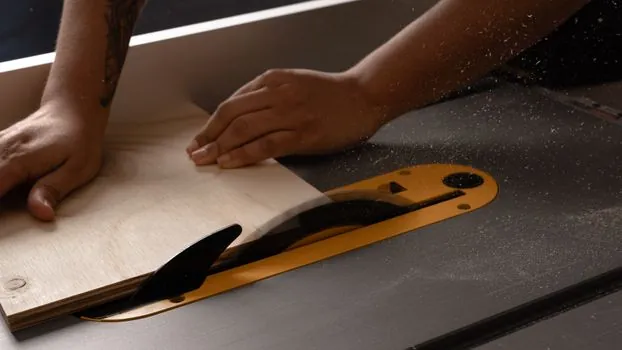
A cold saw with a sharp carbide-tipped blade leaves a burr-free, square edge that usually needs no secondary finishing, which is why automated cut-off cells downstream of tube and bar loading rely almost exclusively on cold saws [S1][S5]. A chop saw produces a rough, often burred edge, can bow during the cut, and on softer metals like aluminum the abrasive disc loads up and "gums" until it is useless [S3][S5].
Cold cutting preserves the metal's properties at the cut face, no change to temper, hardness, or grain, because there is no heat input to drive phase changes [S3]. Abrasive cutting dumps friction heat into the edge, which on hardened or cold-drawn stock can locally soften the material and complicate downstream welding or machining. For a process line that needs burr-free, metallurgically clean blanks, the cold chamber machine reference page gives context on why "cold" terminology is reserved for processes that protect the workpiece.
Where Each Method Wins: Application Selection
Pick the abrasive chop saw when the priority is raw cutting speed on hard, mixed-material stock in a field or construction environment: rebar, angle, thick-walled pipe, masonry, tile. The cheap 14" disc, the high RPM, and the wide material range (steel, stainless, aluminum, wood, plastic, masonry, composites) make it a flexible job-site tool [S1][S2][S3].
Pick the cold saw when the priority is cut quality, repeatability, and per-part cost in a production or fabrication shop: structural steel, stainless tube, aluminum billet, any cut that feeds a CNC machining cell or a welding fixture. The control of a cold milling machine-class coolant-fed process, with resharpenable carbide blades and tight tolerances, is what justifies the higher entry price [S1][S3].
Cost, Blade Life, and Safety Trade-offs
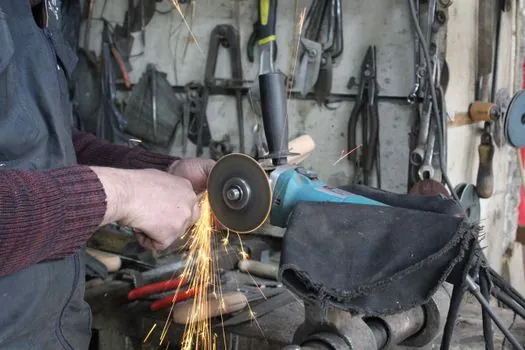
Entry-level chop saws start in the low hundreds of USD and run into the low thousands for professional bench-top units; cold saws are a step up in capital cost because of the gearbox, spindle, and flood-coolant system [S3]. On a per-cut basis, the cold saw usually wins, because a carbide-tipped cold saw blade can be resharpened multiple times, whereas an abrasive disc is a consumable that wears out and is thrown away [S1][S5].
Safety pushes the same direction. The cold saw runs cool, with coolant carrying chips away and no airborne sparks; the chop saw throws hot sparks in every direction, accelerates blade wear through friction heat, and is a documented fire hazard near combustibles [S5][S6]. For shops that cut magnesium, coated steel, or any sparking-prone alloy, the cold saw is the safer default.
Limitations and Common Failure Modes
The cold saw's limitation is mechanical: it cuts a narrower range of materials (metals, plastics, wood only) and cuts slowly. The abrasive chop saw's limitations are thermal and geometric, including kerf wandering on long cuts, disc glazing on aluminum, edge burr that needs deburring, and the inability to safely swap to a toothed blade without gearing the spindle down to cold-saw RPMs, which a variac cannot do on a single-phase induction motor [S3][S4][S5].
Forums confirm that retro-fitting a 14" abrasive saw to run a cold-saw-style metal-cutting blade at 1,800-3,500 RPM by adding a brush-motor speed controller is unreliable: torque and motor cooling both collapse at low RPM, and rigidity suffers [S4]. A production buyer who wants both cut quality and abrasive flexibility should treat them as two machines, not one converted machine. For related process-equipment context, see the riser cutting machine and cold box core machine encyclopedia pages.
Standards and Sourcing Checklist
For procurement, the practical spec lines to confirm on the data sheet are: blade diameter (typically 10", 12", or 14"), blade type (solid HSS vs carbide-tipped, with carbide resharpenable), spindle RPM range (look for 20-150 RPM with 120 RPM recommended), flood-coolant capacity, vice opening for stock size, and motor power (commonly 1.5-3.0 kW on mid-size ferrous cold saws) [S1][S3]. For an abrasive chop saw, verify disc diameter (typically 14"), no-load RPM, and the abrasive specification (aluminum oxide for steel/iron, silicon carbide for non-ferrous and masonry) [S1][S2].
The decision matrix is short. Choose cold saw for steel, stainless, aluminum, and any cut where burr-free, metallurgically clean, repeatable accuracy matters, accepting higher capital cost and slower cycle. Choose abrasive chop saw for speed, mixed materials, and field portability, accepting sparks, burr, heat-affected edges, and higher consumable use. Trackable next signals for buyers: resharpening service availability for carbide cold saw blades in your region, and TCO-per-cut data published by vendors on 14" abrasive disc consumption at production rates.