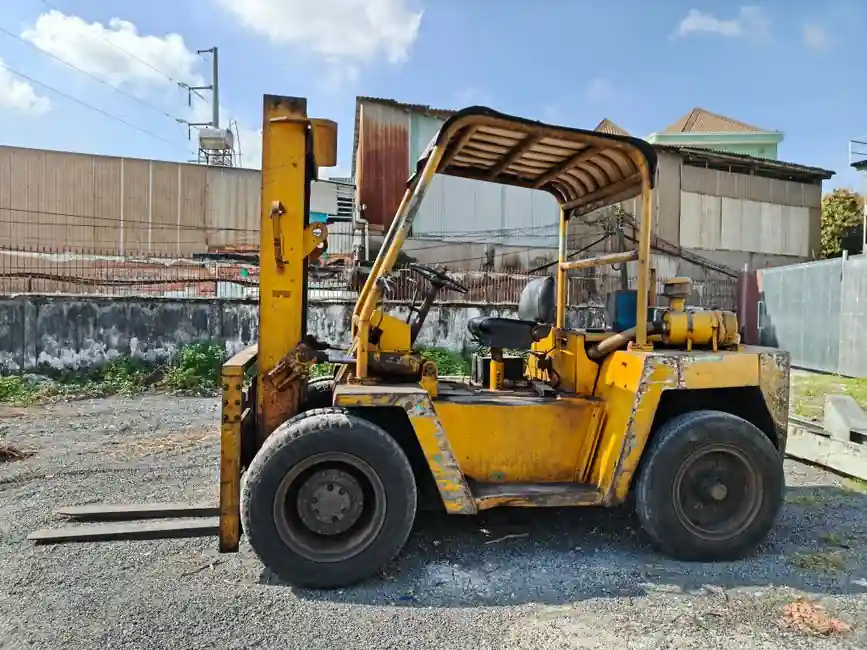
Standard lead-acid forklift batteries lose 20-50% of usable capacity in freezing environments, with a published 20-35% loss band and a 35% figure specifically cited for cold-store service [S1][S2][S5].
Standard ISO VG 32 hydraulic oil thickens below -20°C and slows lift response until the pump strains and seals crack, so cold-store packages at -30°C require low-viscosity, cold-rated hydraulic oil plus freezer-grade grease in every grease point [S1][S2][S3].
Why -30°C Breaks a Standard Truck
At -30°C, the four systems that fail in sequence are battery, hydraulic, seals, and electrics. Cold slows the electrochemical reactions inside a flooded lead-acid cell, so a battery that delivers 600 Ah at 25°C may only deliver 300-420 Ah in a freezer, and the same cold raises internal resistance, which adds a noticeable voltage sag every time the truck lifts or accelerates [S2][S4].
On the hydraulic side, an ISO VG 32 mineral oil at -30°C behaves closer to molasses than lubricant, so the lift cylinder creeps, the pump cavitates, and operators compensate by revving, which overheats the motor and burns the seal lips. Cold-rated hydraulic oil for freezer service is typically a low-viscosity ISO VG 15 or synthetic PAO/Ester blend with a pour point below -40°C, and pairing it with freezer-grade grease (synthetic base, low-temperature thickener) keeps linkages, king pins, and masts moving [S1][S2][S3][S7].
Battery and Charging Setpoints for Freezer Service
Battery spec for a -30°C cold store is not just chemistry, it is the full thermal management loop. Freezer-rated or lithium-ion packs are preferred because they retain more capacity at low temperature and accept opportunity charging during short breaks, which removes the need to drag a half-frozen pack back to a warm room every shift [S1][S2][S3].
If the fleet stays on lead-acid, charge at temperatures above 10°C, ideally at room temperature, and never let a lead-acid cell drop to zero state of charge in the freezer, because a deeply discharged cold cell will freeze its electrolyte and split the case [S5][S6]. Toyota's cold-conditioning package, for example, is rated to -4°F (-20°C) and combines sealed linkage, heaters, and rust-inhibiting treatments to keep the truck on the floor when the temperature drops; operators who need -30°C need to verify the specific OEM package rating rather than assume a -20°C package covers them [S1].
Lithium-ion with internal heater modules is the cleaner answer for -30°C because the pack self-heats before charge, supports opportunity charging inside the cold room, and removes the condensation cycle that comes from hauling a hot pack into a -30°C aisle and back [S1][S2].
Condensation Is the Real Killer, Not the Cold
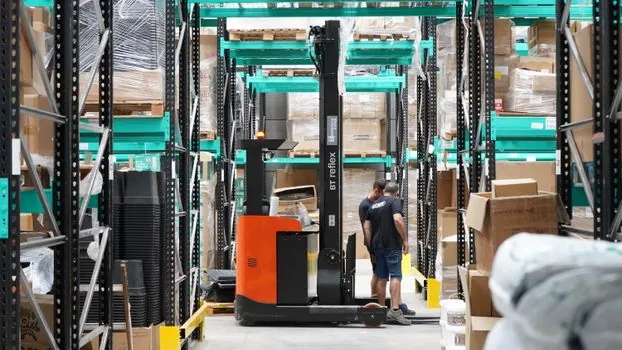
Condensation from repeated warm-to-cold transitions damages more trucks than steady cold does, and it is the failure mode that catches most fleets off guard. A warm, humid loading dock is around 20-25°C and 60% relative humidity, so any surface that enters a -30°C aisle instantly drops below the local dew point and grows frost inside connectors, controllers, and valve blocks [S1][S2][S3].
The fix is mechanical: sealed connectors, sealed controllers, anti-condensation heaters on electronics, low-humidity transition zones, and a "machines stay inside" policy where one truck is dedicated to the freezer instead of being shuttled in and out. S5 recommends a low-humidity 0°C buffer zone between the freezer and the dock so a returning truck can warm up without condensing on cold metal, and S2 and S3 both rank condensation above the raw cold as the dominant failure driver [S5][S2][S3].
Forklift Selection Criteria at -30°C
Use this four-axis comparison to size a freezer-rated forklift for -30°C duty; pick the column that matches your application. [S2]
1. Power source: Lead-acid flooded is cheapest but loses 20-50% capacity at freezing and demands a heated battery room above 10°C; lithium-ion with self-heating retains most capacity, supports opportunity charging, but costs 2-3x upfront [S1][S2][S4].
2. Hydraulic fluid: Standard ISO VG 32 mineral thickens below -20°C and is not acceptable at -30°C; specify ISO VG 15 or synthetic cold-rated oil with pour point below -40°C, plus freezer-grade grease at all lube points [S1][S2][S3].
3. Cab and seals: Heated enclosed cab, defrost windows, low-temperature seals on cylinders and hoses, corrosion-resistant chassis coating, and siped polyurethane tires for icy floors [S1][S5].
4. Electrics: Sealed controllers, sealed connectors, anti-condensation heaters, insulated battery compartment, and an OEM cold-conditioning package rated to at least the operating temperature [S1][S3].
PM Schedule Differences in a Freezer
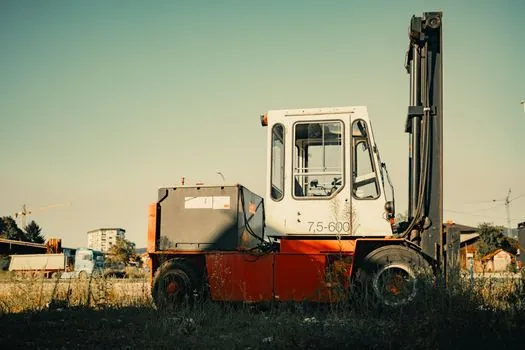
A -30°C truck needs shorter PM intervals than an ambient truck, not longer. Daily checks should include battery state of charge and connector dryness, hydraulic oil level with cold-soak temperature logged, tire pressure (cold drops pressure 5-10 kPa per 10°C drop), and a visual scan of seals for cracking [S2][S5].
Hydraulic oil and filter changes run on a compressed schedule, and oil samples should be pulled quarterly because moisture ingress from condensation shows up in ppm water before it shows up as a corroded valve. Grease intervals shorten because cold grease does not redistribute as easily, so bearings that run fine on 500-hour intervals ambient need re-greasing every 250 hours in a freezer [S1][S2][S7].
What This Article Does Not Cover
This spec is written for a single truck in a -30°C cold store, not for a fleet retrofit or for a multi-temperature site with mixed ambient, chill, and freezer zones. For wider fleet economics, total cost of ownership modelling, and OEM-by-OEM warranty comparison at sub-zero temperatures, the linked forklift stability and load center reference and the forklift encyclopedia entry carry the broader decision framework. ATEX/IECEx certification for hydrogen-rich forklift charging rooms is also a separate spec path and is not covered here. [S1]
Verifiable next signals: any -30°C-rated OEM cold-store package announcement that publishes the specific hydraulic oil viscosity grade and pour point, and any 2026 revision to OSHA/EN 17281 forklift operator training rules for sub-zero duty, are the two public signals that will change the spec on this page.