Cold milling machines remove asphalt and concrete in a single pass to depths of 1.5 to 14 inches depending on machine class, with Wirtgen's published product range covering working depths up to 1 ft 2 in (350 mm) in one pass [S1][S8].
Typical milling depth for highway and airfield rehabilitation runs 50 to 100 mm (2 to 4 inches), and typical maximum milling depth extends to 300 mm (12 inches) [S5]. For full-depth removal, cuts of 3 to 5+ inches are common, while heavy-duty cold planers reach 13 to 14 inches per pass [S3].
Depth by Machine Class: Small, Compact, and Large Mills
Wirtgen small milling machines span 4 in (W 35 XRi) to 12 in (W 100 Ri / W 120 Ri) of maximum milling depth, with operating weights from 10,252 lb to 33,951 lb and power ratings of 45 kW (60 hp) to 160 kW (215 hp) [S1]. Compact milling machines (W 100 Fi through W 150 Fi) push maximum depth to 13 in with power from 265 kW (355 hp) to 313 kW (420 hp), and operating weights of 44,092 to 47,179 lb [S1].
Cutting drum widths scale with class: trenching drums start at 100-300 mm, mini planers cover 300-600 mm, small mills reach 1.0-1.2 m, half-lane drums run 1.8-2.1 m, and full-lane drums span 3.0-4.2 m (10-14 ft) [S5]. Wirtgen's large-class machines top out at a working width of 14 ft 5 in (4.40 m) and working depth of 1 ft 2 in (350 mm) per single pass [S1][S8].
Depth by Application: Partial vs Full-Depth Milling
Partial-depth milling removes only 1.5 to 2 inches of surface course while leaving the binder layer intact, and is used for dips, ruts, alligator cracking, and pothole repairs [S3][S4]. This class corrects surface irregularities and restores uniform cross-slope without disturbing structural layers.
Full-depth milling removes the entire asphalt layer, typically 3 to 5+ inches, down to the aggregate base or subgrade, and is classified as FHWA Class IV cold milling [S3]. For comparison, the full-depth reclamation (FDR) process pulverizes pavement in place and mixes it with underlying base material, a different operation from full-depth removal though the terms are often confused [S3][S4].
Skid Steer Attachments vs Dedicated Cold Planers
Skid steer cold planer attachments average a maximum milling depth of 5 to 6 inches, with some models reaching 9 inches, and cut widths of 13 to 47 inches depending on model [S4]. These attachments rely on host-machine hydraulics rather than dedicated engines, which limits productivity: a 100-foot milling pass can consume a full operator shift [S4].
Larger asphalt milling attachments mount to loaders or backhoes with their own engines and hydraulic systems, reaching deeper cuts and wider drums than skid steer units, and are sized for production-rate pavement rehabilitation rather than spot repairs [S4]. Standard drum width classifications confirm the gap: skid steer units fall in the mini-planer to small-mill range (300 mm to 1.2 m), while dedicated full-lane cold planers reach 3.0-4.2 m [S5].
Cutting Depth vs Productivity: Drum, Picks, and Pass Count
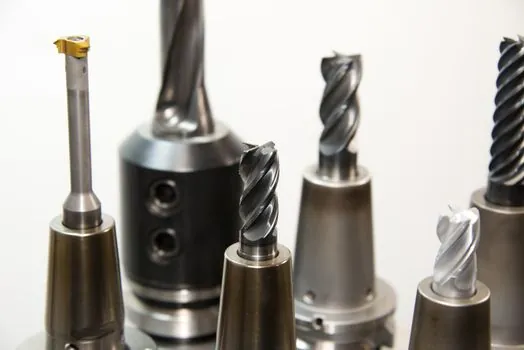
Triple-wrap drums with 3 scrolls typically space cutting tools 15 mm (5/8 in) apart horizontally, and operate in an up-cut direction that controls milled particle size and surface texture [S5]. Cutting tool life spans one hour on abrasive concrete or contaminated material to several days on standard asphalt, making tool selection a direct driver of depth-per-shift productivity [S5].
Modern cold planers rely on front-loading conveyors for milled material transfer, a configuration that improves visibility and maneuverability during deeper cuts where haul-truck cycling matters most [S5]. Water spray systems manage the heat generated at deeper cuts on asphalt, where bitumen softens and tool wear accelerates if dust suppression is inadequate [S5]. For a detailed cut-by-cut productivity comparison, the cold milling drum swap time across cutting widths (2026 field data) reference provides matched production rates.
Decision Criteria: Matching Depth to Project Scope
Selection hinges on four criteria: target depth, drum width, machine class, and whether the project is partial-depth repair or full-depth removal. A 2-inch surface correction on a city street fits a small mill (W 35 XRi class, 14 in drum, 4 in max depth, 10,252 lb) [S1]. A 5-inch binder removal on a county road needs a compact mill in the W 120 Fi class (4 ft 11 in drum, 13 in max depth, 265 kW) [S1]. Full-depth removal of 12+ inches on a highway or airfield requires a large milling machine at the top of the Wirtgen range, with 14 ft 5 in working width and 350 mm depth per pass [S1][S8].
Cost positioning follows depth and width: skid steer attachments are the lowest capital cost but the slowest path to depth, averaging 5-6 inches with a 100-foot-per-day pace, while large-class dedicated planers command higher capital cost but deliver full-lane coverage at production rates measured in lane miles per shift [S4]. The RAP output scales with depth too: U.S. asphalt producers accepted an estimated 119.6 million tons of reclaimed asphalt pavement in 2024, with 101.4 million tons going back into new mixtures, a supply chain that depends on consistent milling depth calibration [S3].
Limits, Failure Modes, and Engineering Constraints
Depth is constrained by the cutting drum's wrap and the machine's down-pressure envelope, not just the rated maximum, and operators routinely run below the published maximum to control particle size and tool wear [S5]. Holders may shear off if the drum strikes buried obstacles such as manhole frames or water valve boxes, a failure mode that becomes more likely as depth increases and the drum encounters unmarked utilities [S5].
Aggregate hardness, size, and abrasiveness are the dominant variables for cutting tool life, with tool life ranging from one hour on abrasive concrete to several days on standard asphalt, meaning that a 14-inch cut in concrete is not equivalent to a 14-inch cut in aged asphalt in either productivity or cost terms [S5]. For applications where milling ties into adjacent lifts or flush-to-edge work, the W 35 XRi and W 50 Ri small mills with right-rear-wheel steering are specified, and depth ratings in this class cap at 8 in even though working widths stay narrow [S1].
Next verifiable nodes to track: Wirtgen large-class machine depth extensions beyond 350 mm in single pass, and the 2027 FHWA specification revisions for Class IV full-depth milling tolerances. Operators specifying equipment should match drum width and depth class to the 2-4 in resurfacing band or the 3-5+ in full-depth band before pulling a quote.