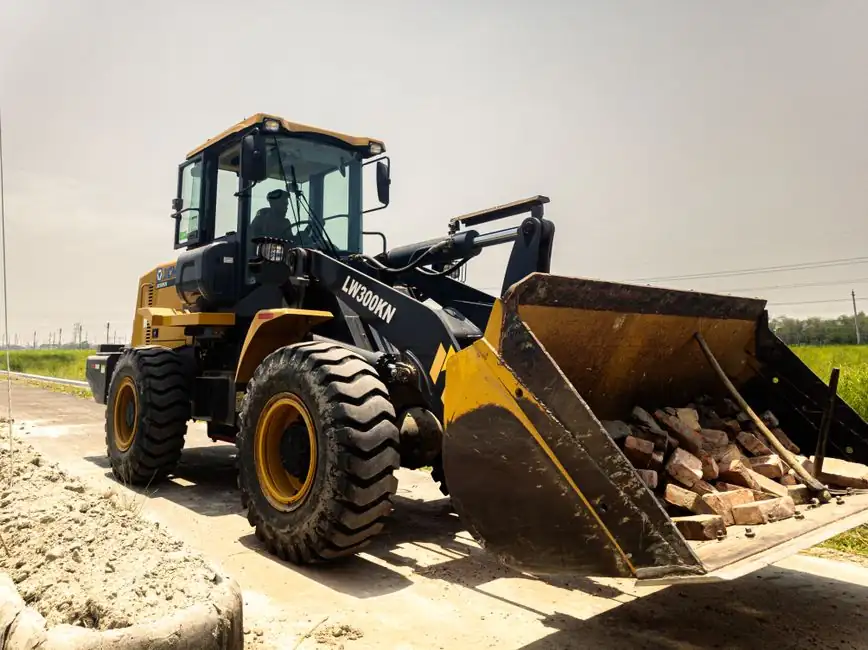
Compact wheel loaders (CWLs) are defined as machines up to 90 hp weighing 6,000 to 15,000 lb, while mid-size loaders step up to roughly 100 to 200 hp and operating weights north of 15,000 lb for higher-volume production [S4][S5].
The split is not just a marketing line: the same source shows CWLs topping out at 2 cu yd bucket capacity and 10.5 ft lift height, whereas mid-size machines routinely clear 3 to 5 cu yd buckets and 12 ft-plus dump heights for truck loading [S4][S9].
Weight, Power and Bucket Capacity Thresholds
The 6,000 to 15,000 lb / under-90-hp bracket is the working definition of a CWL in the 2025-26 buyer's guide, and the class spans bucket sizes from roughly 0.86 cu yd on small Bobcat L65 units to 1.2 to 2 cu yd on the heavier L95 [S4]. Mid-size loaders jump past those numbers, with the Construction Equipment Guide buyer's guide noting compact machines "typically can lift two or three cubic yards, while midsize and larger loaders can lift up to 20 cubic yards or more" [S9].
Horsepower and weight scale together: Bobcat's CWL range runs 55 hp (L65, 9,944 lb), 64 hp (L85, 11,164 lb) and 74 hp (L95, 12,000 lb), all with electronic hydrostatic transmissions and travel speeds up to 24 mph on the L95 [S4]. Mid-size loaders from the same makers add a larger displacement engine, higher hydraulic flow, and a 4 to 5 cu yd standard bucket, with rated operating capacity (ROC) climbing from the CWL's roughly 4,000 lb into the 8,000 to 12,000 lb range. Operating weight is the cleanest single proxy for class because two CWLs at the same horsepower can still differ by 2,000 lb and a full bucket size [S4][S5].
Site Geometry: Confined Yards vs Open Production
Compact and small wheel loaders are built for confined job sites (residential construction, nurseries, indoor facilities, landscaping yards) where maneuverability beats raw capacity, while larger open sites (quarries, landfills, highway projects) can absorb mid-size and large machines without spatial penalty [S5]. CWLs typically use a single joystick with skid-steer-style quick-coupler controls, giving them the agility to work in places a wheel loader on a 23-ft turn radius simply cannot enter.
Surface type matters as much as footprint: wheel loaders in general perform best on hard, stable surfaces such as concrete, packed dirt, or asphalt, where their pneumatic tires deliver smoother travel and faster cycle times than tracked alternatives [S3]. On soft, uneven or sloped ground, even a mid-size wheel loader loses traction and stability, and a tracked compact track loader becomes the safer call regardless of bucket size [S3][S5].
Cost, Productivity and Cycle Time Trade-Offs
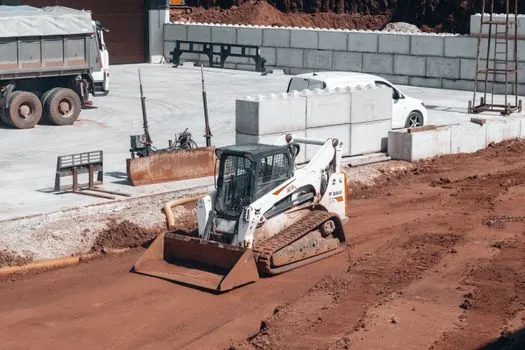
A CWL carries a higher sticker price than a skid steer of comparable capacity, but the difference is modest, and the lift height, hydraulic flow, and travel speed typically justify it for material-handling work [S2]. The 24 mph roading speed on units like the Bobcat L95 is a real productivity lever versus a skid steer's 7 to 11 mph, and the higher ROC means fewer cycles per ton moved [S2][S4].
Mid-size loaders flip the math in the other direction: higher hourly fuel burn and a heavier transport weight (often 25,000 to 35,000 lb) make them expensive to mobilize between sites, but their larger buckets drop cost-per-yard on steady-state work. A simple sizing rule from the field is to divide daily material volume by realistic daily cycles, then size the bucket to match; if the resulting ROC exceeds 8,000 lb, you are firmly in mid-size territory, not CWL [S5].
Comparison Matrix: CWL vs Mid-Size on Four Criteria
On operating weight, CWLs stay in the 6,000 to 15,000 lb band while mid-size loaders generally start around 15,000 to 20,000 lb and climb past 30,000 lb for 4 to 5 cu yd configurations [S4][S5]. On bucket capacity, CWLs span 0.86 to 2 cu yd and mid-size loaders span roughly 3 to 5 cu yd standard, with the broader wheel-loader market reaching 20 cu yd at the top end [S4][S9].
On travel speed, CWLs like the L95 hit 24 mph on pneumatic tires, while mid-size loaders typically run 20 to 25 mph loaded and trail off on grades. On ROC, CWLs cluster near 4,000 lb, mid-size loaders land in the 8,000 to 12,000 lb band, and the buyer's guide sizes CWLs to clear 10.5 ft lift heights versus 12 to 13 ft for typical mid-size dump-clearance over highway trucks [S4][S5].
Who Each Class Is For and Where It Falls Down
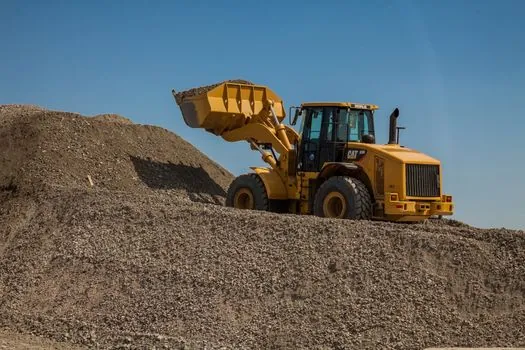
Pick a CWL when the work is light-to-moderate material (mulch, topsoil, snow, landscape aggregate), the site is tight, and the operator needs to road between small jobs at speed; the 6,000 to 15,000 lb footprint and sub-90-hp engine keep transport, fuel, and tire costs in line with skid-steer economics, and the higher lift height beats a skid steer for truck loading [S2][S4]. A CWL is the wrong tool for shot rock, dense aggregate, or high-cycle quarry work, where under-sized ROCs force the operator to short-load every bucket and burn time.
Pick a mid-size loader when the daily tonnage is steady, the dump target is a highway truck or large hopper, and the site has room to turn a 20,000+ lb machine; here the larger bucket, higher ROC, and stronger hydraulics pay back the higher acquisition and transport cost [S5][S9]. Mid-size loaders fall down on soft ground, on sites with bridge or pavement weight limits, and on short-duration rental jobs where mobilization eats the productivity gain. For context on how these size classes compare to the broader loader market, see the wheel loader size class reference.
Sourcing and Standards for CWL and Mid-Size Specs
Operating weight, horsepower, ROC, bucket capacity and dump height are the five numbers that actually decide a wheel-loader purchase, and reputable OEM spec sheets plus aggregated buyer guides are the cleanest source for them [S4][S5][S9]. EDA equipment finance data (Fusable) gives market-weighted sales rankings that map closely to that spec envelope, with the Bobcat L95 and Case CL36EV ranking among the most financed CWLs in the 2025-26 cycle [S4].
Roading speed, hydraulic flow, and tire options are second-tier but still verifiable on OEM pages, and they are the levers that separate a CWL from a re-bodied skid steer wearing a bigger bucket. Before any purchase, confirm the ROC against the densest material on site, the dump clearance against the tallest haul unit, and the travel speed against the longest on-site road segment, since each one can shift the decision from CWL to mid-size without changing the brand at all [S4][S5].
Trackable signals for the next buying cycle include 2026-27 buyer-guide updates from the same publishers, any EDA ranking shifts between CWL and small articulated loader financing, and new high-flow attachment options (cold planers, snowblowers) that extend the CWL operating envelope beyond bucket work [S4].