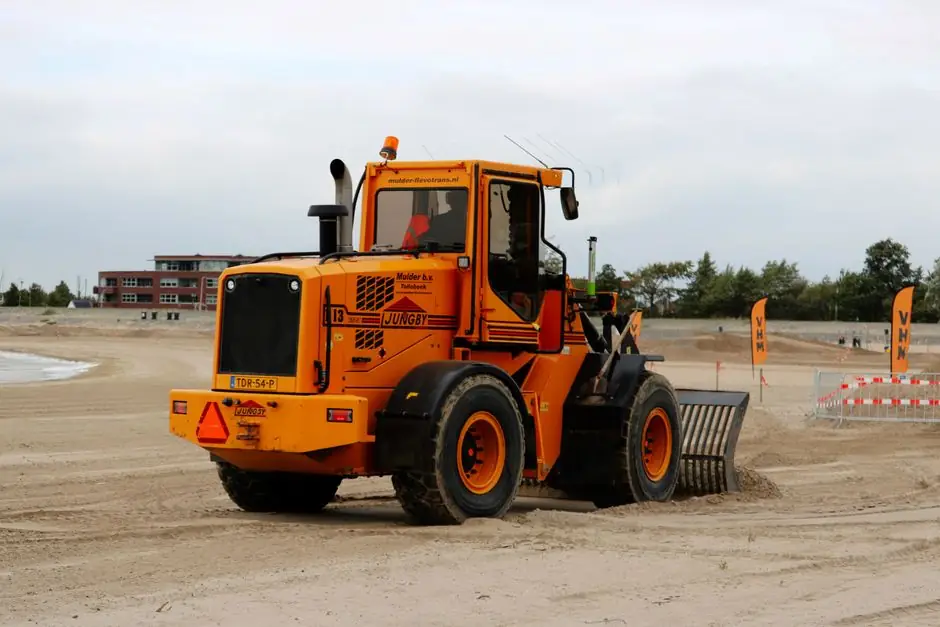
Wheel loaders split into four practical size classes defined by operating weight, horsepower, and rated operating capacity, with compact machines under roughly 6 tonnes running buckets up to about 1.5 m³ and large quarry-class units climbing past 30 tonnes with bucket capacities exceeding 5 m³ [S1][S5].
Across the North American market, published operating weights for compact models such as the Bobcat L65-L95 sit between 9,944 lb and 11,993 lb with maximum bucket capacity of 1.6 yd³, while full-size machines like the CASE 521G weigh 24,203-25,399 lb and carry 1.77-2.0 yd³ buckets [S2].
Compact Class: Under 6 Tonnes Operating Weight
Compact wheel loaders are generally specified below 6,000 kg (roughly 13,200 lb) operating weight, with bucket capacities capped at around 1.5 m³ (about 2.0 yd³) [S5].
This class suits confined job sites including residential construction, nurseries, and indoor facilities where a full-size machine cannot turn, and the lighter footprint reduces surface damage on finished asphalt or concrete [S1][S4]. Concrete example: the Bobcat L95 weighs 11,993 lb (about 5.4 t) and takes a 1.1-1.2 yd³ bucket, the upper edge of the compact envelope [S2]. For a broader definition of how a wheel loader sits in the loader family versus skid steers and backhoes, the encyclopedia entry is the quickest reference. Compact machines share bucket math with skid steer loaders on small-site duty cycles, though the wheel loader carries more per pass.
Small to Medium Class: 6-16 Tonnes, 1.5-3.5 m³
Small and medium wheel loaders typically span 6 to 16 tonnes operating weight with bucket capacities from about 1.5 to 3.5 m³ (2.0 to 4.6 yd³) [S5].
US sources often draw the line at under 20,000 lb for small loaders (1-4.5 ton payload) and 20,000-40,000 lb for medium loaders, which roughly maps onto the 6-16 t metric band once unit conversion and bucket density factors are applied [S4]. Production-rated examples include the CASE 321F at 13,633 lb operating weight with a 1.05-1.7 yd³ bucket, and the CASE 621G at 28,159 lb with 2.56-4.5 yd³ of bucket range [S2]. For most rental fleets, this is the workhorse bracket, big enough for aggregate and civil work, small enough to road between sites without oversize permits [S5]. Selection guidance published in mid-2025 lists material density, bucket capacity, quick coupler type, and ground conditions as the four primary decision variables at this size [S3].
Large Class: 16 Tonnes and Up, 5+ m³ Buckets
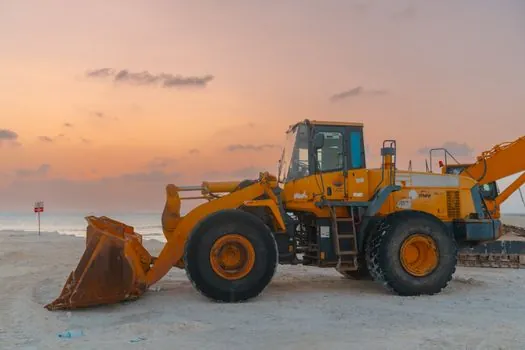
Large wheel loaders start at roughly 16 tonnes operating weight and extend well past 30 tonnes for quarry and mining duty, with the largest buckets exceeding 5 m³ (about 6.5 yd³) in capacity [S5].
One industry overview places production-class machines in a 40,000-80,000 lb band, which is the operating-weight envelope of most OEM large-frame models, while another reports that mainstream loader buckets in the US market typically range from 3 to 5 yd³ with oversized configurations above 6 yd³ for quarry face work [S7][S8]. At this size the machine is usually matched to a specific haul truck or crusher feed rate rather than general site work, and over-the-road transport can require oversize permits depending on dimensions and route [S5]. Heavy Equipment Guide's 2026 spec roundup uses 40,000-80,000 lb as the comparison bracket for fleet buyers evaluating production loaders [S8].
Selection Criteria: Material Density, Site Geometry, Cycle Targets
Material density drives loader size more than any other variable, since a machine that handles mulch efficiently at 1.0 yd³ per pass will be overmatched moving shot rock or wet sand at the same bucket rating [S1].
The published sizing rule is to divide required daily material volume by achievable daily cycle count, then back-solve for bucket capacity rather than starting from the machine and hoping production falls out [S1][S3]. Three further filters narrow the choice: job site geometry (compact and small for confined sites, large for quarries, landfills, and highway work), lift and dump height against the haul unit, and duty-cycle hours per year, which determines whether a higher-hour Tier 4 Final or Stage V diesel pays back versus a smaller, cheaper unit [S1]. In practice two machines in the same nominal size class can deliver very different production numbers if their rated operating capacity does not match the material's loose bulk density, which is why buyers are pushed to verify ROC at the material, not at the brochure number [S1][S3].
Comparison Table: Four Size Classes Against Decision Criteria
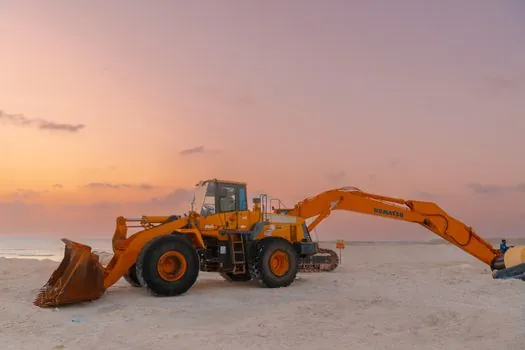
Four size classes line up against the four decision criteria most procurement engineers actually screen on: [S1]
Compact (under 6 t, under 1.5 m³): lowest capital cost and best maneuverability, but limited to loose bulk densities under about 1,500 kg/m³ and short haul distances; not suitable for quarry face work [S1][S5]. Small to medium (6-16 t, 1.5-3.5 m³): broadest applicability across construction, aggregate, and municipal fleets, can road between sites without permits, but bucket fill factors drop on fragmented rock [S1][S5]. Large (16-30+ t, 3-6+ m³): highest production per litre of fuel, matched to specific truck or crusher feed rates, requires oversize-load transport planning and dedicated operators [S5][S7]. Production class (40,000-80,000 lb US band, 3-5+ yd³): the 2026 spec roundup bracket used for fleet-buyer comparisons across OEM large-frame offerings, with oversized buckets above 6 yd³ reserved for face-loading and stockpile work [S7][S8]. The takeaway is that size class is a starting filter, not an answer: ROC at the actual material density, dump height against the haul unit, and transport weight on the route are the three numbers that decide the order.
Bucket Capacity, Lift Height, and Production Math
Bucket capacity is rated in heaped cubic yards (or m³) and varies with bucket type, where general-purpose, light-material, and rock buckets each carry different volumes on the same machine [S3].
For the Bobcat L85, published bucket capacity spans 1.0-1.6 yd³ across optional buckets, and the operating weight shifts with the selected bucket and any added counterweight, which is why OEM tables show ranges rather than single numbers [S2]. The same pattern holds across the CASE F-Series, where the 21F ranges 0.92-1.31 yd³ and the 321F reaches 1.05-1.7 yd³ on the same compact chassis family [S2]. When paired with the bucket math, dump height to bucket pin matters because a loader that cannot clear the haul truck's sideboard forces a slower partial-fill cycle, which cancels the production benefit of a larger bucket [S1][S3]. Buyers comparing a construction machinery and equipment spec sheet should always cross-check three numbers together: operating weight, ROC at full turn, and bucket-pin height.
Limits, Failure Modes, and Sourcing Standards
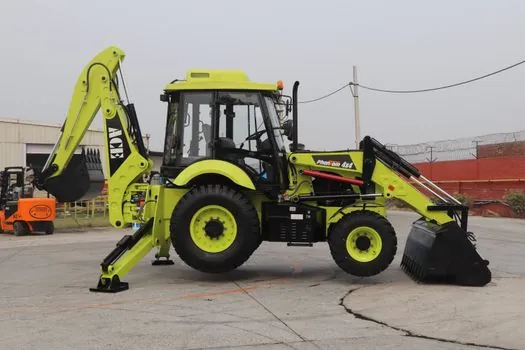
The most common sizing mistake is oversizing for a confined site, where a larger machine burns fuel idling, scuffing finished surfaces, and waiting on trucks that cannot be filled to design density [S1].
Undersizing is the symmetric failure mode: a compact loader on a quarry face never reaches its rated cycle time and is beaten by abrasion costs on the bucket and tyres, with static tipping load exceeded on uneven ground [S1][S5]. Sourcing for production decisions should start with OEM spec sheets, cross-checked against an independent database such as Ritchie Specs, which aggregates operating weight, engine power, and dimensions across hundreds of current models [S6]. For larger machines, the spec roundup published 3 February 2026 covers the 40,000-80,000 lb band that fleet procurement teams actually order against [S8]. Trackable signals for the next planning cycle: OEM releases of Tier 4 Final and Stage V successors in the 6-16 t bracket (where most fleet replacement happens), and any revision of the static tipping load or ROC testing method that would change how bucket ratings are published.
Background reading: ESD Flooring Resistance Test Methods: ASTM F150, EN 1081, and ANSI/ESD STM 7.1 Compared.