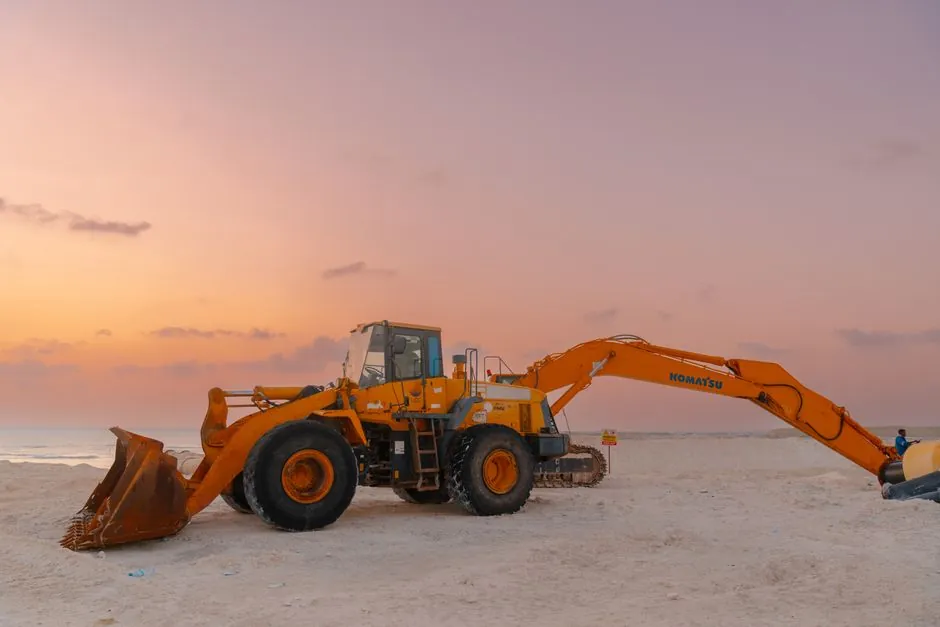
For urban infrastructure work, compact wheel loaders in the 1-8 t class with operating weights of 9,944-11,993 lb and 55-74 hp engines are the dominant specification, sized for gate widths, headroom, and articulated turning inside tight lots [S4].
Smart-city road, utility, and municipal contracts route these machines into alleys, basements, and pedestrian zones, so the spec envelope is set by the access geometry, not the bucket size [S1][S2].
Class definitions by operating weight and bucket capacity
Published Indian-market segmentation places compact wheel loaders at 1-8 t with 1.0-1.2 m³ buckets, small at 8-15 t with 1.5-2.5 m³, medium at 15-30 t with 2.2-5.2 m³, and large above 30 t with 4.3-19.1 m³ as-standard buckets [S1]. The same four-band logic appears on the MechLink reference, with compact units at 0-8 t flagged as optimal for confined spaces and urban construction sites [S3].
For 2025-vintage utility loaders, SANY's reference overview puts general wheel loaders at 10-25 t operating weight with 3-7 t rated load, a band well above urban compact use [S7]. Cross-checking against Dozr's North American data, the Bobcat L65/L85/L95 line sits at 9,944-11,993 lb (4,510-5,440 kg), confirming the compact sub-5 t bracket as the practical urban floor [S4]. For a wider category overview, the wheel loader encyclopedia entry consolidates the four-class taxonomy used by Indian, European, and North American sources.
The four critical site-envelope measurements
Bobcat's 12 August 2026 buyer's guide states that the access decision is not the bare gate width, it is the machine-plus-real-attachment envelope, the full articulation turn, the headroom under the bucket pin, and the reversing path through pedestrians and deliveries [S2]. A 74 hp Bobcat L95 with a 1.1-1.2 yd³ bucket and 128 in bucket-pin height is a typical urban-class envelope; bucket-pin height, not overall ROPS height, sets the under-powerline limit [S4].
Surface load matters: 9,944-11,993 lb on standard tyres exerts roughly 2,500-3,000 lb per wheel on a finished road or basement slab, a number many site engineers treat as the soft-surface cutoff before switching to a skid steer loader on tracks [S2]. Where excavation depth is needed instead of stockpile loading, a backhoe loader spec is often paired in the fleet, since a compact wheel loader is purpose-built for loading, not trenching [S1].
Comparison: compact vs small vs medium for urban contracts
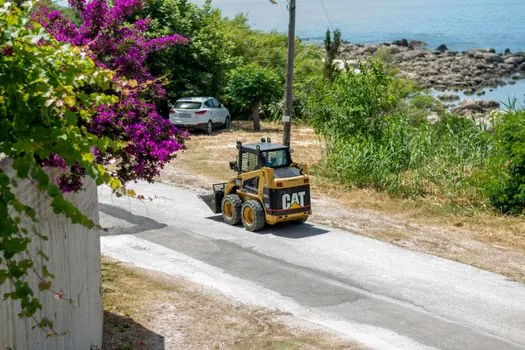
On bucket capacity, the published gap is roughly 1.0-1.6 yd³ for compacts, 1.5-2.5 m³ for small units, and 2.2-5.2 m³ for medium frames, a 2-3x swing that decides truck-loading cycle time per shift [S1][S4]. On operating weight, compacts sit at 9,944-11,993 lb, small frames climb to 12,547-13,633 lb (CASE 221F/321F), and medium machines jump past 24,203 lb (CASE 521G), tipping most finished-floor live-load limits in cities [S4].
On engine power, compacts span 55-74 hp, small loaders 74-142 hp, and medium frames 142-195 hp, so fuel burn per cubic yard moved falls sharply at the compact end, but trucks-per-hour falls just as sharply [S4]. On turning and reach, articulated steering with a 38-40° articulation angle and 126-128 in bucket-pin height lets a compact work in plan footprints a skid steer loader cannot match, while keeping the load-and-carry speed of 20-50 km/h that larger machines use on long hauls [S1][S2].
Hydraulic and powertrain specs that matter underground
Reference spec sheets list wheel-loader relief pressures around 3,650 psi, a value that ties bucket breakout force to engine horsepower and hydraulic flow on a given chassis [S5]. On Bobcat's L65-L95 line, engine power scales 55-68-74 hp alongside operating weight 9,944-11,164-11,993 lb, so the power-to-weight ratio stays inside a 12-13 hp/1,000 lb band that defines urban-class performance [S4].
Top speed across published working-size wheel loaders runs 20-50 km/h, with most in the 34-44 km/h band, useful for short transfer moves between street segments but not for highway dead-heading [S1]. For buyers cross-shopping the compact segment, weight, horsepower, and tipping-load charts on the wheel loader reference page let specifiers line compact against small frames on the same axes used by Dozr and SANY [S4][S7].
Selection criteria, use cases, and what to exclude
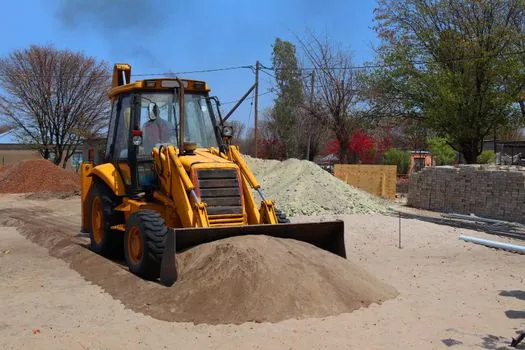
Buyers should pre-measure gate width plus 0.3 m clearance, headroom to bucket pin in fully dumped position, articulation radius on the worst corner, and the heaviest expected load (rebar pallets, granular, salt, snow) before shortlisting any model [S2]. Bobcat's own guide warns that articulated steering, not pivot steering, is the geometry that frees space on urban lots, but it also requires a stable sub-base to avoid surface damage under load [S2].
Use cases that fit the compact class include road repair, sidewalk and curb work, utility trench backfill, salt and grit loading, recycling-yard sorting, and indoor demolition support. Use cases that do NOT fit include bulk aggregate loading at a quarry face, long-haul stockpile work above 200 m, and 5+ yd³ truck loading on a continuous cycle; those belong to medium (15-30 t) or large (>30 t) classes with 2.2-5.2 m³ and 4.3-19.1 m³ buckets respectively [S1][S3]. For a related infrastructure spec, the clutch and brake spec map for cement plant drives applies the same weight-class logic to downstream material-handling lines fed by these loaders.
Limitations, failure modes, and sourcing standards
Common failure modes on urban compact loaders are hydraulic-hose abrasion against curbs, articulation-joint wear from short-radius turning on hard surfaces, and tyre sidewall damage from rebar and manhole edges; the published 3,650 psi relief pressure sets the upper bound, but the operator's modulation of the third-function valve decides hose life in practice [S2][S5]. A compact frame running at 9,944-11,993 lb on a basement slab rated for 100 psf live load is already at ~80% utilisation, which is why most rental contracts cap compact loaders to ground-level or first-suspended-slab work [S4].
For sourcing, refer to OEM data sheets for SAE J732 bucket capacity and ISO 6014/SAE J1111 operating-weight definitions, and check that the relief pressure, hydraulic flow, and ROPS/FOPS certification are stated on the same spec page; for procurement workflows that need spec-first comparisons across vendors, the clutch and brake selection map shows the same cross-vendor weight-vs-power methodology applied to a different drivetrain class.
Track, over the next 6-12 months, whether OEMs publish city-specific ROPS height data alongside bucket-pin height, and whether rental fleets standardise on a 1.0 yd³ or 1.2 yd³ urban bucket as a default, since published Bobcat, CASE, and SANY data still spans the full 0.78-1.7 yd³ compact-bucket range without a clear consensus [S1][S4][S7].