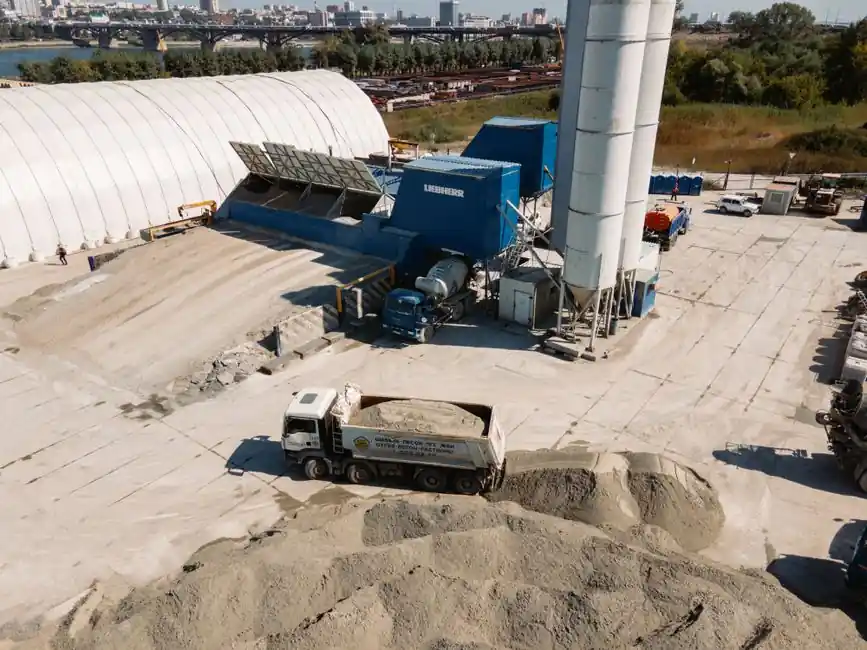
Pneumatic clutch-brake packages rated up to 150,000 Nm (110,000 lb-ft) are the heavy-duty ceiling in industrial press and mill service, with Goizper's catalogue sitting at the top of that range [S1]. Cement plants buying stop-start drives for kilns, mills, and conveyors are therefore choosing between air-actuated and electromagnetic units in a torque band that typically starts at 1.1 Nm and ends at roughly 77,000 Nm for off-the-shelf clutch-brake combinations [S1][S3].
Across the 2026 catalogue snapshot, three families are visible: large-frame industrial pneumatic clutch-brakes (Goizper, Nexen), integrated clutchbrake units (Clark Electric CB series), and small-frame electromagnetic clutch-brakes (Miki Pulley, Warner). Each maps to a different duty cycle in the cement process flow, from raw-mill drives to packaging lines.
Torque envelope and where the cement plant actually sits
Cement-plant drives span five orders of magnitude on torque, so a single clutch family cannot cover the whole plant. At the small end, Clark Electric's CB175 delivers just 1.1 Nm of static torque in a 73 mm frame, suitable for light packaging or lab-scale feeders, while the CB800 reaches 122 Nm in a 257 mm frame, the typical duty band for small bagging lines and auxiliary conveyors [S3]. Mid-range cement service, including rotary feeders and apron feeders, sits in the 100 to 2,000 Nm range where Warner/Miki electromagnetic units are common, with Miki's 101/CS clutch and 111 brake pairings built for general industrial machinery up to roughly 16 Nm at 1,200 rpm [S7]. Heavy kiln and mill duty crosses into the Goizper Series 5.8 pneumatic band, which publishes torque ratings up to 77,000 Nm (56,000 lb-ft) per size [S1]. Selection is therefore not "best clutch", it is "correct clutch for the duty point" on the cement process map.
The same catalogue data shows that Goizper's broader industrial line, including dedicated press drives, reaches 150,000 Nm, which is the maximum rating published for a stock industrial clutch-brake in the surveyed set [S1]. For plant engineers, this ceiling defines when custom engineering is needed: above 77,000 Nm, expect a custom-engineered pneumatic or hydraulic solution, and above 150,000 Nm, a gearset with a discrete flywheel and clutch is typical.
Air-actuated vs electromagnetic: cement-plant decision criteria
Air-actuated pneumatic clutch-brakes are the dominant choice in cement raw mills, cement mills, and cooler drives for four engineering reasons visible in the 2026 spec data. First, torque density: Nexen's FMCBES 1375 (Motion SKU 01367953) delivers 680 in-lb (76.8 Nm) of static clutch torque and 495 in-lb of static brake torque in a 92 lb NEMA 213TC/215TC frame, with 28 hp peak thermal input on each element [S5]. Second, control simplicity at high inertia: a maximum 80 psi (5.5 bar) supply, 50 psi minimum engagement, and 29 psi release give the plant a wide operating window, and the spring-applied/air-released brake is fail-safe on power loss, which is critical on inclined conveyors and kiln drives [S5]. Third, heat capacity: 0.44 hp continuous dissipation is modest per unit, but cement plants typically gang two or three units on a high-inertia load, and the wet clutch-brake Series 5.W from Goizper is the next step up when continuous slip is unavoidable [S1]. Fourth, environment: cement dust ingress kills unprotected electric coils, so pneumatic actuation, with the electric control valve located remotely in an enclosure, survives where an electromagnetic coil would not.
Electromagnetic units from Miki Pulley, including the 101/CS clutch, 111 brake, and the reduced-noise CSZ/BSZ series, fill the gap where a cement plant needs a clean-room-adjacent or precision stop-start, such as a bagging head, palletiser index, or laboratory mill [S7]. These units are typically DC-actuated, mount directly on a motor or gearbox, and require no compressed-air ring main, which is a real cost saving on retrofits where the plant does not already run an air network at the machine.
Selection criteria a cement engineer should pin before quoting

Five specification points consistently appear in the 2026 vendor data and should be on every cement-plant clutch-brake enquiry. (1) Static torque, both clutch and brake, with the brake usually 60 to 80% of the clutch rating on air-actuated units, see the Nexen FMCBES ratio of 495/680 in-lb (0.73) [S5]. (2) Peak thermal input rate, which on the surveyed pneumatic units is 28 hp per element, and sets the upper limit on energy dissipation per stop [S5]. (3) Maximum RPM, 1,800 rpm for the NEMA C-faced pneumatic units and 5,000 rpm for the smaller Warner DC friction clutches, the former being the cement-mill-relevant figure [S5][S6]. (4) Air supply envelope, where the published data shows 50 to 80 psi engagement, 29 psi release, and 1/8 NPT or 1/8 BSPT ports depending on region [S2][S4][S5]. (5) Approximate facing life, ranging from 293.8 kWhr on the FMCBE 0.875 unit (SKU 02292379) to 1,225 hphr on the larger FMCBES 1375, which is roughly a 4x spread that drives maintenance cost directly [S4][S5].
For an explanation of how a clutch-brake physically couples and decouples a motor from a load, the clutch-brake working principle reference is a useful primer. Where the cement application requires the clutch and brake to be on separate shafts (for example, a through-drive gearbox), engineers should review the clutch-coupling design notes to avoid specifying two units that fight each other on engagement. Fail-safe spring-applied brakes, common on inclined conveyors and kiln drives, are detailed under electromagnetic brake, and the resistor-braking option often used on VFD-driven cement mills to dissipate regenerated energy is covered in brake resistor.
Product-to-cement-process map
Matching the 2026 catalogue offerings to the cement process flow, a working assignment looks like this. Limestone crusher and apron feeder duty is a high-inertia, dirty, outdoor service, the right call is a Goizper pneumatic clutch-brake from Series 5.7 or 5.8 with a wet-clutch option, sized above 10,000 Nm with a 110,000 Nm headroom for surge loads [S1]. Raw mill and ball mill drives are continuous-rotation, so a clutch-brake is only needed for maintenance isolation, a small Nexen FMCBES or Clark CB400 (23 Nm) is normally adequate and the brake resistor on the VFD handles the dynamic braking [S3][S5]. Kiln drive, the highest-torque single load in the plant, typically uses a custom-engineered hydraulic or pneumatic clutch above 50,000 Nm, which is within the Goizper Series 5.8 range up to 77,000 Nm [S1]. Packing and palletising lines are stop-start at high cycle rates, the Miki 101/CS/111 family or Warner CS-11/15/17/22 family (max 14.2 Nm at 5,000 rpm) is the right size and avoids the cost of a pneumatic ring main [S6][S7].
On a four-criterion comparison for the dominant pneumatic and electromagnetic options against the cement-plant decision points, the data from the surveyed catalogues lines up as follows. (a) Maximum torque per stock unit: Goizper pneumatic 77,000 Nm, Nexen pneumatic 76.8 Nm in the surveyed FMCBES, Warner DC friction 14.2 Nm, Miki electromagnetic 16 Nm [S1][S5][S6][S7]. (b) Maximum RPM: Goizper pneumatic typically below 1,800, Nexen pneumatic 1,800, Warner DC 5,000, Miki electromagnetic 1,200 [S1][S5][S6][S7]. (c) Fail-safe on air/power loss: pneumatic spring-applied yes, electromagnetic spring-applied only on the BSZ/111 brake variants, DC friction Warner requires external power [S5][S7]. (d) Cement-dust tolerance: pneumatic best (sealed actuator), electromagnetic acceptable in enclosure, DC friction poorest (open friction face) [S1][S5][S7].
Standards, ratings, and certifications to pin in the enquiry
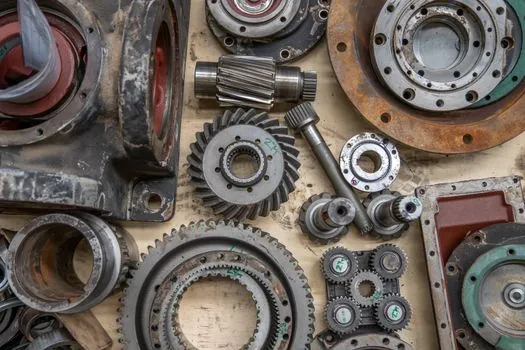
Two certification lines appear consistently in the 2026 industrial clutch-brake catalogue data. The Nexen FMCBES 1375 carries CE and RoHS ratings, an 80 psi maximum pressure rating, and a 32 to 150 °F operating temperature range, which is the envelope most cement-plant DCS and procurement systems expect to see on the nameplate [S5]. For European cement plants, the relevant machinery safety standard for clutch-brake selection on press and shear duty is EN 692 (mechanical presses) and EN 12601 (hydraulic presses), with clutch-brake monitoring typically tied to a safety relay rated to EN ISO 13849-1 Performance Level d or e, although the surveyed catalogues do not publish the PL claim directly and this should be confirmed with the OEM at quote stage. Hazardous-area cement plants (coal-grinding areas, clinker cooler stack) should also confirm ATEX or IECEx marking on the solenoid valve and any integral position switch, since the clutch-brake body itself is normally non-electrical and falls outside the Ex marking requirement.
Failure modes and what to watch on installed base
Three failure modes show up repeatedly in cement-plant clutch-brake service. First, facing wear on the high-cycle stop-start drives (packers, palletisers), where the 293.8 kWhr rating on the smallest FMCBE units and the 1,225 hphr on the FMCBES 1375 set a 4x maintenance cost spread that procurement rarely prices in correctly [S4][S5]. Second, seal failure on pneumatic units in dusty environments, which is why Goizper publishes a dedicated wet clutch-brake Series 5.W and an enclosed pneumatic Series 5.36 safety brake for the worst exposures [S1]. Third, valve-timing drift on air-actuated systems, where a sticky 3/2 or 5/2 valve delays engagement and the brake applies later than the design intent, a problem that worsens in cold kiln-section environments near 32 °F, the published minimum for the Nexen pneumatic line [S5].
Buying signals and the next step for cement-plant specifiers
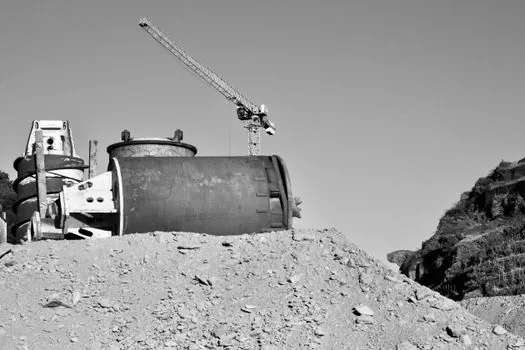
Two trackable signals from the 2026 catalogue data are worth flagging for specifiers who will be requoting in the next 12 months. First, the gap between the Nexen FMCBES 1,225 hphr and the FMCBE 293.8 kWhr facing life is the single largest variable cost driver on a multi-unit order, and any OEM publishing a higher hphr rating on a NEMA 213TC/215TC frame in the next cycle will shift the cost-of-ownership calculation materially [S4][S5]. Second, the Goizper Series 5.W wet clutch-brake line, and its 150,000 Nm (110,000 lb-ft) industrial ceiling, is the next product family to watch for cement raw-mill and kiln-drive applications, particularly where dust ingress has historically killed dry-friction units [S1]. Engineers should request updated facing-life curves, IP rating on the pneumatic actuator, and EN ISO 13849-1 PL documentation with the next RFQ cycle, and they should compare those figures against the published numbers above before committing.
See also our earlier report, Building Stone Selection for Renovation Projects: A Spec-First Map.