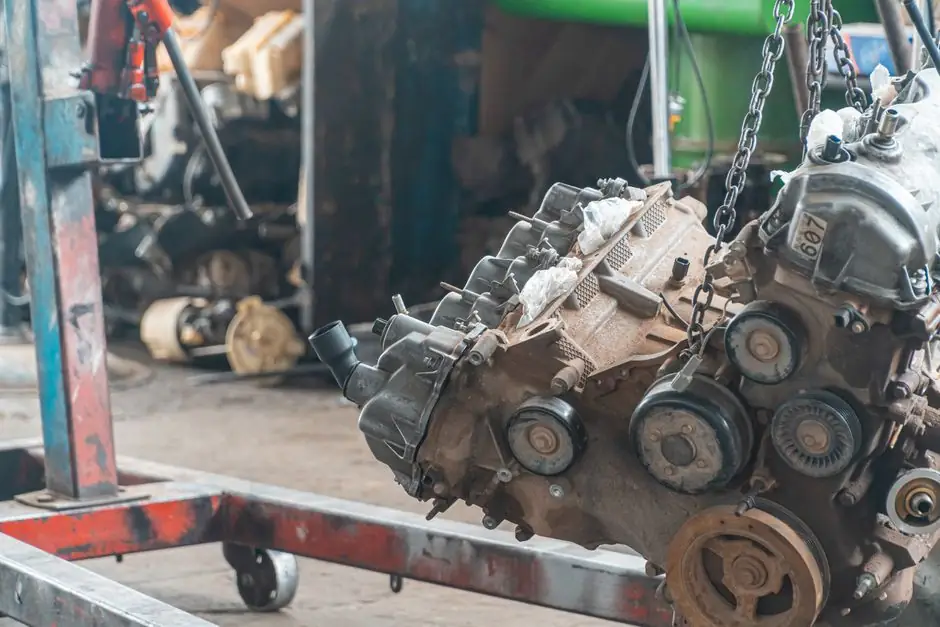
The working equipment chain on a motor grader runs main frame, drawbar, circle, moldboard, cutting edge, ground, and every link in that chain has a different wear profile and a different replacement interval [S3]. For fleet planners, the practical question is which spares to stock, which to source on demand, and which can be safely replaced with aftermarket equivalents rather than OEM parts.
Cat structures its motor grader wear-parts catalog around ground-engaging tools, undercarriage, and powertrain consumables, with the explicit message that replacing and maintaining parts on schedule protects adjacent components from collateral damage [S1]. EquipXR, an aftermarket distributor, breaks its inventory into undercarriages, blades, ground engaging tools, wheel parts, engine parts, and attachments, a taxonomy that maps closely onto the OEM structure but with broader brand coverage [S4].
Tier 1 consumables: cutting edge, end bits, and scarifier tips
Cutting edges and end bits carry the direct abrasion load and are the highest-frequency wear items on a motor grader. Caterpillar treats these as scheduled-replacement ground engaging tools (GET), not repair parts, because uneven wear on the edge changes how the moldboard contacts the ground even when the rest of the machine is healthy [S3]. The replaceable end pieces at each end of the moldboard protect the parent blade structure from impact damage when the operator works against curbs or hard shoulder material.
Scarifier and ripper tips fall in the same tier because they engage the ground ahead of or behind the moldboard. Both are typically through-hardened boron steel with optional tungsten-carbide insert tips for abrasive rock. Stocking policy for a contractor fleet running 4-6 graders is usually 1.5-2 sets of cutting edges per machine per year, with end bits at roughly twice that count given their smaller size and higher loss rate.
Tier 2 wear parts: circle, circle drive, drawbar, and turntable bearings
The circle is the large ring gear above the moldboard that lets the blade rotate, and the circle drive is the hydraulic motor and pinion that turns it. Symptoms of a failing circle include new knocking, excessive rotational play, jerky rotation, and inability to hold the selected blade angle once hydraulic pressure is relieved [S3]. These are not scheduled consumables in the same sense as a cutting edge; they are inspected-item replacements driven by hours and visible wear pattern.
Drawbar, saddle, and the lift-cylinder pins are the next wear band. The drawbar carries the entire working assembly and the reaction forces from cutting, so its wear surfaces and pin bores are inspected every 2,000-4,000 hours depending on application. Aries India, a Faridabad-based manufacturer of grader spares, lists Komatsu lock bracket part 23H-70-12221 and Cat wear strip 128-9656 as common Tier 2 replacements for older GD535 and 14G/140G class machines [S2], with 3-month warranty on the wear strip indicating it is treated as a consumable rather than a structural repair.
Tier 3 structural and powertrain: blades, moldboard, frame, engine, and hydraulics
The moldboard itself is heavy structural plate, typically 12-16 mm boron steel curved to a standard radius, and it is replaced only when the parent material is worn through or distorted beyond truing. Wheel lean, articulation joint, and front-axle kingpins are in the same structural tier: condition-based, not calendar-based. [S3]
Engine, transmission, and hydraulic spares are the deepest inventory problem. Filters, belts, gaskets, hoses, and seal kits are the genuine consumables, and EquipXR stocks aftermarket equivalents that the supplier states meet or exceed OEM specifications [S4]. For these items the key decision is filtration micron rating and seal compound compatibility (NBR versus FKM versus polyurethane) rather than brand loyalty, because the hydraulic fluid specification stays constant across OEM and aftermarket channels.
OEM versus aftermarket: where the savings are real
Aftermarket motor grader parts split into three categories by risk: GET (cutting edges, end bits, ripper tips) is essentially a commodity product, with multiple qualified manufacturers producing to the same dimensional and hardness spec, so aftermarket substitution is low risk. Undercarriage components (track shoes, idlers, rollers) for the rare tracked graders are higher risk because metallurgy and through-hardening depth vary between suppliers. [S4]
Engine, transmission, and hydraulic pumps are the highest-risk aftermarket substitution. For these, OEM remains the default unless the aftermarket supplier publishes specific test data against ISO 4413 (hydraulic fluid power) or the relevant API engine-oil category. The Cat 140G parts manual, for example, remains the reference document for serial-number-specific subassemblies on legacy fleets [S5], and on those machines the OEM part number is often the only reliable cross-reference. For broader background on construction equipment categories and their consumable economics, see the construction machinery and equipment reference.
Selection criteria and comparison of common wear parts
Comparing the main wear items on a 2,000-hour service interval, cutting edges are the lowest cost per hour but the highest frequency; circle and drawbar assemblies are the inverse. The exact split shifts with application: a snow-and-ice operator burns through GET faster, while a mining-haul-road operator burns through circle and drawbar components faster. [S3]
For procurement decisions, the four criteria that matter are: OEM part number cross-reference (always verify on the serial-number plate), hardness specification on GET (typically HB 400-500 for cutting edges, higher for impact zones), seal compound on hydraulic items, and warranty terms. Aftermarket GET from a supplier publishing hardness data and offering at least a 3-month warranty is functionally equivalent to OEM for most non-impact applications.
Failure modes and inspection triggers
Three failure modes dominate motor grader parts replacement. First, abrasive wear on GET, visible as a rounded or stepped cutting edge rather than a clean square profile, triggers immediate replacement because a dull edge forces the operator to add down-pressure, which loads the circle, drawbar, and lift cylinders. Second, impact damage on end bits and scarifier teeth, usually from hidden rocks or frozen ground, is accepted as routine but tracked because clusters of impact events predict moldboard fatigue. Third, contamination-induced failure on hydraulic and powertrain items, almost always traced back to filter or seal compromise rather than the working component itself. [S3]
For the mechanical power-transmission side, the motor grader reference covers the full machine architecture, while the linear guide and crossed-roller guide pages document the bearing technologies used in modern moldboard side-shift and centershift mechanisms, where crossed-roller bearings have largely replaced plain bronze bushings on newer platforms.
Trackable signals for the next 3-6 months
Two signals are worth watching through 2026-Q4. First, the running change in OEM GET part numbers as manufacturers extend carbide-insert options into mid-size 140-160 class machines, traditionally the domain of through-hardened boron only. Second, the aftermarket distributor shakeout: as more suppliers carry full coverage of Komatsu, Cat, John Deere, and Case part numbers, expect consolidation around distributors that publish material certifications rather than just dimensional cross-references. [S4]
For related coverage, see EV Traction Motor Manufacturing Cost: BOM, Process, and Assembly Drivers.