
NdPr oxide, normally about 75% neodymium oxide and 25% praseodymium oxide, is the relevant magnet-feedstock benchmark when comparing prices.
Neodymium oxide alone is a different quotation basis; its relationship to NdPr depends on the praseodymium contribution, purity, delivery location, tax treatment, and contract terms.
What the two oxide prices represent
Neodymium-praseodymium oxide is the mixed raw material used to manufacture NdFeB permanent magnets, while neodymium oxide represents only the neodymium component. S&P Global identifies Nd and Pr as the key raw materials for NdFeB magnets, with applications including electric-vehicle motors, renewable-energy generation, and defense systems [S3].
The usual commercial NdPr composition is approximately 75% Nd and 25% Pr by mass [S4]. That ratio makes a simple comparison invalid: US$100/kg for neodymium oxide does not imply US$100/kg for a 75:25 NdPr oxide unless the praseodymium contribution, processing charges, and commercial basis are also equivalent.
MP Materials’ NdPr oxide is mined, separated, and refined at the Mountain Pass Rare Earth Mine and Processing Facility in California, exceeds 99.5% NdPr/TREO purity, has been qualified by automotive customers, and is produced at an ISO 9001-certified site [S5].
Decision matrix for price comparisons
Compare the oxides on four criteria: material basis, market location, commercial terms, and intended use. Fastmarkets used a 99%, 75:25 NdPr assessment, fob China, at US$50–52/kg in July 2024 [S2]. Benchmark Minerals assessed ex-China NdPr oxide at US$95,000 per tonne on August 21, 2026 [S4].
Neodymium oxide is more appropriate for separated Nd-unit economics, whereas NdPr oxide is more appropriate for planning magnet-grade feedstock procurement. Neither quotation should be compared without its purity, composition, location, unit, and date.
For long-term supply planning, the relevant non-China reference point is the US$110/kg floor in MP Materials’ U.S. Department of Defense agreement [S4]. That floor is a contract parameter, not an exchange-traded spot price, so it should not be presented as the market price for either oxide.
How closely the two markets move together
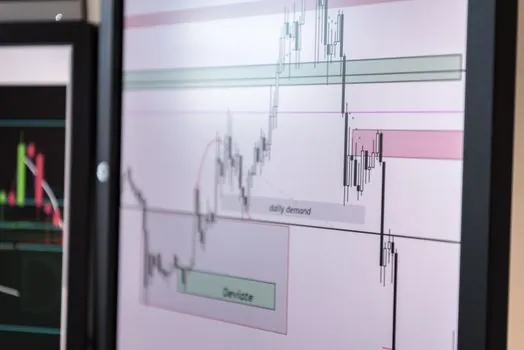
Praseodymium spot prices tend to follow neodymium price trends closely, making the individual neodymium series relevant to the NdPr direction but not sufficient for a numerical conversion [S8]. The degree of alignment also depends on the 75:25 blend and on whether the quoted product is separated neodymium oxide, separated praseodymium oxide, or mixed NdPr oxide.
A separate historical series recorded averages of US$92/kg for 2021 and US$124/kg for 2022 before a fall toward US$75/kg in a later year [S7]. S&P Global recorded a rise from about US$74/kg in December 2025 to US$120/kg in mid-2026 [S3].
These figures establish substantial volatility rather than a fixed numerical spread between neodymium oxide and NdPr oxide. The first fluctuation cycle of neodymium-oxide prices lasted more than 48 months [S6].
Where the observed price gaps come from
The largest observable gaps arise from basis differences rather than an elemental formula. On August 21, 2026, Benchmark Minerals assessed ex-China NdPr oxide at US$95,000 per tonne, while SMM’s China domestic average was 721,500 yuan per tonne on October 26, 2026 [S4].
This is a market-structure explanation for the spread, not a rule that NdPr always trades at a fixed premium or discount to neodymium oxide.
On October 26, 2026, SMM’s China domestic average for NdPr oxide was 721,500 yuan per tonne [S4]. These are distinct products, dates, and quotation systems, so their difference is not a defensible NdPr premium.
Use cases and purchasing decisions

Use neodymium oxide pricing when the procurement decision concerns separated neodymium units, separation economics, or a qualified Nd-bearing feedstock. Use NdPr oxide pricing when purchasing the mixed precursor for NdFeB production. Fastmarkets’ 75:25 fob China series is therefore the more direct benchmark for a conventional NdPr purchase [S2].
Chinese manufacturers with domestic supply should compare quoted yuan/t prices after confirming whether 13% VAT is included. Ex-China buyers should retain CIF delivery terms, freight, insurance, duties, and qualification costs within the delivered comparison. Benchmark Minerals’ August 21, 2026 ex-China NdPr oxide assessment of US$95,000 per tonne and SMM’s October 26, 2026 China domestic average of 721,500 yuan per tonne had different dates and bases [S4].
NdPr is suitable for high-performance NdFeB magnets and for quality-controlled procurement, with one producer stating that its material exceeds 99.5% NdPr/TREO and that Mountain Pass operates an ISO 9001-certified quality system [S5]. Purity and lot qualification matter because a commodity price cannot substitute for a magnet maker’s approved chemical specification.
Limits of the price relationship
There is no exchange contract for NdPr oxide and no LME or COMEX listing, so no single public spot price defines the market [S4]. Published assessments also differ by purity, composition, tax, delivery term, and date. Fastmarkets quoted US$50–52/kg in July 2024, while Benchmark quoted US$95/kg in August 2026; treating that US$45/kg difference as a pure neodymium-to-NdPr relationship would conflate a two-year interval with incompatible bases [S2][S4].
Spot assessments, contract floors, and production-cost estimates are different tools. S&P Global’s August 2026 analysis calculated oxide-production cost and break-even ranges, while expressly distinguishing those values from Platts spot assessments and noting that transactions also reflect inventory, trade conditions, and other market variables [S3].
For cost models, use a dated NdPr index with a declared 75:25 or other specified ratio, reconcile the delivery and tax basis, and then apply conversion, freight, duty, inventory, and qualification costs separately. Do not derive an NdPr forecast from a neodymium quote alone, and do not treat the US$110/kg agreement floor as a universal market floor [S4].
Track the next two dated inputs in the same assessment series: the China domestic NdPr price and the ex-China CIF NdPr price. Their dated spread, after tax normalization, is the more reliable purchasing signal than an isolated neodymium oxide quotation [S4].