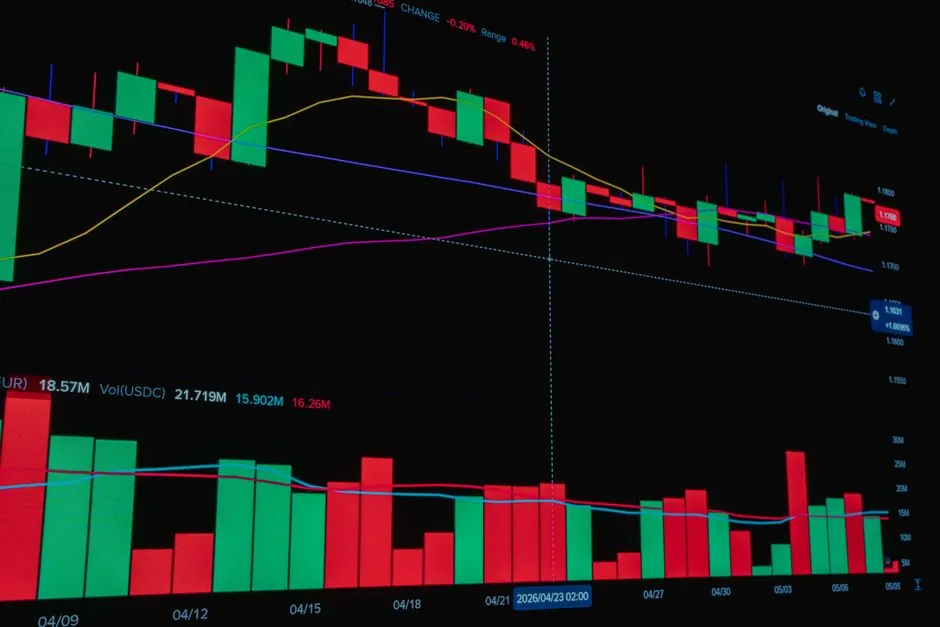
Nylon 66 injection-molding prices reached US$3,400 per metric ton in the United States and Southeast Asia and US$3,440 per metric ton in China in April 2026, each rising 26–27% month over month [S2].
The market is split across three regional price assessments, and Chinese adiponitrile capacity expansion—including 300,000 metric tons of planned capacity at Huafon and 500,000 metric tons at Tianchen Qixiang—may affect feedstock supply and prices as new plants develop [S2][S4].
Price evidence across three regional markets
Intratec reports April 2026 injection-molding nylon 66 at US$3,400/mt in both the United States and Southeast Asia and US$3,440/mt in China, compared with a March 2026 base of roughly US$2,730–2,700/mt implied by the published monthly increases [S2].
All three assessments increased 42% year over year in April 2026, while month-on-month gains ranged from 26% in China to 27% in the United States and Southeast Asia [S2]. The China series is domestic spot, ex-works, while the US and Southeast Asian series are export spot, FOB, with the latter netted back from China CIF values [S2].
These figures are not interchangeable. Intratec covers injection-molding grades with defined geographic and delivery bases, while ECHEMI provides a China domestic market view that includes enterprise quotations [S2][S3]. Buyers should align grade, additive package, payment terms, freight basis, and volume before comparing the numbers.
Why adiponitrile supply sets the nylon 66 ceiling
Approximately 90% of adiponitrile consumption is directed to hexamethylenediamine, the primary intermediate used to produce nylon 66, making ADN availability a structural constraint on polymer output [S4]. Hexamethylenediamine is obtained by hydrogenating adiponitrile, and nylon 66 is produced through polycondensation of hexamethylenediamine with adipic acid [S1].
The historical producer base explains why ADN capacity reacts slowly to demand. Invista uses a butadiene route for adiponitrile production, while Ascend Performance Materials uses an acrylonitrile route [S4].
That barrier, combined with chemical handling, process control, and customer qualification, means announced capacity should not be treated as immediately available commercial supply.
Butadiene, acrylonitrile, and adipic acid routes compared

China capacity additions create a staged supply response
Chinese adiponitrile capacity expansion included planned capacities of 500,000 metric tons for Tianchen Qixiang and 300,000 metric tons for Huafon [S4].
Tianchen Qixiang was listed with 500,000 metric tons of planned capacity, Huafon with 300,000 metric tons, and Invista with a 260,000-metric-ton unit shut in October 2023 [S4].
The commissioning sequence matters more than the 4 million metric ton headline. Construction completion, pilot output, mechanical completion, feedstock availability, customer approval, and sustained commercial operation are separate milestones.
Price and qualification risks for resin buyers
The April 2026 price increase of 26–27% month over month and 42% year over year occurred while planned ADN supply was expanding, showing that upstream capacity does not immediately eliminate tightness [S2]. Polymer inventories, operating rates, outages, freight, currency, and resin conversion economics can move faster than new chemical plants [S2][S4].
ADN is a hazardous intermediate, so capacity additions also carry safety, environmental, permitting, and utility constraints. The historical explosion at a 100,000 metric ton per year Chinese ADN plant in 2015 demonstrated that feedstock availability can be interrupted by a single major failure [S1]. That plant was not rebuilt, removing its planned 300,000 metric ton expansion from the market [S1].
For purchasers, the practical risks are different from the headline market size. A nominal ADN surplus can coexist with local resin scarcity, while a resin price reduction can encourage destocking and weaken upstream operating rates. The global ADN market was estimated at US$3.8–5.8 billion in 2025, with projected annual growth of 2.5–4.5% through 2030 [S4].
Cost drivers and total ownership economics
Purchase price is not the only cost variable for molded components. Nylon 66 cost is driven by adiponitrile and adipic acid feedstock exposure, polymer conversion, reinforcement and additive packages, volume tier, and delivery terms. ADN route economics add further differentiation through feedstock cost, yield, capital recovery, energy demand, by-products, and safety controls [S1][S4].
Volume affects the landed cost through supplier commitments, freight efficiency, and inventory carrying costs. A lower commodity quote may not lower total cost if it causes longer lead times, smaller lots, more urgent freight, or a switch to a higher-priced grade. Buyers should include price, delivery reliability, and processing performance in one comparison rather than ranking resin quotations alone.
Total cost of ownership also includes molding-machine energy, cycle time, scrap, regrind handling, maintenance, and service-life requirements. Nylon 66 is widely used in automotive components such as air-intake manifolds, electrical parts, and oil pans, as well as power tools and cable ties, where heat, oil, and grease resistance affect resin selection [S1]. Substituting engineering plastic grades solely to reduce purchase cost can invalidate tooling, temperature, chemical, or lifecycle assumptions.
Who should use this pricing evidence

Resin buyers with injection-molding exposure can use the April 2026 regional values as a procurement baseline, then qualify local quotations for equivalent grades and delivery terms [S2]. Procurement teams should also ask suppliers which ADN route supports the resin, whether the material is captive or merchant supply, and how new ADN capacity affects allocation and lead time [S4].
Engineers can use this market information for material-risk review, but price alone is not a technical qualification. Nylon 66 is selected where its strength, toughness, abrasion resistance, heat resistance, and resistance to oil and grease justify the material in the component [S1][S4]. Candidate alternatives should be compared against the same geometry, loading, temperature, chemical exposure, and assembly requirements.
This price evidence is less suitable for direct annual budgeting from a single market point because ECHEMI’s October 2026 domestic reference of 18,000–19,500 yuan/mt for enterprise quotations sits alongside a distinct earlier regional benchmark set [S2][S3]. Contract structures should cover grade equivalence, formula, monthly price resets, freight, minimum order quantities, and pass-through rules for ADN or polymer disruptions.
Track commissioning, not announcements
Two indicators will determine whether planned capacity becomes competitive supply: confirmation that the 400,000 metric ton per year Fujian Haichen plant has launched production, and evidence that Zhejiang NHU phase 1 has progressed beyond pilot operation toward sustained commercial output [S4].
Procurement teams should also monitor the spread between ECHEMI’s 18,000–19,500 yuan/mt China enterprise range and Intratec’s regional injection-grade assessments, then reconcile differences in location, grade, and delivery basis before revising purchase forecasts [S2][S3].