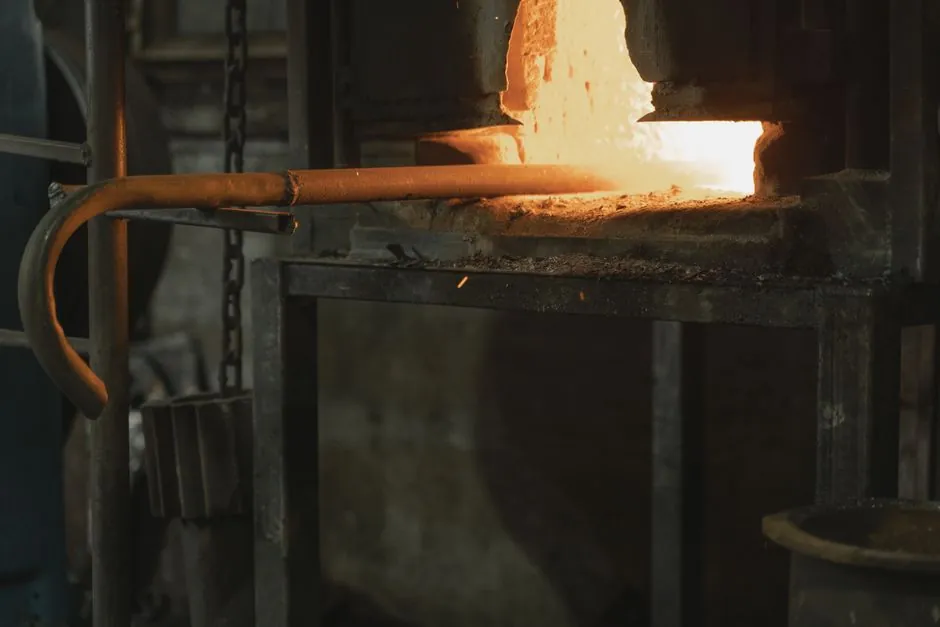
Cold-drawn wire steel fiber is defined by ASTM A820 as Type I and by EN 14889-1 as Group I; melt-extracted fiber is ASTM A820 Type III and EN 14889-1 Group III, with both standards treating the two as the leading categories for fiber-reinforced concrete [S4]. The manufacturing routes diverge from the first step: cold drawing starts with a wire rod pulled through a die at or near room temperature, while melt extraction spins fiber directly from a molten bath [S9][S1].
Steel fibers for concrete typically measure 0.5 to 1.5 mm in diameter and up to 50 mm in length, with an aspect ratio range of about 20 to 100 [S2][S3]. That envelope is the same for both processes; what changes is surface, dimensional tolerance, alloy flexibility, and corrosion behavior in the hardened composite [S2].
Process Line: Wire Drawing vs Melt Spinning
Cold drawing is a chipless forming process in which an oversized wire rod is pulled through a precision die at or near room temperature, with the cross-section reduction and a work-hardening of the steel occurring simultaneously [S9]. Drawing is distinguished from cold rolling, which produces flat sheet, plate, or strip stock rather than round wire [S8]. After drawing, the wire is cut to length and frequently deformed (hooked, crimped, or flattened) to improve mechanical anchorage in the concrete matrix [S4].
Melt extraction takes a fundamentally different route. The manufacturer spins fiber directly from a molten bath using processes such as Melt Extraction (ME) or Melt Overflow (MO), and the fiber cools so rapidly, on the order of tens of thousands of degrees per second, that the metallurgical structure is effectively frozen in a non-equilibrium, fine-grained state that conventional casting cannot replicate [S1]. Because alloying elements such as nickel and chromium partition into the fiber while the melt is still liquid, melt-extracted stainless grades can be tailored for high-temperature refractory service rather than only for ambient-temperature concrete reinforcement [S1].
Metallurgy, Tolerance, and Surface
Cold drawing raises tensile strength through strain hardening and leaves a smooth, bright surface with consistent diameter along the fiber length, which is why mill spec sheets typically quote tighter diameter tolerances for drawn wire than for chopped or shaved alternatives [S2][S8]. The same strain-hardening that improves strength also reduces ductility, so the cut fiber is often given a final annealing pass for toughness or paired with end-deformations (hooked or crimped) to recover pull-out resistance in concrete [S4][S5].
Melt extraction freezes a fine-grained structure with primary nickel and chromium distributed through the section, and the resulting fiber is described by the manufacturer as "fully annealed" and more ductile than stiff, needle-like cut fibers, an important property for refractory mixing and installation [S1]. Standard stainless grades offered in melt-extracted form include 304 (18-20% Cr, 8-12% Ni), 310 (24-27% Cr, 19-22% Ni), 330 (14-17% Cr, 33-37% Ni), 430 (17-19% Cr), and 446 (24-27% Cr) [S1]. By contrast, cold-drawn wire is overwhelmingly a carbon-steel product for concrete reinforcement rather than a stainless-steel product.
Corrosion, Fire, and Service Environment
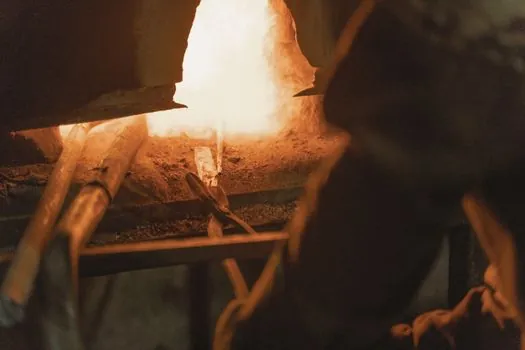
Corrosion behavior is the headline trade-off between the two families. The MarketsandMarkets 2024-2029 steel fiber report states explicitly that melt-extract and cold-drawn wire fibers are less resistant to corrosion than mill-cut fibers, a ranking that puts both mainstream processes behind a niche, thicker cross-section alternative [S2]. The same source frames corrosion susceptibility as the leading technical challenge for the whole steel fiber category, not just one process route [S2].
Melt extraction counters this weakness on the high-temperature side. By freezing a fine-grain structure and retaining alloying elements in solution, melt-extracted stainless grades offer oxidation resistance and thermal-shock performance that mill-cut or cold-drawn carbon steel cannot match, and the manufacturer claims refractory life is at least doubled in high thermal-shock service [S1]. Cold-drawn hooked-end carbon steel fibers, on the other hand, have been studied for residual mechanical performance after elevated-temperature exposure, which is the relevant failure mode for structural concrete in a fire rather than for refractory linings [S5].
Comparison Matrix: Cold-Drawn vs Melt-Extracted
The decision is not "which fiber is better" but "which fiber matches the matrix, the environment, and the budget." The table below lines up the two processes against the four criteria that govern most project specifications. [S1]
On dimensional tolerance, cold-drawn wire wins because die-drawing produces a controlled diameter and a smooth surface; melt-extracted fibers are inherently more variable because the section is frozen from a spinning melt [S2][S1]. On corrosion resistance, both rank below mill-cut fibers, but melt extraction at least offers a stainless-steel option (304, 310, 330, 430, 446) where the application budget can absorb the alloy surcharge [S2][S1]. On high-temperature service, melt extraction dominates because the frozen fine-grain structure is designed for refractory duty, while cold-drawn carbon steel is the structural-concrete default [S1][S5]. On unit cost, cold-drawn carbon wire is generally the lower-cost mainstream option; melt-extracted stainless is a specialty product where the cost premium is justified by extended refractory life and reported fiber-cost savings of up to 50% versus comparable high-end products [S1][S2].
Application Fit: Concrete vs Refractory
For fiber-reinforced concrete in buildings, slabs, shotcrete, and precast elements, cold-drawn wire is the default choice. NPCA industry guidance cited in the type overview notes that cold-drawn wire is the most common steel fiber used in precast concrete because of the high tensile strength of the source wire [S4]. Volume fractions of 0.5% to 1% are typically enough to deliver a significant lift in flexural performance of recycled-aggregate concrete, and that dosage range is independent of fiber type as long as aspect ratio and anchorage are matched [S3].
For refractory linings subject to thermal cycling, mechanical shock, and steep thermal gradients, melt-extracted stainless fibers are the matched product. The manufacturer's published grades target exactly this duty and the fiber is supplied in a pliable, fully annealed condition to survive the refractory mixing cycle [S1]. The trade-off is that the alloy content (Cr, Ni) makes the fiber more expensive per kilogram than carbon-steel cold-drawn wire, so specifying melt-extracted stainless for ambient-temperature structural concrete is rarely cost-justified. If your line of work is process heating rather than concrete reinforcement, the coreless vs channel induction furnace melting rate decision map sits one level upstream of fiber selection, since the melt bath chemistry is set at the furnace before the fiber is ever spun.
Standards and Specification Anchors
Any project specification should anchor on ASTM A820/A820M for North America or EN 14889-1 for Europe, with the two standards listing the same five process families: cold-drawn wire, cut sheet, melt-extracted, and two variant categories that differ in name between ASTM (mill-cut, modified cold-drawn wire) and EN (shaved cold-drawn wire, milled from block) [S4]. The same standards note that fibers in any of these groups may be straight or deformed, which is why the market often leads with the shape (hooked, crimped, twisted) rather than the process [S4]. For structural concrete rather than refractory, the comparison between cast-in embed plates and post-installed anchors is a closely related decision: in both cases the reinforcement geometry is set by the standard class, not by the brand on the box. For ductile anchorage at the fiber-concrete interface, CD vs drawn-arc stud welding sits one process family away, but it uses the same cold-drawn feedstock before any end-deformation is applied.
The next trackable signal is the September 2025 update cycle of the MarketsandMarkets steel fiber report, which still frames corrosion susceptibility as the binding technical challenge and projects a 4.5% CAGR through 2029 for the category as a whole [S2]. Watch for revised dosage and durability data on the nano-silica plus steel fiber combinations that the same report flags as an active R&D front; that work could shift the corrosion ranking between cold-drawn and melt-extracted fibers within the next reporting cycle.
Detailed specification references: cold chamber machine, cold milling machine, and cold box core machine.