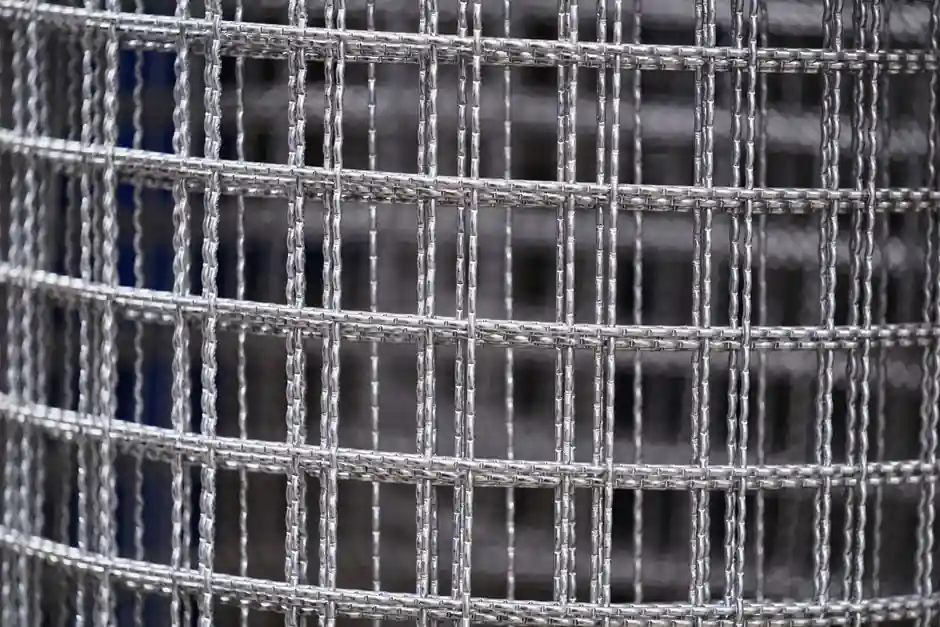
Cold-drawn wire (ASTM A820 Type I) and mill-cut steel fiber (ASTM A820 Type IV) are the two standard families most often shortlisted for reinforced marine concrete, and the choice is governed less by price than by aspect ratio, anchorage geometry and the cracking-control mechanism the element actually needs [S1][S2][S3].
Marine service exposes concrete to chloride ingress, wet-dry cycling, abrasion from waves or vessel impact, and, in splash/tidal zones, repeated saturation. In that envelope, fiber geometry, dosage, and fiber-matrix bond quality dominate the residual flexural and shear performance of the composite, so picking the wrong shape class costs more than picking a slightly higher grade of cement [S1][S5].
How the two fiber classes are made and classified
ASTM A820 groups steel fibers into five manufacturing-based types: Type I cold-drawn wire, Type II cut sheet, Type III melt-extracted, Type IV mill-cut, and Type V modified cold-drawn wire; EN 14889-1 mirrors this with five Groups, naming the last two "shaved cold-drawn wire" and "milled from blocks" [S2]. Cold-drawn wire fiber is produced by drawing steel wire rod down to the target diameter, cutting to length, and frequently deforming the ends (hooked, crimped, or flat-end) for mechanical anchorage, which is why NPCA identifies it as the most common fiber in precast concrete, citing the high tensile strength of the source wire [S2]. Mill-cut fiber (Type IV) is produced by shaving or slitting from a steel block or bar, giving a flat, irregular cross-section and a characteristically rough surface, but with lower aspect-ratio control than drawn wire [S2][S3].
Aspect ratio (length-to-diameter) for steel fibers in concrete generally sits between 20 and 100, and this single number drives both workability and crack-bridging behavior; cold-drawn wire routinely reaches 60–80 at 0.5–1.0 mm diameter, while mill-cut fiber more often lands in the 30–50 range because the cross-section is rectangular rather than round [S3].
Mechanical effectiveness: what the shear database actually shows
A 2024 statistical study assembled 232 shear-failed reinforced SFRC slender beams across four fiber types (straight wire, deformed wire, deformed cut-sheet, and ingot mill) and combined them with an existing 280-beam database on hook-end wire fiber, deriving fiber bond factors that quantify each type's contribution to shear capacity [S1]. The ranking that fell out of that combined database is unambiguous: hook-end and ingot-mill steel fibers deliver the highest strengthening effectiveness, followed by cut-sheet, then deformed wire, with straight wire the lowest of the series [S1].
That ranking is counter-intuitive at first glance, because hook-end cold-drawn wire is the market default, but it makes physical sense once bond is decomposed: the ingot-mill fiber's rough, irregular surface plus irregular cross-section gives a frictional bond that activates at small crack openings, while the hook-end wire's geometric anchorage only mobilizes after a measurable slip. For thin webs and slender beams without stirrups, that early bond activation is exactly what the uncracked shear-compression zone needs [S1]. In the same study the primary shear-carrying mechanisms were identified as the uncracked shear-compression SFRC plus the dowel action of the longitudinal tensile bars, with the fiber contribution routed through the uncracked SFRC term rather than acting as discrete ties [S1].
Marine-specific selection criteria
For marine concrete, four criteria drive the call: (1) residual flexural strength after first-crack, which controls crack-bridging under thermal and shrinkage movement; (2) impact and abrasion resistance, which matters for quay edges, floating pontoons, and lock walls; (3) corrosion behavior at the cover zone, since any exposed fiber will rust and stain the surface; and (4) pumpability and finish, because marine pours are often heavily reinforced and pumped over long distances [S3][S5]. On the first two, cold-drawn wire with hooked or crimped ends is the stronger option per unit dosage because of its higher aspect ratio and clean anchorage geometry; mill-cut fiber wins on (3) surface roughness in thin overlays and (4) lower balling risk at high dosage in sticky mixes [S1][S3].
Cover-zone corrosion of steel fibers in marine exposure is real but cosmetic at typical 30–50 mm cover depths, because the rust product occupies a smaller volume than the consumed steel and does not split the concrete the way rebar corrosion does, an advantage over conventional welded wire mesh once the cover cracks [S5].
Head-to-head comparison: cold-drawn wire vs milled fiber
On the four decision criteria above, the contrast is sharp. Aspect ratio: cold-drawn wire typically 60–80 versus milled fiber 30–50, so per-fiber crack-bridging capacity is materially higher for the wire product [S3]. Anchorage: cold-drawn wire relies on geometric end-deformation (hook, crimp, flat-end), which gives a well-defined pull-out load; milled fiber relies on surface roughness and irregular section, giving earlier but less peaky bond mobilization [S1][S2]. Cost per kg: cold-drawn wire generally runs higher because of the wire-rod feedstock and drawing step; milled fiber is cheaper per kg but you need more of it by mass for an equivalent dosage in critical structural zones [S2][S3]. Surface finish and pumpability: milled fiber's flat section and shorter length reduce the "hedgehog" effect in heavily reinforced pours, so it is often preferred for thin overlays, shotcrete, and high-dose precast where balling is a risk [S2][S3].
A useful decision rule: for primary structural elements in marine service (wharf decks, pile caps, seawall stems) where shear and flexural residual strength dominate, specify hook-end cold-drawn wire at 0.5%–1.0% by volume to ASTM A820 Type I with a 60–80 aspect ratio; for abrasion-resistant overlays, tunnel linings, and repair mortars where finish and pumpability matter more than peak strength, mill-cut Type IV fiber at similar dosage is the more forgiving choice [S1][S2][S3].
Limitations, failure modes, and what each fiber cannot do

Cold-drawn wire's failure mode is pull-out, and in aggressive chloride exposure a corroded fiber's pull-out load drops because the smooth wire section loses mechanical interlock once the rust layer spalls, so design for marine service should size fibers assuming a partially degraded bond over the design life rather than the as-mixed value [S3]. Milled fiber's failure mode is fracture of the fiber itself at lower aspect ratios, because the rectangular section and notches from the milling act as stress raisers; this is why its contribution to flexural toughness plateaus earlier than cold-drawn wire's [S1][S3]. Neither fiber substitutes for structural rebar in primary flexural members: SFRC is a toughness and crack-control material, and using either fiber in place of main reinforcement is a code violation under ACI 318 and equivalent European design codes for framed structures (a point reinforced by the 2024 beam study, which still relied on longitudinal rebar for dowel action) [S1].
Marine overlay work also needs to reckon with corrosion staining. If the architectural finish cannot tolerate rust bleed from any fiber that ends up within 5–10 mm of the surface, stainless or heavily galvanized cold-drawn wire is the safer call, not a switch to milled fiber, because surface roughness does not slow the corrosion rate, it only changes the bond profile [S5].
Standards, sourcing, and what to put on the drawing
For spec writing, the cleanest call is to reference ASTM A820/A820M for the fiber type (Type I cold-drawn wire or Type IV mill-cut), EN 14889-1 Groups I or V if the project is European, and ACI 304 for placement and mixing guidance, with dosage expressed as both kg/m³ and % by volume to avoid ambiguity [S2][S3]. Material traceability should include the actual wire rod grade (typically drawn from low-carbon wire rod to AISI 1006/1008), the post-drawing tensile strength (often 1000–1400 MPa for the cold-drawn wire, a major reason for its dominance), and the fiber length tolerance [S2]. For marine service, also call out the chloride exposure class (ACI 318 exposure class C, or equivalent EN 206 XS/XD), and require a minimum 30-day wet cure before any chloride exposure to limit early-age fiber-corrosion staining at the cover zone [S5].
For readers comparing this with the broader steel-fiber landscape, the cold-drawn versus melt-extracted comparison covers the third major ASTM A820 family and explains why melt-extracted fiber is rarely used in marine structural concrete despite a low unit cost. For a closer look at how fiber reinforcement compares with conventional welded wire mesh in slab and pavement design, the practical cost-and-labor trade-offs are laid out in this steel fibers versus wire mesh pour-side decision guide.
Trackable signals to watch: revisions to ACI 318 Chapter 19 (SFRC provisions) and any update to ASTM A820's Type IV mill-cut dimensional tolerances, both of which will tighten the acceptable aspect-ratio range and force re-spec of current milled-fiber datasheets; on the supply side, watch European wire-rod spot prices, because cold-drawn wire fiber cost is tied tightly to low-carbon wire rod and a sustained move above typical 2024–2025 bands will close the price gap with milled fiber. A separate trackable item is the concrete fiber encyclopedia entry, which is updated as the ASTM and EN type definitions get revised and which consolidates the same five-family classification used here [S1][S2][S3].
Component reference pages worth checking: marine hvac, and marine valve.