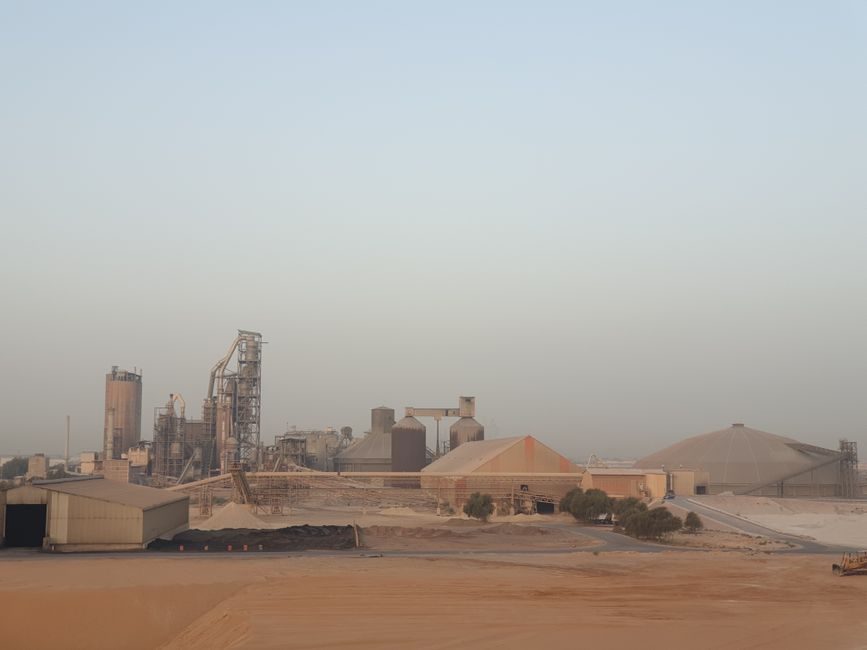
A concrete batching plant guarding frame is a perimeter steel structure that physically isolates nip points, drive trains, and elevated transfer points on the mixer, aggregate bin, belt conveyor, and skip hoist — the four sub-systems that generate the bulk of operator-side hazards on a stationary or mobile plant [S1][S5].
The practical sizing envelope is set by the batch plant class: a stationary HZS60-class unit with a JS1000 twin-shaft mixer discharges at 45–60 m³/h with 200 t/h inclined-belt aggregate delivery and 4.1 m discharge height, while total installed power reaches roughly 130 kW — every one of those numbers directly constrains frame height, footprint, and the load rating of guarding uprights [S3].
Map the four hazard zones before sizing the frame
Frame height, mesh aperture, and kick-plate geometry are useless without a hazard map; the four zones that govern every guarding layout on a concrete batching plant are the mixer drive, the aggregate bin discharge gate, the inclined-belt conveyor head/transition, and the skip-hoist travel envelope [S1][S5].
ConMACH-class turnkey plants and SMAT-class mobile plants both expose those four zones, so a frame spec written for one platform transfers to the other as long as the mixer model, belt width, and skip travel stay within the same envelope [S2][S6]. On a JS1000 twin-shaft the mixer drive sits low and forward, so its guarding frame is short and wide; on the aggregate bin the discharge gate is elevated to clear the weigh hopper, which forces the frame upward and dictates fixed hand-rail height around the gate operator station [S3][S4].
Selection criteria by sub-system
Selection criteria split cleanly along the four hazard zones: for the mixer drive, the controlling figure is shaft speed and gearbox torque on the JS-class twin-shaft, with the guard rated to withstand a 1.5× static tip load from any hand tool during maintenance; for the aggregate bin, the bin wall angle and vibrator mounting dictate kick-plate thickness and the position of the upper rail; for the inclined-belt conveyor, the head pulley diameter, belt width, and 200 t/h throughput set the transition-zone enclosure dimensions; and for the skip hoist, the travel stroke plus the rail-to-rail clearance governs the full-height cage that prevents fall-into-track events during the lift cycle [S3][S5].
Material specification follows duty cycle rather than geography: a stationary plant running two 8-hour shifts per day needs hot-dip-galvanized rectangular hollow section uprights with stainless mesh, while a mobile or compact plant that is relocated every 3–6 months benefits from bolted modular panels that can be re-torqued on the new pad [S5][S6]. The four main frame options — fixed welded, bolt-down modular, hinged swing-gate, and sliding-panel — line up against the four selection axes in the comparison below.
Frame option comparison on four decision criteria

The four main guarding frame types for concrete batching plants compare as follows on cost, install time, reconfigurability, and maintenance access: [S1]
For a contractor running 4–6 plant relocations per year the bolt-down modular option is the dominant spec; for a readymix operator on a permanent pad the fixed welded frame remains the cost-default; the swing-gate and sliding-panel options are justified only when the maintenance team has flagged conveyor head or skip-rail access as a recurring downtime driver [S1][S5].
Who this spec is for and who it is not
This frame selection logic applies to stationary and mobile concrete batching plants in the 30–120 m³/h output class — the band that covers the bulk of readymix, precast, and infrastructure contractor deployments from Apollo Inffratech and ConMACH in India/Türkiye to SMAT and Haomei in China [S1][S2][S6][S7].
It does not apply cleanly to compact or self-loading mixer units where the batching function is integrated into the truck chassis, because those platforms have neither a fixed aggregate bin nor a skip hoist, so a guarding frame sized for an HZS60 will be oversized by a factor of two or more [S5][S6]. Drum-mixer-only plants below 20 m³/h also fall outside this envelope, and any spec written from this frame logic must be re-cut if the mixer is a reversing drum or pan type rather than a JS-class twin-shaft [S4].
Concrete use cases from active plant builds
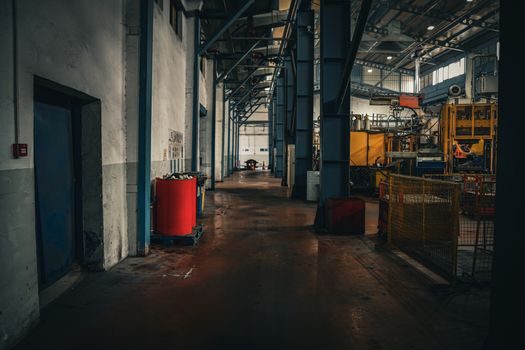
Three current use cases dominate 2026 plant builds: Indian readymix fleets running HZS60-class stationary units on permanent pads, where the welded frame with swing-gate on the conveyor head is the repeated spec; infrastructure project contractors running mobile or compact plants on 6–18 month site tenures, where bolt-down modular frames dominate because the same plant is redeployed with only the conveyor and bin reoriented [S1][S5]; and precast yards in Türkiye and China running 75–120 m³/h stationary plants, where the additional conveyor width forces the guarding frame upward and the kick-plate geometry to be re-cut per project [S2][S3][S6].
On SMAT-class mobile plants the standard delivery includes containerized frame sections that bolt to the bin and conveyor base, which means the guarding frame must be specified in matching containerized modules or it will not survive the second or third relocation [S6]. Haomei-class turnkey plants ship with a service and parts package that assumes the guarding frame is removable for mixer bearing replacement, which is the underlying reason the bolt-down modular option dominates the online-sold plant segment [S7].
Limitations, failure modes, and pad-side constraints
The dominant failure modes on a concrete batching plant guarding frame are corrosion at the bin-to-frame interface where wash water collects, fatigue cracking at the conveyor-head hinge points, and impact damage from wheel loader collisions at the bin corner — together these account for the majority of frame replacement events reported by OEM service teams [S1][S7].
Pad-side constraints are equally binding: a frame designed for a 130 kW HZS60 plant on a 200 mm reinforced concrete pad cannot be re-used on a 90 mm pad without additional anchor chemistry, and any frame taller than 2.2 m at the conveyor head needs a wind-load check against local code, since a 200 t/h inclined belt running empty in a 25 m/s gust generates a non-trivial overturning moment that the uprights must resist [S3][S5]. Drainage around the pad must keep wash water away from the lower 300 mm of the frame or the kick-plate will fail inspection inside 18 months on a two-shift plant [S1][S7].
Sourcing, standards, and procurement signals
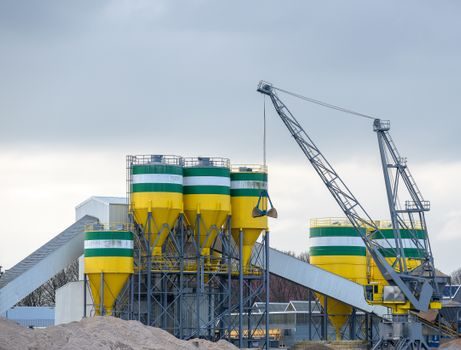
Procurement should reference each guarding zone to the OEM-supplied general arrangement drawing and require the frame supplier to sign off against the mixer, conveyor, and skip sub-suppliers' own hazard zones — Apollo Inffratech, ConMACH, SMAT, and Haomei all publish general-arrangement drawings on their product pages that mark the mixer drive, belt head, and skip travel envelope explicitly [S1][S2][S6][S7].
Trackable signals for the next procurement cycle are: OEM-published general-arrangement revisions on the HZS60 and HZS75 stationary lines, the appearance of containerized bolt-down frame kits as a line item on the SMAT and Haomei product configurators, and any revision to the JS1000 mixer service manual that changes the bearing-pull clearance and therefore the swing-gate geometry [S3][S6][S7].
Related: pressure transmitter, flow meter, industrial valve.