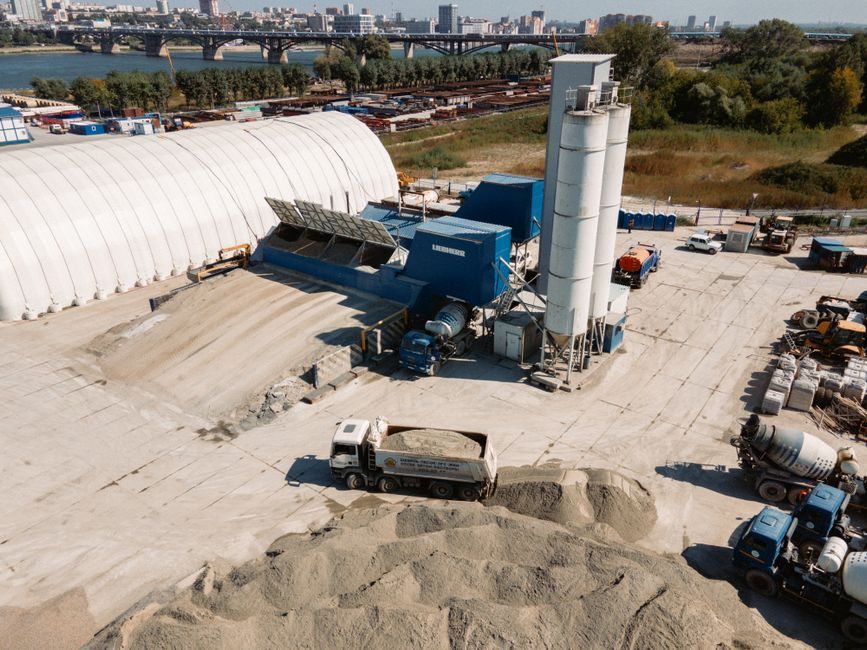
China-origin concrete batching plant manufacturing dominates global B2B sourcing in mid-2026: Alibaba's supplier index for the category returns 1,676 matching factories, with Domestic Market absorbing 79.5% of the listed top-supplier revenue, Africa 10.0% and Eastern Europe 6.0% [S9]. The product mix on the index page resolves to Construction Machinery, with mobile and stationary concrete batching plant lines, tower cranes, elevators, mixers, pumps, stabilized soil mixing stations, pile drivers and mixer trucks all listed under one export programme [S9].
Working capacity bands in active listings run from the HZN25 mobile unit (rated 25 m³/h) up through HZS100 (100 m³/h), HZS120 (120 m³/h) and HLS120 (120 m³/h large-station configuration) [S1][S3][S6][S2]. OEM data sheets consistently cite electric drive power between 145 kW and 175 kW for the 100-120 m³/h tier, CE/ISO certification on the HZS-series nameplate, and a 3.8 m discharge height on the HLS120 large-station layout [S3][S6][S2].
Shandong and Henan: the two regional clusters that set the price/spec curve
Shandong (Dezhou/Qihe Economic Development Zone) and Henan (Zhengzhou High-Tech Development District) are the two Chinese OEM bases that show up in nearly every mid-2026 supplier record [S4][S7]. Shandong Tianyu Construction Machinery Co., Ltd. registers as a Concrete Batching Plant Manufacturer with assembly silo supply, marketing channel routed through made-in-china.com under sales contact Chanlin Young [S4]. Luton Group Co., Ltd. in Zhengzhou lists Concrete Batching Plant, Asphalt Mixing Plant, Concrete Pump, Self Loading Concrete Mixer and Dry Mix Mortar Plant as its main-products line, classified Manufacturer/Factory on the same B2B channel [S7].
The Shandong origin tag is repeated verbatim on the HZS120 spec sheet — "Place of Origin: Shandong, China (Mainland)" — alongside 175 kW power and CE/ISO dual certification [S6]. The HLS120 sheet frames the same station as "large concrete mixing equipment integrating the storage, metering, and mixing of materials" with the 3.8 m discharge point sized for standard transit-mixer drum loading [S2]. For project buyers comparing regional lead times, that geographic split is the single most actionable sourcing signal: Shandong skews toward HZS-stationary output at 100-120 m³/h, while Henan skews toward multi-product packages that bundle batching plant with asphalt and dry-mix plants under one OEM [S4][S7].
Stationary HZS-series spec bands versus mobile HZN-series trade-offs
Stationary HZS100 and HZS120 plants target infrastructure and commercial concrete supply, with HZS100 listed for "various highways, railroads, high-speed railways, airports, ports, bridges, and hydropower stations, as well as commercial concrete mixing station" duty [S3]. The HZS100 spec sheet carries CE and ISO certification, while the HZS120 spec sheet explicitly pairs CE and ISO together with 175 kW total installed power [S3][S6].
The HZN25 mobile plant is the small-capacity end of the same OEM family, framed as "new generation Batching Plants, the fruits of extensive R&D work, experience" on its Okorder listing, and it is the only listing in the dataset that explicitly carries the "mobile" classification [S1]. Trade-off to weigh in spec review: a stationary HZS100/HZS120 plant delivers 4-4.8× the hourly output of an HZN25 mobile unit but requires foundation, aggregate bin and cement silo civil works, whereas the mobile HZN25 line is trailer-towable between job sites without permanent foundations [S1][S3]. For concrete admixture dosing integration, both layouts accept the same liquid-admix line, so admixture specification does not have to change between the two form factors.
Certification, power draw and discharge geometry as the three buying filters
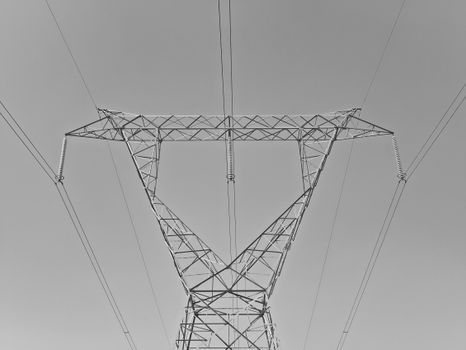
Three verifiable data points separate a credible HZS-series data sheet from a generic re-listing: certification stamps, total connected power in kW, and the discharge height to the truck-mixer drum. The HZS100 spec sheet carries the dual "ISO & CE" stamp in the product title [S3]. The HZS120 spec sheet pairs "CE & ISO" certification with 175 kW power and a Shandong origin tag [S6]. The HLS120 large-station spec sheet quotes 3.8 m as the discharge height to the truck-mixer loading chute, which is the geometry threshold a standard transit-mixer drum needs to clear for direct gravity loading [S2].
Buyers should also weight the concrete vibrator and concrete curing compound downstream package: HZS100/HZS120 plants are commonly tendered as part of an integrated site package including immersion vibrators, curing compound sprayers and aggregate conveyors, so asking the OEM for the full bill of materials — not only the mixer core — avoids mismatched lead times on a single PO.
What the 1,676-supplier index actually says about competition
The same index page breaks total revenue concentration into Domestic Market 79.5%, Africa 10.0% and Eastern Europe 6.0% — a distribution that signals the category is supply-heavy domestically and export-light but real into Africa and Eastern Europe [S9].
A second index pass on the made-in-china.com channel for the "portable concrete batching plant" keyword resolved to "Sorry! No matches were found" on 2026-06-25, indicating that the portable/mobile sub-segment is still indexed under the broader "concrete batching plant" term rather than a separate dedicated category page on that channel [S8]. The 30 t cement silo category on the same ecosystem shows 100+ active product listings under the cement silo sub-line, which matters for buyers because the silo is a tendered accessory on essentially every HZS-stationary plant [S10].
Comparing the four main capacity/output options against decision criteria
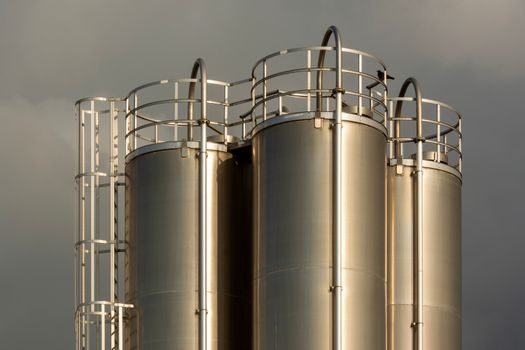
Side-by-side on the four listings in the research: HZN25 mobile at 25 m³/h with no permanent foundation requirement; HZS100 stationary at 100 m³/h with CE/ISO dual certification, target projects in highways/railways/airports/ports/bridges/hydropower; HZS120 stationary at 120 m³/h with 175 kW power, CE/ISO dual certification, Shandong origin; HLS120 large-station layout at 120 m³/h with 3.8 m discharge height and integrated storage-metering-mixing architecture [S1][S3][S6][S2].
Decision criteria line up as: (1) hourly output — pick HZN25 for low-volume or remote-site pours, HZS100 for standard commercial supply, HZS120/HLS120 for high-throughput infrastructure; (2) civil works budget — mobile HZN25 cuts foundation cost, stationary HZS/HLS plants need silo and aggregate bin pads; (3) certification ceiling — HZS100/HZS120 both carry CE/ISO dual marks, HZN25 spec sheet does not list certification stamps in the visible data fields, so EU and Africa-bridge-project buyers should confirm certification case-by-case for the mobile line; (4) OEM concentration — Shandong origin dominates the stationary tier, Henan origin dominates the multi-product bundle tier including asphalt and dry-mortar plants [S1][S3][S6][S2][S4][S7].
Limits of the public record and what to verify before PO
The public snapshots have blind spots a procurement engineer should plan around. First, the HZN25 listing does not show total connected power or certification stamps in the visible fields, so EU/Africa tender documents that mandate CE marking on the nameplate need a vendor confirmation before contract [S1]. Second, the Alibaba 1,676-supplier count is a platform index snapshot, not a verified-active-factory count — duplicate listings and trading-company entries inflate that number relative to actual manufacturing capacity [S9]. Third, the "portable" sub-keyword returns zero matches on made-in-china.com, which means the mobile category is reached only via the broader "concrete batching plant" search and risks under-discovery in RFQ routing [S8].
For concrete-pumping downstream of the batching plant, the Truck-Mounted Concrete Pump Sizing: Output, Pressure and Reach Bands reference and the Truck-Mounted Concrete Pump Suppliers: 2026 OEM Map and Spec Bands map are the natural cross-reference for matching pump reach to the 3.8 m HLS120 discharge geometry and to HZS100/HZS120 silo-and-boom site layouts.