Road maintenance contractors running short traffic-closure windows should size a concrete groove cutter on three contract-driven numbers: groove width tolerance, depth tolerance and cut length per shift, because every other spec flows from those three [S1][S4].
Walk-behind gasoline-powered units now lead the category at 31.0% share in 2026, with 5-10 mm cutting widths at 38.0% of demand, per Future Market Insights' August 2026 market study [S4]. The same study pegs road and pavement grooving at 29.0% of all concrete groove cutter applications, ahead of expansion-joint cutting and industrial floor work [S4].
Match the Cutter to the Contract Spec, Not the Brochure
Michigan DOT requires transverse grooves at 1/8 inch width with a +/- 1/32 inch tolerance, spaced 3/4 inch on center with a +/- 1/16 inch tolerance, which sets the lower bound for any cutter the contractor plans to run on that agency's work [S1]. Iowa DOT's April 2026 specification layers in a diamond-grooving depth window of 1/8 inch to 3/16 inch on concrete pavement, the dimension the saw operator must hold across a 12-foot lane pass [S4]. When the agency spec is silent, contractors default to the same 1/8 inch width because it is the band that keeps aggregate reveal shallow enough to limit tire noise and raveling [S1][S4].
Cutting depth and blade diameter scale together: walk-behind units in the constructionetail.com March 2026 spec list cut 4 to 5 inches deep with a 16-inch maximum blade at 4 mm kerf, a configuration suited to full-depth joint repair rather than surface texturing [S3]. A 500-type road cutter, by contrast, is the working benchmark for normal cement floor and asphalt pavement under 15 cm (roughly 6 inch) depth, where a deeper rig is wasted mass and fuel [S8].
Power Source, Width Class and Productivity Trade-Offs
Gasoline or petrol power holds 38.0% of 2026 share because dispersed outdoor worksites rarely have three-phase power within reach, and the self-contained engine lets a single operator stage the cut without a tow vehicle for a generator [S4]. Electric walk-behinds gain share on indoor industrial floors and airport runways where diesel particulate and noise are restricted, but on highway rehabilitation they trail the gasoline class for shift productivity [S4].
The decision matrix below lines up the four main configurations a road maintenance buyer will see in 2026 quotations:
Walk-behind, 5-10 mm width, gasoline: best fit for routine pavement grooving on state highway work, 31.0% category share, lightest logistics, lowest per-shift fuel cost [S4]. Walk-behind, 10-20 mm width, gasoline: chosen when the spec calls for expansion-joint resection or full-depth patch cutting, where a 4-5 inch depth pass is required [S3][S4]. Handheld diamond-blade cutter: suited only to confined-area joint trimming, edge adjustment and small patch work, not lane-scale grooving [S5]. Ride-on multi-blade cutter: specified for airport runways and long continuous slabs where the contractor can amortize the larger machine across thousands of linear feet per shift [S4].
Machine Class, Maneuverability and Crew Size

Walk-behind units are the reference choice for short closure windows because a two-person crew can offload, set and start cutting within 15 minutes, and the same crew can swap to a road roller for backfill compaction without retooling [S4][S5]. Vermeer markets its concrete cutter line specifically for interstate patch and joint repair, citing ground speed and compact design as the productivity drivers on highway-class work [S6]. The trade-off is depth: walk-behind machines top out around the 4-5 inch pass in the 2026 spec sheets, so any cut deeper than that pushes the buyer into a ride-on or a staged cut [S3][S4].
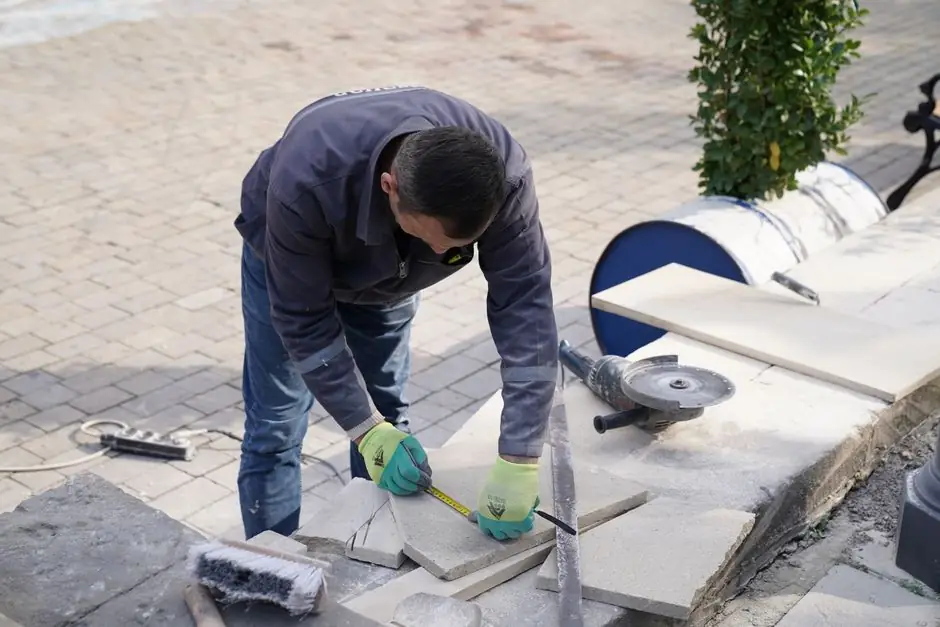
Handheld cutters, including 13 HP VST Shakti-class petrol units, fill the niche for kerb cutting, small slab repair and isolated joint trim where a walk-behind cannot physically fit [S2]. These are not lane-scale tools: their productivity per shift is roughly one-fifth of a walk-behind on continuous grooving, and they expose the operator to higher hand-arm vibration, which is why most agency specs cap handheld use to short-duration, low-production tasks [S2][S5].
Blade Selection, Dust Control and the Silica Cost Curve
Diamond blades are the default consumable for concrete groove work, with segment height and bond hardness matched to aggregate hardness; a soft-bond blade cuts granite-rich concrete faster but wears faster on limestone aggregate [S5]. Replacement cost and segment wear are the second-largest line item after fuel on a highway-renewal contract, and FMI flags silica controls plus blade replacement as the cost pressures expected to compress equipment economics through the 2026-2036 forecast window [S4].
Water-suppressed cutting is the standard control for respirable crystalline silica on concrete, and the 2026 walk-behind spec sheets carry a 20-litre on-board tank with consumption around 1 L/hr under intermittent load, a capacity sized for one shift of joint cutting without a tow-behind water trailer [S3]. Dry cutting with local exhaust ventilation is acceptable on short intermittent cuts per common agency specifications, but it is not the production-rate path for full-lane diamond grooving where the spec demands a 1/8-3/16 inch depth held across the pass [S4].
Market Backdrop, Regional Pipelines and Fleet Sizing

USD 720.6 million in 2026 growing to USD 1,230.9 million by 2036 at a 5.5% CAGR is the headline demand number, sustained by recurring highway rehabilitation rather than new-build paving [S4]. The USA Census Bureau reported a USD 150.9 billion annualized highway construction rate in June 2026, a public-workstream baseline that keeps concrete-cutting crews booked through the maintenance season [S4].
Mexico's 5.2% CAGR outpaces Japan's 4.1% because SICT set a routine-conservation target of 48,653 km for the federal road network in May 2025, generating a denser near-term maintenance pipeline for joint-cutting and grooving work [S4]. For a US-based contractor sizing a 2026 fleet, the practical read is one walk-behind per two-person finishing crew for routine pavement work, plus one ride-on reserved for airport and long-slab contracts; handheld units stay in the trailer as utility tools rather than primary production machines [S2][S4][S6]. A comparable fleet planning approach for adjacent equipment categories is laid out in the concrete groove cutter spec map for steel construction, where blade width class and power source drive the same trade-offs.
The underlying component specifications are covered under marble cutter.