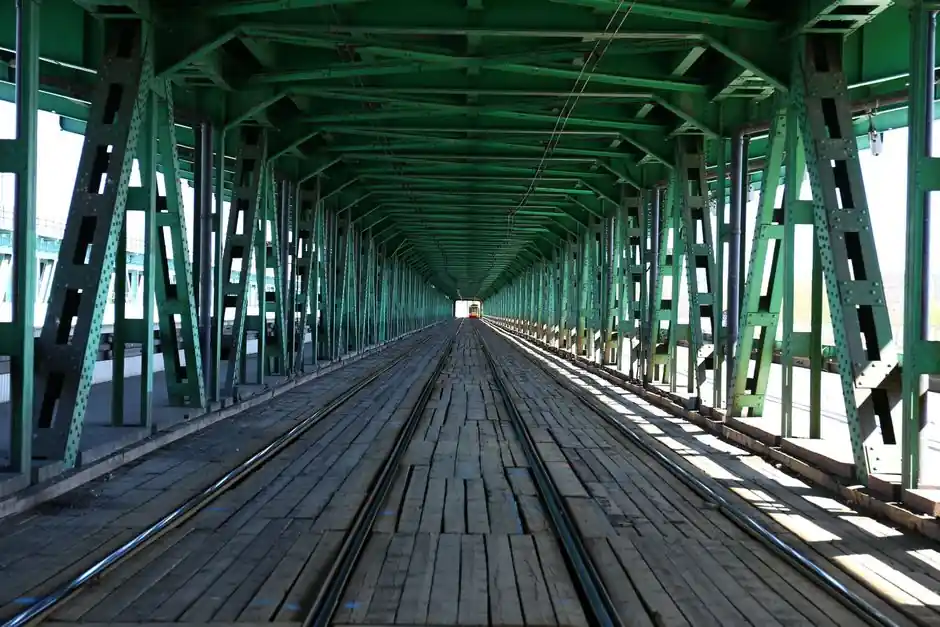
Underground concrete placement rules out GNSS, so a tunnel-spec laser screed is sized on engine power, vibration width, and 2D control rather than 3D model stringline. The YG-ZP30 and YG-ZP40 ride-on platforms at 35.5-63.9 kW, 3.1-4.0 m vibration width, and 100-500 mm leveling capacity bracket most metro and rail-tunnel invert pours [S1].
Tunnel clearance typically limits equipment envelope to roughly 4.5 m width and 4.7-5.0 m vertical, which is why a 4.0 m screed head still leaves margin for ventilation duct, formwork rails, and the operator station. Walk-behind models like the YG-CL300 and YG-CL300A at 22 kW and 2.5-3.0 m head are restricted to short invert patches, cross-passages, and sump pits where ride-on access is impossible [S1].
Engine Power and Machine Class Mapping
Laser screed models in the 2026 YG commercial line segment into three working envelopes that map directly onto tunnel tasks: 22 kW walk-behind (CL300 series), 35.5 kW ride-on (ZP30), and 63.9 kW heavy ride-on (ZP40), with machine weight scaling from 1.0 t to 8.5 t [S1]. The 35.5 kW ZP30 is the realistic floor for continuous mainline tunnel invert pours above 1,000 m² per shift, because its 100 L fuel tank supports an 8-10 hour working day without rehandling, while the 22 kW walk-behind's 20 L tank forces refuel stops every 3-4 hours under load [S1].
Travel speed further separates the classes: walk-behind units cap at 0-4 km/h, ride-on units run 4-8 km/h, which is the difference between a 200 m²/h and 400-500 m²/h effective placement rate on a 200 mm slab. For tunnel segments where concrete delivery windows are tight (typical rail-tunnel pour windows run 6-8 hours between rebar and finish), the ride-on class is the only way to keep pace with the agitator truck queue.
Vibration Width Versus Tunnel Cross-Section
Vibration head width in this class runs 2.5 m (CL300), 3.0 m (CL300A), 3.1 m (ZP30), and 4.0 m (ZP40), and each step changes which tunnel geometries the machine can finish in a single pass [S1]. A 3.0-3.1 m head covers a standard two-lane road tunnel invert at roughly 8.5-9.0 m width in three passes with 200-300 mm overlap, which is the practical minimum for production work; a 4.0 m head reduces that to two passes and cuts cold-joint risk on long pulls.
Leveling thickness is the second width-related spec: walk-behind units stop at 50-300 mm, ride-on ZP30 reaches 100-450 mm, and ZP40 spans 100-500 mm [S1]. Tunnel invert slabs in metro and high-speed rail work typically run 250-400 mm structural thickness with a 40-60 mm wearing course on top, so 450 mm headroom is comfortable; the 500 mm ZP40 capacity is sized for heavy-duty base slabs under service rooms and cross-passage sump structures.
2D Paving Control in GNSS-Denied Tunnel Space
Tunnel work cannot use GNSS, so screed control falls back to 2D averaging using sonic tracers, stringline skis, or rotary laser receivers referenced to a fixed elevation benchmark. The Topcon P-32 2D paving system is one of the few purpose-built 2D control packages that explicitly covers concrete paving "under open skies, in tunnels, or on obstructed jobsites" [S3]. A P-32 stack reads sonic or laser elevation on each side of the screed head and averages the two, which is exactly the failure mode you need to handle in tunnels: uneven formwork height, rebar chair deflection, and varying head pressure from the truck chute.
2D averaging is a deliberate downgrade from 3D stringless, and the trade-off is that the operator must verify cross-fall and slope against a manual level at every 10-15 m station. For long invert pulls the practical workflow is P-32 averaging for grade plus a Topcon pipe laser (or equivalent rotary laser) set to the design invert elevation as the static reference [S3]. A laser screed spec map for electrical-installation floors follows the same 2D logic, because indoor slabs also forfeit GNSS and rely on the same averaging architecture.
Slope, Drainage, and Invert Geometry
Tunnel inverts are never flat: they are sloped at 1-2% (10-20 mm per meter) to drive water to side drains and central channels, which is the same drainage-gradient logic used on flat roofs, parking decks, and balconies [S2]. The screed head must therefore finish to a deliberate cross-fall, not to absolute level, and 2D averaging on both sides of the head is what keeps the 1.5% typical road-tunnel cross-fall from drifting over a 50 m pour.
Substrate prep is the same as any bonded or separation-layer screed: clean, expose load-bearing zones, and treat voids before any bond bridge goes down [S2]. Tunnel invert pours sit on either a sprayed-concrete primary lining (with geomembrane waterproofing) or a structural concrete base slab, and the bond condition at the interface governs whether you run the screed as a bonded layer or a separation-layer pour, which in turn sets the minimum screed thickness at the head.
Tunnel-Specific Selection Criteria
Five criteria separate a tunnel-rated laser screed from a generic slab screed: (1) engine power and fuel tank size for shift length without rehandling, (2) vibration head width versus minimum clearance and overlap count, (3) leveling thickness range covering both wearing course and structural invert, (4) 2D control compatibility because GNSS is unavailable underground, and (5) travel speed matched to the concrete delivery window [S1][S3]. A walk-behind 22 kW unit fails criteria (1), (3), and (5) for any continuous mainline pour; a 3D-GNSS-only machine fails (4) regardless of size.
The same five-criteria filter is used for tank cleaning machine selection for tunneling: TBM-type and sludge match-up, because the underground envelope imposes identical constraints (no satellite signal, fixed clearance, tight shift windows) on every piece of equipment that goes inside the bore.
Failure Modes and Limits Inside the Bore
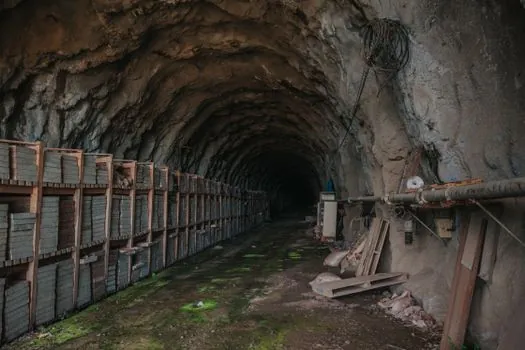
Three failure modes dominate tunnel screed work: formwork deflection under head pressure, head loss in long concrete pump lines, and rebar chair crush under a heavy 8.5 t ride-on [S1]. The first is mitigated by 2D averaging reading off the formwork rather than off the rebar mat; the second caps effective pour rate at 30-40 m³/h for a 100 mm line, which is below the 60-80 m³/h the ZP40 can finish, so the screed is rarely the bottleneck; the third means the ZP40 needs at least 200 mm of cured blinding concrete before it can drive onto the rebar mat without crushing chairs.
Ventilation is the silent limit: a 63.9 kW diesel engine burns roughly 15-18 L/h under load, and a 140 L tank lasts one shift only if idling is disciplined. Most tunnel contracts force Stage V or equivalent diesel particulate filters on any engine above 56 kW underground, which adds a maintenance interval to the spec sheet that open-air spec maps never carry. The walk-behind 22 kW class escapes most of this because it falls below the particulate-filter threshold in many European tunnel codes.
Related Equipment Categories
A screed is the second machine in the tunnel-concrete chain; placement and finishing are separate decisions. For broader concrete-placement context inside the construction tools category, the screed sits between the pump boom and the trowel/power float pass, and it shares the same 2D control architecture with a laser level referenced off a static benchmark. A laser screed on a tunnel invert is functionally a moving laser profiler sensor package with a vibration head bolted underneath. [S1]
Trackable signals to watch in the next buying cycle: (a) any OEM release of a fully electric or Stage V-compliant ride-on in the 35-65 kW class sized for 3.0-4.0 m tunnel heads, since the 140 L diesel tank on the ZP40 is the largest regulatory liability in urban tunnel work; (b) 2D control updates that integrate sonic tracers and inertial measurement units so the screed can average across a rebar mat without losing elevation when the formwork deflects; (c) rental fleet additions in the 22 kW walk-behind class for short cross-passage and sump work where the 1.0 t machine weight is the only option.