A pile driver is sized from three hard numbers — required driving energy per blow, pile section weight, and the soil's calculated set resistance — and a single mismatch between any of them turns into a stalled hammer, a shattered precast pile, or a refusal at the wrong depth [S1][S2].
The decision applies across hydraulic impact, diesel, vibratory, and static-pressing categories, with road and guardrail post drivers being a lighter subclass typically rated from a few kilojoules up to roughly 90 kJ per blow for highway guardrail installations [S1][S2].
Define the Job: Pile Type, Working Load and Driveability Target
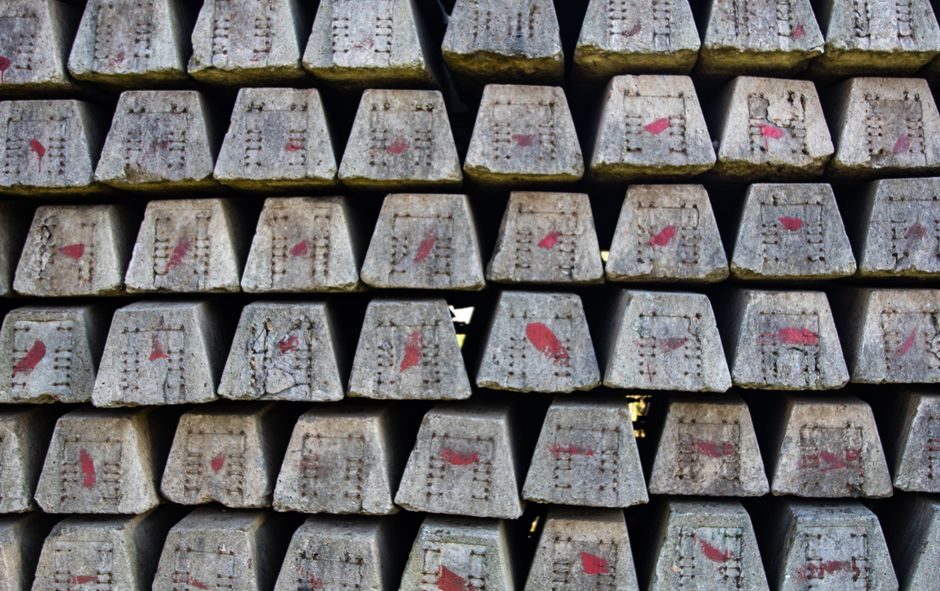
Specifying a pile driver starts with the pile, not the hammer. Precast concrete, H-beam steel, sheet pile, timber, and solar-farm post piles each carry a different allowable compressive/tensile stress and a different cross-section that sets the minimum hammer ram mass as roughly 0.5–1.0× the pile weight for efficient energy transfer [S2].
For guardrail and solar post applications, Nanjing Roadsky Traffic Facility Co., Ltd. markets dedicated post drivers in the 1–5 tonne machine class with rated striking energies commonly between 20 kJ and 90 kJ, paired with 60–80 mm post section capacity [S5].
Working load on the pile should be carried back to a static resistance to driving (SRD) target of about 2.5–3.0× the design working load for end-bearing piles, which then becomes the input to the hammer energy formula R = W·h / (s+0.5·s_cap) per the Hiley-derived field check [S2].
Hammer Class Comparison: Hydraulic Impact, Diesel, Vibratory, Static-Pressing
Hydraulic impact hammers cover the widest energy band, with production rigs spanning roughly 30 kJ to 1500 kJ per blow and offering controlled stroke length, water-cooling, and bio-oil compatibility, with a flow meter on the hydraulic loop; they suit precast concrete, H-beam, and large-diameter tubular piles on land and offshore [S2].
Diesel hammers are typically cheaper to buy but louder, with no power-supply dependency and a self-contained combustion cycle delivering 30–80 kJ on small units and 200+ kJ on heavy offshore-class machines; they struggle in soft cohesive soils where the cylinder can flood and refuse to fire [S2].
Vibratory drivers use high-frequency eccentric weights (roughly 1200–2500 rpm, 200–400 kN centrifugal force) to fluidize granular soils and sink sheet piles 5–10× faster than impact methods, but they do not develop point bearing in dense layers and are paired with an impact hammer for the final set [S2].
Static-pressing hydraulic pile drivers (jacked piles) push precast sections in by reaction weight, with rated jacking forces from 600 kN to 12000 kN; they are vibration-free, suited to urban work near sensitive structures, and limited by soil resistance above roughly 80% of the rated jacking force [S2].
Selection Criteria: Energy, Ram Weight, Blow Rate and Stroke
Required hammer energy is sized using the wave-equation output of the driving system, but a working field rule of thumb is E_req = 25–35 × R_ult (in kJ, with R_ult in MN) for precast concrete piles; running below this band risks pile damage, running above risks compression-spall at the pile head [S2].
Ram mass should sit at 1.0–1.5× the pile mass for standard precast concrete; light piles driven by heavy rams transmit too much stress per blow and crack at the head unless a hammer cushion (micarta, conbest, or aluminum) and pile cap cushion (plywood, hardwood, or micarta) are correctly stacked [S2].
Blow rate, typically 40–60 bpm for hydraulic impact hammers, sets cycle time and hourly production: at 50 bpm, a 5-hour shift advances 15,000 blows through a pile, so even a 5% energy oversize per blow compounds into 5% extra delivered stress [S2].
Stroke length controls the kinetic energy at impact (E = ½mv² = m·g·h for free-fall rigs); variable-stroke hydraulic rigs let the operator tune E between roughly 20% and 100% of rated for driving versus proof blows without changing the hammer [S2].
Soil Match: SPT, CPT and Set Criteria
Soil resistance sets the hammer: SPT N-values below 10 indicate loose sands or soft clays where a vibratory driver is most economical, N between 10 and 30 covers most driven pile ranges with a standard hydraulic impact hammer, and N above 50 with boulder or rock needs a heavy hammer plus a proper driving shoe or pilot drill [S2].
CPT q_c profiles give a continuous tip-resistance trace, with end-bearing piles sized to a target q_c around 10–15 MPa at design depth in sands; vibratory rigs stall when q_c exceeds roughly 20 MPa and require an impact follow-up [S2].
Final set criteria — typically 10 blows per 25 mm (or 100 blows per 250 mm) at the design hammer stroke — are the contractual proof of bearing capacity and must be checked against the geotech report, not the equipment brochure [S2].
Who It Is For vs Who It Is Not For
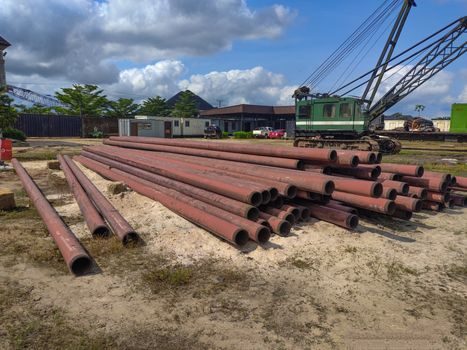
Pile drivers are for civil and infrastructure contractors handling foundations, sheet pile shoring, guardrail post installation, solar farm racking post driving, and bridge piers; site supervisors specifying the wrong hammer energy class for the pile section typically see 20–40% lost productivity and accelerated cushion wear [S1][S2][S5].
They are not for interior slabs, basement raft foundations in built-up urban areas without vibration permits, or for low-capacity jobs where a hand-held post driver or hydraulic press-in rig covers the same load; specifying a 600 kN static press for a 60 kN working load is wasted CAPEX and freight [S1][S2].
For buyers weighing alternatives like bored piles or CFA rigs, the decision point is vibration tolerance, water table, and adjacent structure sensitivity; the related rotary drilling rig selection guide covers the displacement-pile alternative path.
Procurement Levers: Brand, Lead Time, Spare Parts
Lead time on a hydraulic impact hammer in the 100–300 kJ class runs 30–60 days ex-works from major Asian OEM lines, with guardrail post drivers often available from stock at distributors like Nanjing Roadsky Traffic Facility [S5].
Spare-parts stocking matters more than sticker price: a 5-year total cost on a hydraulic hammer is roughly 1.4–1.6× the purchase price once cylinder seals, ram guides, and striker plate replacements are added over a typical 8,000-hour service life [S1][S2].
Buyers looking at adjacent capex like drivetrain components should cross-check the industrial gear buying guide for the gearbox side of the power pack, since piling-rig gearboxes have their own torque-density constraints.
Standards, Sourcing and Failure Modes
Reference standards commonly invoked on piling specs include ISO 9001 for OEM quality systems, CE marking under the Machinery Directive for European jobsites, and project-specific geotech reports tied to local codes (e.g. JGJ 94 in China, FHWA NHI-06-088 in the US, BS 8004 in the UK); final set criteria are written into the project specification, not the equipment manual [S2][S5].
Common failure modes are pile head spall from undersized cushions, ram seizure from contaminated bio-oil, leader-frame twist from off-axis driving, and noise/vibration complaints triggering site shutdowns near hospitals or heritage structures [S1][S2].
A useful cross-reference for engineers buying adjacent foundations work is the pile driver selection guide, which extends the energy/soil logic here into a hammer-type decision tree.
Verify any new spec with at least three data points: the geotech-bearing target in kN, the hammer energy in kJ, and the pile section stress limit in MPa; if those three do not line up on paper, no brand badge on the equipment will fix it on site. Track the OEM service-bulletin register and the local vibration-permit threshold (commonly 5 mm/s PPV at nearby structures) as the next signal after a quote is signed.