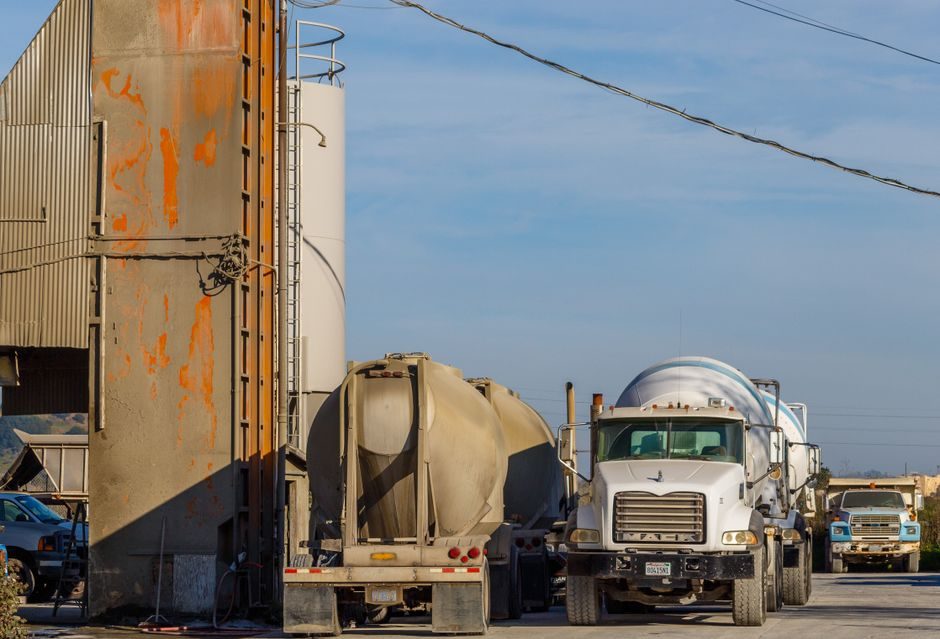
A concrete mixer truck is a revolving-drum hauler sized for 6 m³ to 12 m³ per load, with the drum turning 2–6 rpm to keep the mix plastic in transit; a concrete vibrator is a high-frequency consolidation tool, typically operating between 3,000 and 12,000 vibrations per minute, used after the concrete is already in the form.
These two machines sit at opposite ends of the same pour chain: the truck handles transport and agitation between batch plant and formwork, the vibrator handles densification inside the formwork. They do not substitute for each other, and procurement specs should treat them as separate line items, not as a combined "concrete placing" package [S1][S2].
Function and Operating Envelope Compared
The truck's job is keeping concrete homogeneous during a haul that may run 30–90 minutes from plant to site, and the EMSUNTOUR WC6BJ underground coal-mine mixer truck delivers 0.7 m³/min output at 6 m³ nominal capacity, with the drum rotated continuously to prevent segregation [S1]. The Semix SM9 truck-mounted mixer, by contrast, covers 7 m³ to 12 m³ and is built with SSAB Swedish steel for the drum and helical blades, paired with Rexroth, ZF, and AKG components [S2]. Typical agitation speeds sit in the 2–6 rpm window, slow enough to avoid segregation but fast enough to keep the mix live [S4].
A vibrator's job starts only after the truck discharges into the form or pump hopper. Hand-held pokers commonly run at 3,000 vpm (50 Hz electric) up to 12,000 vpm (200 Hz high-frequency), with immersion depths of 150–600 mm and effective radius of 6–10 times the poker diameter. Frequencies and amplitudes for a given poker diameter follow a curve where smaller-diameter shafts (25–35 mm) drive higher frequencies for low-slump mixes, while larger-diameter shafts (50–75 mm) carry amplitude for stiff structural concrete.
Capacity, Power, and Drive Topology
Truck capacity scales by drum volume: the WC6BJ underground mixer holds 6 m³ (211.89 ft³) with a diesel powertrain sized for low-clearance mine headings and explosion-proof certification [S1]. The Semix SM9 stretches from 7 m³ (247.2 ft³) to 12 m³ (423.78 ft³) and offers two drive paths: a PTO off the truck engine or a separate auxiliary diesel, both factory-configured per customer [S2]. Hydraulic-drive lightweights are now common for export markets where road tonnage rules cap the gross vehicle weight.
Vibrator power and drive split into four families: internal (poker) electric at 50/60 Hz, high-frequency electronic at 200 Hz with built-in inverter, pneumatic for hazardous or wet sites, and engine-driven flex-shaft units for remote pours. Each family pairs a frequency window with a head-size window, and the right pick depends on the slump of the mix, the rebar congestion in the form, and the available power source on deck.
Selection Criteria by Use Case
For a 6 m³ underground mine pour, the WC6BJ diesel with explosion-proof rating is the only practical hauler; the front inlet and rear-mounted engine keep contamination away from the drum and the operator [S1]. For above-grade road or high-rise work where road tonnage laws cap axle loads, the SSAB-steel Semix SM9 at 7–12 m³ is the rational pick, especially when Rexroth hydraulics and ZF gearboxes are specified for parts commonality across a mixed fleet [S2].
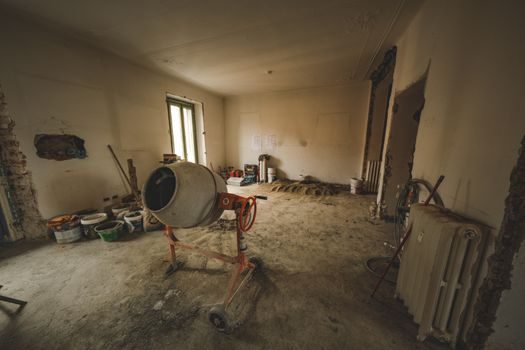
For consolidation, a 50 mm-diameter electric poker at 6,000 vpm covers most wall and column pours with 25–30 cm slump; congested slab rebar or thin toppings call for a 25–35 mm high-frequency head at 9,000–12,000 vpm. Stiff structural concrete (under 75 mm slump) or mass concrete needs the larger 70–75 mm poker at 3,000–6,000 vpm, where amplitude matters more than frequency. Picking the wrong size is the single most common cause of honeycombing and bug-holes on the form face.
Comparison Matrix: Mixer Truck vs Concrete Vibrator
Side by side on the four criteria that actually drive the buy: a concrete mixer truck runs 6–12 m³ batch capacity, 2–6 rpm drum speed, diesel or hydraulic drive, and 30–90 minute haul tolerance before slump loss accelerates [S1][S2][S4]. A concrete vibrator sits in the 3,000–12,000 vpm frequency window, 25–75 mm head diameter, electric/pneumatic/engine drive options, and 5–15 second immersion time per insertion radius.
If your bottleneck is haul distance and slump retention, the truck dominates the spec. If your bottleneck is rebar congestion and surface finish, the vibrator is the spec item that has to be right, and the truck can be a commodity buy. Most failed pours are spec failures at the vibrator, not the truck.
Materials, Wear Parts, and Maintenance
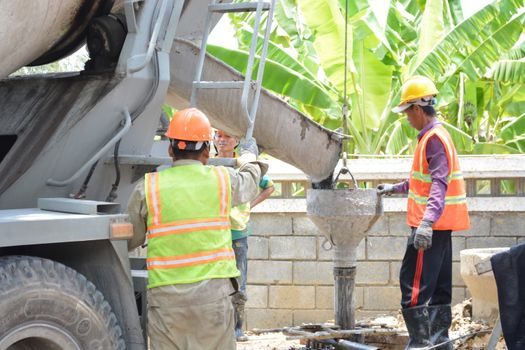
Truck drum wear concentrates on the helical blade and the charge/discharge fins; SSAB-grade steel on the Semix SM9 is rated against abrasive aggregate for "many years" of service, and blades are weld-repairable rather than replaceable [S2]. Mixer truck drum bearings, hydraulic motors, and water-metering systems are the typical 1,000–2,000 hour service items, with drum bearing re-pack intervals around 500 hours for units running abrasive mixes.
Vibrator wear parts are the eccentric bearings, the tip rubber cap, and the flex-shaft inner core (on shaft-driven units). Electric poker bearings see 500–1,000 hour re-grease cycles; pneumatic vibrator bearings survive 1,500–3,000 hours because air cooling carries heat away. Tip caps are a consumable: when the rubber wears past 2–3 mm, amplitude at the head drops and the poker stops consolidating effectively.
Limitations and Failure Modes
A mixer truck cannot fix a bad mix design; once the cement sets, no amount of drum rotation recovers workability, and retarders only buy 60–120 minutes of additional haul tolerance [S4]. Over-agitation at 8–10 rpm in transit causes segregation and a layer of paste at the drum wall, while under-agitation below 2 rpm lets coarse aggregate settle and bleed water rise. Both modes produce a load that arrives looking correct on the slump test but behaves badly under vibration at the form.
A vibrator cannot rescue concrete that was placed 20 minutes ago without re-agitation; once initial set starts, vibration closes the mix against itself and creates a cold joint. Over-vibration pulls paste to the bottom of the form and leaves the upper cover zone rocky, while under-vibration leaves entrapped air that shows up as bug-holes on stripping. The standard field rule is 5–15 seconds of immersion per lift, with the poker withdrawn at roughly 75 mm per second.
Standards, Sourcing, and Fleet Notes
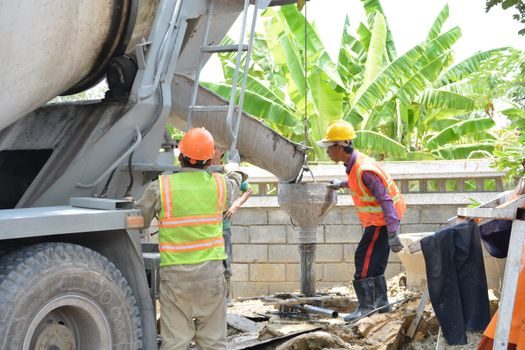
Mixer truck sourcing from Chinese OEM channels (Chongqing, Jiangsu, Shandong clusters) typically lists Iveco-HONGYAN, Foton, and Sinotruk chassis as the base, with drum and hydraulics added by the OEM partner; the Iveco-HONGYAN Genlvon 340 HP 6–10 m³ variant is a representative data point [S3]. Pricing on new Chinese-built units sits in the USD 50,000–120,000 band for 6–10 m³, with the Semix SM9 lightweight hydraulic unit commanding a premium for SSAB steel and Western hydraulics [S2][S6].
Vibrator sourcing is fragmented across Wacker Neuson-type European, Multiquip-style North American, and a long tail of Chinese and Indian OEMs. Buyers should pin specs to frequency, head diameter, amplitude, and ingress protection, not brand, because the failure mode is bearing and tip wear rather than build origin. Match the vibrator family to the concrete mix design, rebar congestion, and power availability on site, and match the truck capacity to haul distance, road tonnage laws, and pour size; the two decisions are independent and should be spec'd on separate lines. For related comparisons on drive selection and equipment classification, see the Cycloidal Reducer Types and Classifications spec map, and for adjacent concrete-placement hardware, the truck-mounted concrete pump and concrete pump truck reference pages round out the pour-chain spec set.