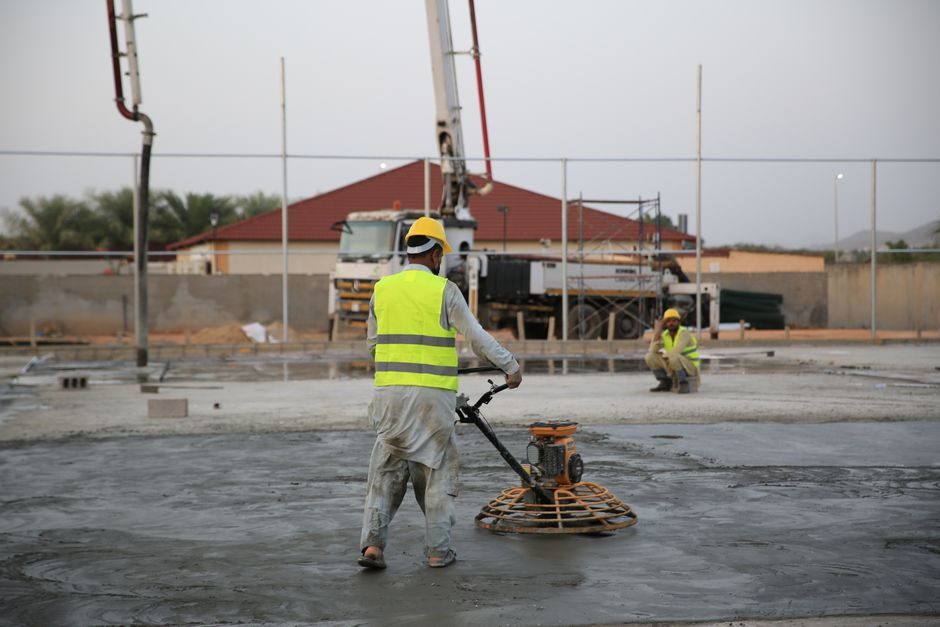
Concrete vibrator selection in 2026 resolves to a three-axis decision: head diameter matched to the minimum rebar spacing and formwork gap, frequency (vpm) and amplitude matched to the mix workability, and drive power matched to the shaft length and head mass [S4].
Suppliers active in the 2026 sourcing window include Zhejiang-Taizhou OEM clusters on Made-in-China, Kormax Corporation in Seoul with 15 years in vibration equipment, and platform listings on Alibaba and EN-Machinery, all carrying electric and portable-class units [S1][S2][S3][S5].
Internal Immersion Poker: Head Diameter vs Pour Geometry
Head diameters of 28-45 mm are specified for columns, walls and beam webs where rebar spacing drops below 100 mm, while 60-100 mm heads are reserved for mass pours and thick slabs where the radius of action must reach 400-600 mm from a single insertion point [S4]. Standard immersion depth is the head length plus 150-200 mm of shaft submerged, with a typical 1.5-2.0 m insertion spacing grid in slump-75-100 mm mixes.
Effective consolidation radius is governed by the ACI 309 rule of thumb that amplitude must remain above 0.25 mm at the edge of the action zone; undersized heads applied to deep pours leave honeycombing along the form face and around congested rebar knots [S4].
High-Frequency Internal Vibrators: 10,000-12,000 vpm Spec Band
High-frequency internal electric pokers in 2026 run 10,000-12,000 vpm at 230 V single-phase or 380-415 V three-phase input, with 800-2,300 W power ratings for 28-50 mm heads and 2,500-3,500 W for 60-90 mm heads, per OEM product-line data on Onnew and Kormax [S2][S4].
Frequency selection is mix-driven: 6,000-8,000 vpm suits stiff low-slump mixes below 50 mm, the 9,000-11,000 vpm band covers the 75-150 mm slump range used in most structural pours, and 12,000+ vpm units are used in SCC and high-slump mixes where over-vibration segregation is a real failure mode [S4].
Flexible-Shaft Driven Pokers: Field Repair vs Motor Cart Trade-off
Flexible-shaft driven immersion vibrators couple a separate 1.5-3.0 kW electric motor or Honda GX-series petrol drive unit to a 6-10 m flexible shaft terminating in a 25-65 mm poker head, and dominate 2026 mid-tier contractor fleets for site work where the motor is left on the deck while the operator drags the head through the pour [S2][S4][S5].
The trade-off is shaft length: beyond 10 m the rotational losses drop delivered head speed by 8-15% and the operator feels whip; Kormax and EN-Machinery both list 6 m and 9 m as standard catalog lengths with custom runs to 12 m [S2][S5]. For a working guide on the related area of flexible-hose machine selection, see the flexible-shaft product line overview.
External Form Vibrators: When Immersion Is Not an Option
External form vibrators clamp to the formwork face via bolted brackets and deliver 3,000-6,000 vpm at 200-1,500 kg centrifugal force, used where internal immersion is impossible: thin-shell architectural panels, heavily reinforced sections where a poker would tangle in rebar, and precast tilt-up tables [S2][S4].
Form-vibrator mounting density is roughly 1 unit per 1.5-2.0 m² of form face for 100-150 mm wall thickness, doubling for walls above 250 mm; the clamp force must exceed the vibrator's centrifugal output by 3-4× or the unit will walk the form face and burn out its bearings [S4].
Power Source Selection: Electric, Petrol and Pneumatic
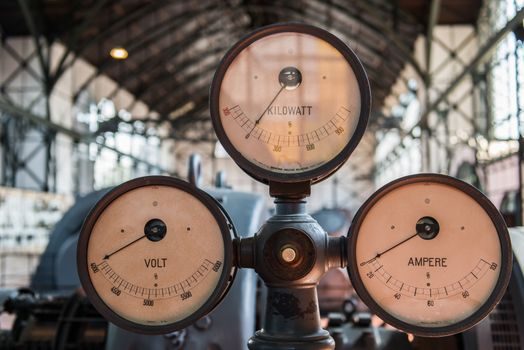
Electric drives dominate indoor and tunnel work where exhaust is unacceptable and 230/400 V site power is available, while Honda GX160/GX270 petrol units remain the spec for remote slab pours and bridge decks without grid access [S2][S3][S5]. Pneumatic poker vibrators at 6-7 bar (0.6-0.7 MPa) supply are still specified for petrochemical and ATEX-classified pours where sparks must be excluded, with 1,500-3,000 W pneumatic power draw per head.
Battery cordless pokers using 48-82 V Li-ion packs have entered 2026 OEM catalogs at 25-45 mm head sizes with 30-45 min continuous duty, priced roughly 2-3× the corded equivalent and still limited to small-pour site work [S3][S4].
Operating Limits and Failure Modes on Site
Over-vibration causes segregation in 150 mm+ slump mixes: the rule of thumb is to withdraw the poker at 5-8 cm/s once the surface goes glassy and air bubbles cease, and to limit each insertion to 5-15 s depending on head size [S4]. Under-vibration leaves bug-holes and cold joints; the visible-surface check is the 309 rule of thumb: re-insert within 3-5 minutes of adjacent concrete to merge the two vibration zones.
Common 2026 field failures are bearing seizure from concrete ingress after a hose breach, shaft-whip fracture beyond 9-10 m of flexible-shaft length, and burnt-out motor windings on petrol drives run below the recommended 3,500 rpm throttle floor; Kormax and EN-Machinery both stock replacement shafts and stator-rotor assemblies as service parts [S2][S5].
Sourcing and Standards Map for 2026 Procurement
Procurement in 2026 splits three ways: direct OEM at Taizhou and Ningbo clusters on Made-in-China for 1,500-3,000 W flex-shaft pokers at USD 80-220 FOB per unit, Kormax and other Korean makers for higher-frequency premium units, and platform catalogs on Alibaba/EN-Machinery for portable-class single-phase units in the USD 60-150 range [S1][S2][S3][S5].
Buyers should verify CE/EMC conformity for European sites, GB/T standards for China-domestic projects, and the 1-year motor warranty typical across the 2026 OEM catalogs [S1][S2][S5]. For a broader 2026 read on construction-equipment selection, the concrete-vibrator category page indexes the related product families including batching-plant feeders and concrete-admixture compatibility and concrete-fiber reinforcement that interact with vibrator choice.
Track the next procurement signal: the 2026 OEM catalogs list a clear migration to 12,000 vpm three-phase units for SCC pours and to 48 V battery pokers for indoor finishing work, while 1,500 W single-phase flex-shaft sets remain the volume product for general contractors [S3][S4]. Buyers can also benchmark a broader construction-equipment decision against the roller-conveyor drive-class selection map for an example of how spec-axis mapping is applied in adjacent equipment categories.