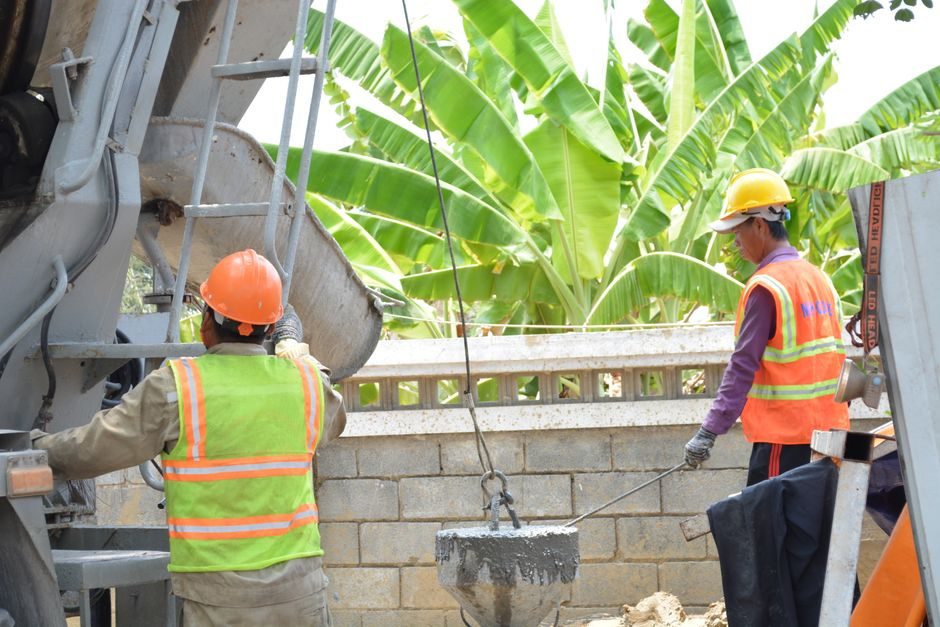
Choosing a concrete batching plant in mid-2026 is a four-gate decision: required peak output in m³/h, mixer shaft configuration, aggregate bin count, and control-system tier — mobility class is selected only after those four lock in [S3].
For most buyers, the first hard filter is output: plants below 50 m³/h suit residential and small commercial pours, the 60–120 m³/h band covers commercial buildings and medium civil works, and anything above 120 m³/h is sized for highways, precast yards, and ready-mix supply contracts. The second filter is the mixer: planetary, twin-shaft compulsory, and single-shaft paddle units each carry a different homogeneity and wear profile that ripples into concrete admixture dosing and aggregate sizing [S2][S3].
Static, Mobile and Compact Plants: Project Duration Decides the Class
Static (skid/fixed) batching plants deliver the highest outputs and the largest aggregate bins (commonly 4×15–25 m³ configurations) but demand a fixed foundation, so they are only cost-effective on jobs running 12 months or longer, or for permanent ready-mix depots. Mobile plants fold the same modules onto a chassis and can commission within 1–2 days, which makes them the default for road and bridge contracts that hop site every 6–18 months. Compact / mini plants (typically ≤35 m³/h, single or dual-bin) target contractors who pour intermittently and need a 20-foot-container footprint that a flatbed can drop on a remote yard [S3].
Erie Strayer-class dealers position their static lines around heavy civil and ready-mix supply, where the 4-bin aggregate configuration and twin-shaft compulsory mixer dominate the spec sheet; Fonte & Company's dealer profile illustrates that the same OEM supports both fixed and portable modules [S3]. Selection rule: if the project window is under 6 months, start with mobile or compact — the demobilisation and re-erection labour of a static plant will erase any per-m³ savings on a short contract [S3].
Mixer Type: Twin-Shaft, Planetary and Single-Shaft Compared
The mixer is the wear-and-quality centre of the plant, and the three dominant types map to different mix designs. Twin-shaft compulsory mixers (typical 1.0–4.0 m³ batch volume) deliver the highest hourly throughput per kW installed and handle large aggregate (up to 150 mm) — the default for ready-mix and high-strength structural concrete. Planetary (pan) mixers shear more aggressively and produce more uniform coloured, fibre-reinforced and ultra-high-performance mixes, at the cost of a taller mixer tower and higher wear on the star-wiper arms. Single-shaft paddle / ribbon-style mixers — including the dry-mortar single-shaft paddle design from Qingdao Elite's product line — target dry-mix mortar, self-leveling screed and bagged-mortar applications where output is measured in t/h rather than m³/h [S2].
Comparison gate by gate: (1) Aggregate size — twin-shaft ≥ 80 mm typical, planetary 40–60 mm, single-shaft paddle 10–20 mm; (2) Cycle time — twin-shaft 30–45 s, planetary 45–75 s, single-shaft 60–120 s; (3) Typical use — twin-shaft for ready-mix, planetary for precast and UHPC, single-shaft paddle for dry mortar and self-leveling [S2][S3]. Picking the wrong class is the most expensive mistake in the build: specifying a twin-shaft for a coloured architectural precast line is a recipe for streaking, while forcing a planetary into highway base-course output is a bottleneck.
Output, Bins and Cement Silos: Sizing the Flow Train
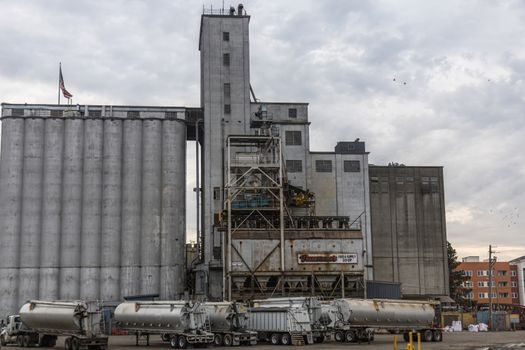
Once the mixer class is fixed, size the upstream flow train to it: the rule of thumb many OEM datasheets converge on is 1.5–2× the mixer's nominal batch volume in live aggregate storage, and cement silo capacity sized for at least one full 8-hour shift of uninterrupted pours (typically 50–200 t per silo, with twin-silo configurations common above 90 m³/h plants). Screw conveyors feeding the cement weigh-batchers are usually Ø219–Ø323 mm at 60–100 t/h; under-sizing the screw is a recurrent cause of plant throughput falling short of nameplate [S3].
For concrete fiber-reinforced mixes, the dosing system becomes its own gate: collated fibre needs a shredder-and-blower unit, while loose fibre is metered through a vibratory screw — both add 0.5–1.0 m of head height to the aggregate bin frame and should be quoted in the LOI, not as a field retrofit. Water chilling or ice dosing for mass-concrete pours (≥1.5 t/m³ cement) is similarly a quoted option, not a site improvisation.
Automation, Controls and the Plant Controller
The control tier is a discrete cost gate: manual / semi-automatic panels remain common on ≤35 m³/h compact plants, while PLC + SCADA systems with recipe management, moisture compensation, and print-batching reports are the 2026 default from 60 m³/h upward. For the upper tier, plant controllers expose OPC UA or MQTT tags so the batch data lands in the contractor's project dashboard, which is increasingly a contract requirement on public-infrastructure work [S3].
Selection advice: do not buy a control system two tiers below the plant size. A 120 m³/h twin-shaft plant on a manual panel bottlenecks on aggregate charging and admixture dosing; conversely, a 25 m³/h compact plant with a full SCADA stack adds commissioning time the small contractor will not recoup. Match the panel to the throughput.
Who It Is For — and Who It Is Not For
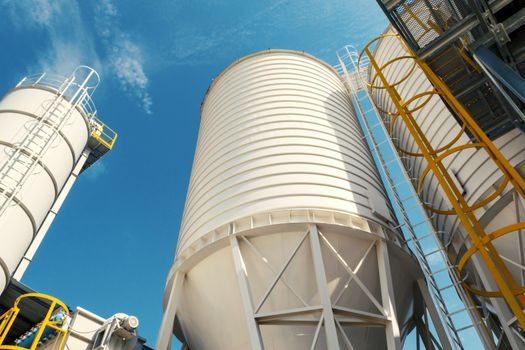
A batching plant is the right answer for contractors pouring more than ~8,000 m³ per year on a recurring basis, for precast yards running daily, and for any project where mix-design consistency drives structural liability (bridges, water-retaining structures, high-rise columns). It is the wrong answer for one-off foundation pours, for remote sites with no aggregate supply within ~50 km, and for projects shorter than 3 months where the mobilisation/demobilisation amortisation is not recovered [S3].
Adjacent equipment — concrete vibrator selection for placing, and admixture handling for hot/cold weather pours — should be specified in parallel with the plant, not as an afterthought. The hose reel selection guide covers water and admixture delivery on site, which is the other end of the batching flow chain and worth lining up before commissioning.
Limits, Failure Modes and Sourcing Standards
The dominant failure modes on a batching plant are aggregate moisture drift (a wet bin pushes water into the mix, collapsing strength), cement weigh-scale calibration drift, and admixture pump starvation in cold weather. Each is mitigated by a sensor and a maintenance task, not by buying a bigger plant. Quote the moisture probes, the auto-calibration sequence, and the winterised admixture tank insulation up front — the sealing washer buying guide applies in spirit: gates, not vibes, drive the spec. [S1]
On standards, a 2026 batching plant should be quoted against ISO 9001 for the OEM's quality system, with plant components referencing EN 12150 / EN 206 for concrete performance and the local structural code (ACI 318, Eurocode 2, GB 50010) for the mixes it will produce. Verify mixer CE / EAC marking and the load-cell accuracy class (typically C3 or C4 for cement and water weighers). For plant buyers comparing OEM catalogues, side-by-side evaluation against a forging press price and cost guide is a useful exercise because both purchases are heavy-capex, tonnage-driven, and dominated by the same four cost axes (main machine, auxiliaries, controls, installation).
Trackable next signals: confirm the OEM's local service radius (response time SLA, not just a regional office) and the spare-parts shelf for the mixer wear parts (lining plates, shaft seals, paddle tips) — those are the items that will idle a plant 18 months after commissioning. Also verify whether the plant is a single-source controller or runs a third-party PLC; the latter is easier to maintain once the OEM's programmer moves on.