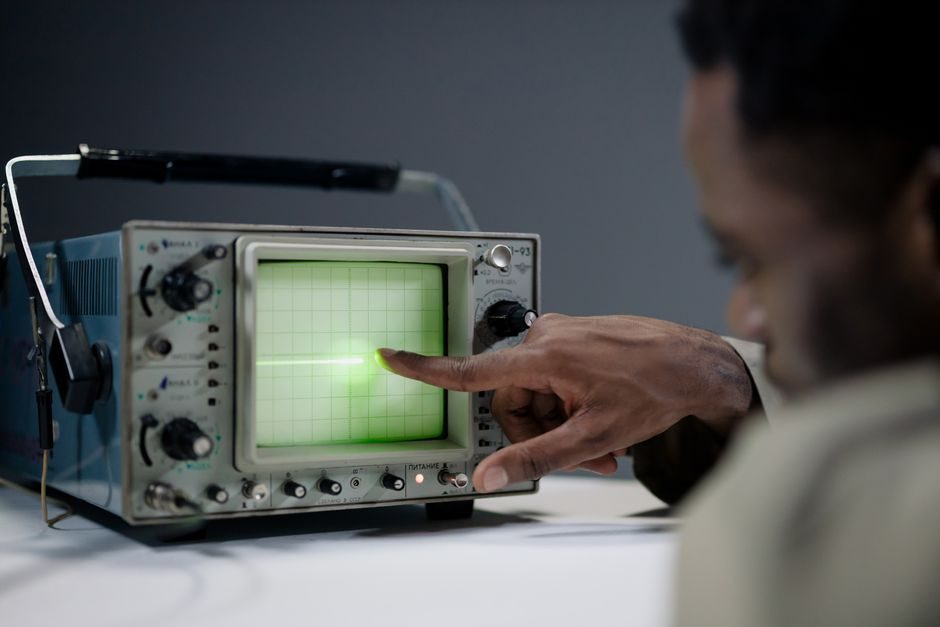
Selection of a condition monitoring (CM) system is driven by the five hardware axes a plant actually needs on the floor: vibration analysis, airborne ultrasound, infrared thermography via IRISS windows, motor current / static electrical test, and operator-rounds CMMS, not by a single vendor catalog [S1]. Industrial buyers working to ISO 17359 (general guidelines for CM of machines) and ISO 13373-x (vibration CM of rotating machinery) should match the hardware axis to the failure mode the asset class actually exhibits, then decide between portable and online architecture.
Tennessee-based Condition Monitoring, LLC, a 10-year distributor active in the Southeastern US, frames its portfolio around that same five-axis split: LUDECA laser alignment + vibration + ultrasound, IRISS infrared windows, PdMA EMAX/MCE electrical testers, DMSI paperless operator rounds, and Hansford Sensors accelerometers [S1]. The split is functionally identical to the way a condition monitoring system is normally specced in a plant engineering document — by the physics of the failure being hunted, not by software features alone.
Vibration Analysis: ISO 13373 Bandwidth and Hansford Sensor Envelope
ISO 13373-1/-2/-3 codifies vibration CM of rotating machinery: broadband RMS, demodulated envelope (bearing-fault frequencies), and ODS / modal work for casing response, respectively, and any serious vibration purchase should be benchmarked against those three parts before price is discussed. Hansford Sensors supplies industrial accelerometers, cabling and termination boxes with a lifetime warranty on many product lines, paired with LUDECA vibration analyzers for portable walk-around routes [S1]. The relevant decision criteria are: 100 mV/g vs 500 mV/g sensitivity for gearbox vs low-speed bearing work, 4-pin MIL vs ICP/IEPE for compatibility with the existing analyzer, top-connector vs side-connector mounting, and IP67/IP68 sealing for washdown or outdoor duty.
Specifying a vibration channel without confirming the 13373-1 spectral bands (typically 10–1,000 Hz for balance, up to 10 kHz for bearing-envelope demodulation) and the dynamic range (>80 dB) of the front end is the most common reason an accelerometer is returned. For shaft-relative measurements on large motors, eddy-current probe systems and LUDECA laser alignment rigs (shaft, belt, geometrical) are the matching axis; laser rigs typically deliver ±0.05 mm or better shaft-offset readings at the coupling [S1].
Airborne Ultrasound: Steam Traps, Valves, Bearings, Electrical
Airborne ultrasound is the second axis the LUDECA / UE Systems class of instrument covers, and its bandwidth (typically 20–100 kHz) is dictated by physics rather than by the manufacturer: leaks above ~20 kHz, partial discharge on MV switchgear, and starved-bearing friction all sit in that band [S1]. A buyer comparing airborne-ultrasound detectors should pin the spec sheet on heterodyne conversion, dB-sensitivity at 40 kHz, headset isolation (≥25 dB NRR), and whether the unit supports contact-mode probing for steam-trap testing.
The target applications, in the order of highest ROI, are: steam-trap failure detection (failed open → energy loss; failed closed → water hammer), compressed-air leak survey, valve seat-pass detection, bearing-lube starvation, and electrical partial-discharge on enclosures. PdMA EMAX dynamic testing is not a substitute for airborne ultrasound, so the two axes must be specified separately in any condition monitoring system BOM; conflating them is a frequent spec error.
IRISS Infrared Windows: Arc-Rated Sight Glasses for Live PD/IR
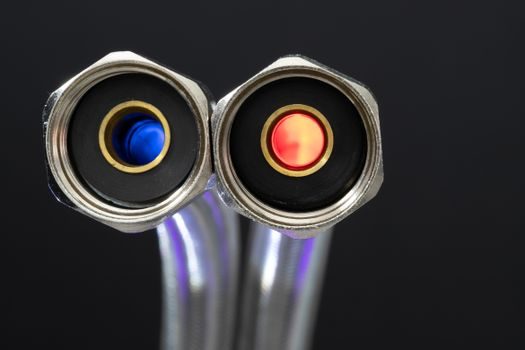
IRISS infrared windows are the third axis and address a different constraint: OSHA / NFPA 70E lockout-tagout economics force most plants to de-energize before opening a panel, while thermography needs line-of-sight. The IRISS product line includes circular windows, rectangular windows, and custom solutions, plus ultrasound ports for combined IR+US inspection [S1]. The headline spec on these windows is the arc-test rating (commonly tested to IEEE C37.20.7 arc-flash or IEC 62271-200 internal-arc procedures, depending on the panel type) and the transmission band (typically long-wave IR 8–14 µm for electrical thermography).
For buyers, the three fixed decisions are: window diameter / cut size (standard 2 in, 3 in, 4 in for circular), grid pattern (fixed stainless mesh vs roll-up cover for low-light / arc-rated applications), and certification pack (UL, IEEE C37.20.7 arc-test report, IP66/NEMA 4X). Wireless ultrasound ports co-mounted in the same panel are a 2024–2026 trend, so the spec should ask explicitly whether the window is ultrasound-ready or needs a separate port.
PdMA Electrical Testers: EMAX Dynamic + MCE Static Coverage
Motor testing is the fourth axis and PdMA's portable testers define the de-facto feature set [S1]. The EMAX is a portable dynamic tester that, on an energised running motor, identifies Power, MCS (motor condition signature), Efficiency, Crest Factor, THD, Sequence Data, Power Factor, Impedance, and Current and Voltage. The MCE is a portable static (de-energised) tester that identifies Power Circuit, Insulation, Stator, Rotor, and Air-Gap conditions. Buying EMAX + MCE as a combination portable system is the standard path when a single technician rotates between online and offline tests.
For online MCM, MCSAplus-class parameters (sideband spacing at slip frequency × pole count, line-frequency notches) are the established indicators of rotor-bar and air-gap eccentricity faults; these are core to the EMAX output list and the buyer should expect them in any vendor comparison. For offline MCE, the buyer should pin insulation resistance at 1 kV/5 kV, PI / DAR ratios, and a calibrated rotor test that resolves broken-bar counts, not a pass/fail binary. Be cautious of vendor claims that a static test fully replaces online MCM, or that a 3-phase clamp-meter can match an MCSA-class instrument — neither is true.
DMSI Operator Rounds and Hansford Sensor Cabling: Closing the CMMS Loop
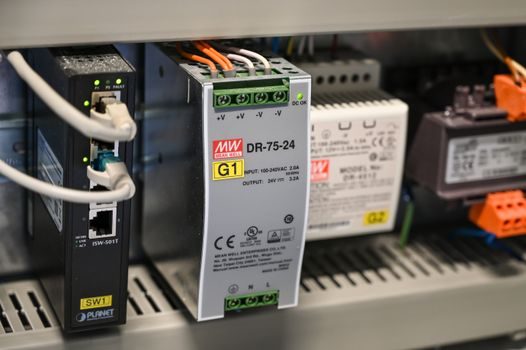
Operator rounds are the fifth axis and the one most often under-specced, because they live in software rather than instruments. DMSI (Design Maintenance Systems) supplies paperless operator rounds, basic asset care (checklists, numerical inputs), lube rounds, safety rounds, and predictive-maintenance triggers, with PDA-based data capture and CMMS work-notification links [S1]. This is the same architectural class as the iPad CMMS apps catalogued on SourceForge in July 2026, which track real-time health and push alerts to mobile [S2].
The decision boundary is clear: SMB / single-site plants under ~200 assets should start with an iPad CMMS app from the SourceForge comparison list and paperless rounds; multi-site Fortune-500 plants with thousands of critical assets need a DMSI-class CMMS-integrated round system plus PdMA + LUDECA hardware. Hansford Sensors supplies the cabling, termination boxes, and accelerometers, with a lifetime warranty on many lines, so the sensor-side BOM can be consolidated to a single vendor [S1]. Cabling decisions to lock in are: armoured vs PUR jacket for the plant environment, integrated vs separate conduit for hazardous area, and twisted-pair / shielded for ICP / IEPE runs longer than ~30 m to avoid noise pickup.
Standards, Sourcing, and 2026 Buyer Shortlist
For an industrial buyer writing a CM specification in July 2026, the underlying framework is ISO 17359 plus ISO 13373-1/-2/-3 for vibration, ISO 20958 for in-line vibration balancing, and ISO 15243 for bearing-fault classification. Hazardous-area electrical work is governed by IEC 60079-x / ATEX 2014/34/EU with US-side NEC 500/505 class/division mapping, and IR windows for live MV work are tested against IEEE C37.20.7 or IEC 62271-200 internal-arc procedures. PdMA-style MCSA readings are typically compared against NEMA MG-1 motor data and EPRI motor reliability guidelines; insulation-resistance pass/fail is referenced to IEEE 43. [S1]
The shortlist for a 2026 mid-sized plant reads: (a) LUDECA vibration + laser alignment, (b) PdMA EMAX + MCE portable, (c) IRISS IR windows in 2 in / 3 in / 4 in circular with ultrasound port, (d) Hansford accelerometers and cabling, (e) DMSI paperless operator rounds or an iPad CMMS app from the SourceForge July-2026 list [S1][S2]. The five-axis split lets the buyer refuse single-vendor bundles that pad a strong axis with a weak one. The next trackable signals to watch are ISO 13373 revision notes, IEEE C37.20.7 arc-test updates, and PdMA / Ludeca firmware releases tagged for IEC 61850 / OPC UA publication.
Detailed specification references: power monitoring system, and asrs system.
This topic is covered further in Lithium Battery Manufacturing Cost Breakdown: Cell, Pack, and TCO.