
Prismatic LiFePO4 cells in the 50-100 Ah class — such as Melasta's 50Ah and 100Ah prismatic SKU lines [S2] — anchor the lowest cell-level cost point for stationary and light-mobility packs, with built-in BMS variants adding roughly 8-15% to the bill of materials at the 12V/24V/48V pack tier.
Pack-level cost is set by four interacting variables: cathode chemistry, cell format, BMS architecture, and enclosure rating. Frey Battery (North America) lists ≥4000 cycles at 80% depth of discharge at 0.5C on its nano-structured LiFePO4 prismatic aluminum cells [S1], which is the cycle-life figure that actually moves $/kWh-over-lifetime, not the purchase $/kWh.
Cost Driver Map: Cathode, Format, BMS, Enclosure
Cathode active material is the single largest cost line in any Li-ion cell, with lithium iron phosphate (LFP) running materially below nickel-manganese-cobalt (NMC) on $/kWh because it uses no nickel or cobalt. Soar Renewable Energy (India) explicitly engineers across both chemistries in-house, defaulting LFP to solar, telecom, defence and BESS, and NMC to EV packs where energy density per kg is the binding constraint [S3].
Cell format is the second driver. Cylindrical 18650 and 32700 cells (Melasta catalog [S2]) trade lower energy density for high-volume automated production and proven consistency; prismatic 50Ah and 100Ah LiFePO4 cells in aluminum cans (Melasta [S2], Frey [S1]) deliver higher pack-level fill factors and simpler module-to-pack scaling. NMC pouch cells — used in EV-focused Soar EV packs with poured conductive gap-filler and aerogel runaway barriers [S3] — carry higher $/kWh but enable the 0-120 km/h discharge profile Soar publishes for its 12V-400V custom packs [S3].
BMS scope and enclosure IP rating are the third and fourth cost levers. Soar's in-house smart BMS adds active cell balancing, per-cell voltage and temperature protection, CAN, Bluetooth and integrated anti-theft [S3]; Frey specifies copper-stud terminals with no welding required, cutting module assembly labour [S1]. IP67 sealed enclosures (Soar [S3]) push pack cost above IP54 equivalents but are mandatory for harsh-field mobile and outdoor stationary duty.
Cell Format Comparison: 18650 / 32700 / Prismatic / Pouch
The four mainstream formats line up on distinct decision axes. 18650 cylindrical cells (Melasta [S2]) give the highest production-line maturity and the tightest cell-to-cell capacity spread at the lowest unit price, but pack assemblers pay in lower pack-level energy density and more spot welds per kWh. 32700 cells (Melasta [S2]) roughly double the capacity per can, reducing welding count and improving pack fill at a small unit-cost premium.
Prismatic 50Ah and 100Ah LiFePO4 cells in aluminum housings (Melasta [S2]; Frey [S1]) optimise for module stacking: Frey specifies 2C-3C constant discharge against the 1C industry baseline for similar-format cells, with consistent capacity per cell extending service life [S1]. Pouch cells in Soar's NMC EV build [S3] deliver the highest gravimetric energy density and the thinnest pack profile, but require poured thermal gap-filler, aerogel runaway barriers, and active liquid cooling — line items that materially raise pack assembly cost.
Use-Case Fit: Forklift, Mining, EV, BESS, Telecom
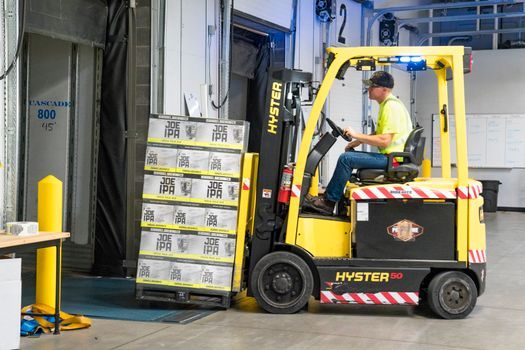
Industrial motive power — forklifts, aerial lifts, mining haul units, AGVs — is the cleanest LFP-and-prismatic fit, which is why Frey (North America) markets dedicated LiFePO4 forklift, mining, aerial-lift and robotics/AGV packs as separate SKUs [S1]. The high cycle count (≥4000 at 80% DoD, 0.5C) and 2C-3C continuous discharge [S1] directly target multi-shift warehouse and underground mining duty profiles where lead-acid replacement economics are decisive.
Stationary BESS and residential solar storage split between 12V/24V/48V lead-acid replacement formats (Melasta 12V 100Ah, 12V 12Ah, 24V and 48V families [S2]) and 5kWh/10kWh/20kWh powerwall-class packs (Melasta's stackable 5kWh 48V 51.2V 100Ah and 10kWh 25AH 400V high-voltage option [S2]). For these duty cycles, the LFP cost-per-cycle advantage dominates because $/kWh installation is amortised over thousands of shallow cycles, not hundreds of deep ones. Soar targets the same stationary segments with LFP and adds AIS-156 Phase 2 compliance for Indian EV and energy-storage deployments [S3].
EV two-wheeler, three-wheeler and performance packs are NMC territory. Soar's 0-120 km/h capability and 12V-400V custom range [S3] illustrate the discharge-rate envelope that pushes the build toward NMC with active liquid cooling — a different cost stack than the LFP motive-power case above.
Total Cost of Ownership: Purchase, Installation, Service Life
Purchase $/kWh is the smallest component of lifecycle cost in stationary and motive-power duty. Frey specifies ≥4000 cycles at 80% DoD on its LiFePO4 prismatic cells [S1]; Melasta offers 12V 100Ah prismatic LiFePO4 modules and drop-in 12V 12Ah lead-acid replacements [S2] sized for solar and deep-cycle use. Soar's LFP solar SKUs are explicitly marketed as long-cycle, maintenance-free, with custom sizing available [S3].
Installation cost scales with enclosure rating and BMS integration. IP67 packs (Soar [S3]) command a price premium over IP20/IP54 indoor modules but eliminate secondary housing spend. BMS integration moves cost in steps: passive balancing only → active balancing plus CAN/Bluetooth plus per-cell temperature monitoring (Soar in-house BMS [S3]) → redundant BMS for large-format BESS and defence. Service-life cost is dominated by cycle count, depth-of-discharge window, and operating temperature; for outdoor stationary and motive-power packs, a passive or active thermal-management layer is the single highest-ROI cost line beyond the cell itself.
Sourcing and Standards Map
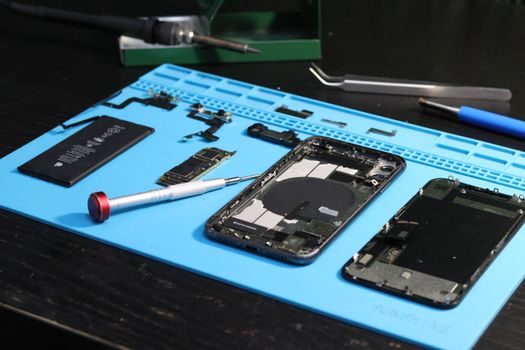
Cylindrical and prismatic LiFePO4 cells in 18650, 32700, 50Ah and 100Ah formats are stocked by Melasta (Germany) with documented UN38.3 / IEC62133-style certification pathways implied by their CE-marked 12V/24V/48V pack lineup [S2]. Frey markets Grade-A in-house-manufactured LiFePO4 prismatic aluminum cells under a patented nano LiFePO4 cathode process [S1].
India-side sourcing through Soar Renewable Energy carries AIS-156 Phase 2 compliance for EV packs and IP67 enclosure rating for stationary and motive-power builds [S3]. Custom pack OEMs (Frey, Melasta, Soar) and Chinese cell-and-pack exporters (Jiangsu Surelithium, Ufine [S4][S6]) are the four procurement channels process engineers typically map against duty cycle, certification, and lead time. Cell-format and BMS choices inside those channels are where the real cost engineering happens, not at the cell-level quote stage.
For related reading on TCO-driven industrial sourcing, see this Pillow Block Bearing TCO breakdown for a parallel 10-year cost-stack methodology, and the 2025-2026 cell and pack capacity planning map for forward supply signals. Process-side spec and instrumentation choices for cell and pack lines are covered in Lithium battery process control and instrumentation spec map.
For the relevant spec sheets and selection criteria, see additive manufacturing material, pressure transmitter, and flow meter.